
Feed Trough Basics for Livestock Farms
A feeding trough is a simple but essential piece of farm equipment: a long, open container used to hold feed for livestock. Whether for cattle, sheep, goats, or horses, the right feeding trough reduces waste, keeps feed clean, and helps manage feeding time safely. For many farms, the trough is the center of daily feeding routines, but not all troughs are the same. Choosing the wrong type can lead to spoiled feed, animal injuries, or constant maintenance.
This article explains what a feeding trough is, compares common types, and walks through the key factors that help farmers choose the right one. According to the Beef Cattle Science handbook (9th Edition, Chapter 12), proper feeding space and trough design reduce competition and feed wastage, which makes it a practical investment for any livestock operation.
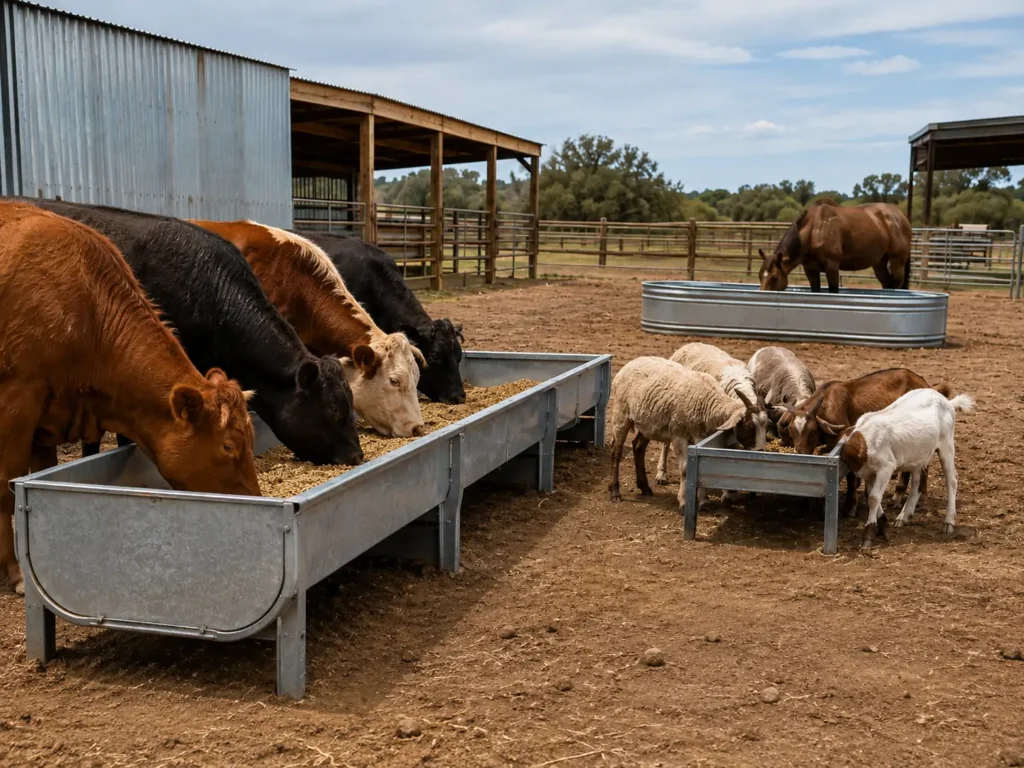
What Is a Feed Trough?
A feed trough is a static feeding container used to distribute dry feed, grain, or supplements to livestock. Unlike a hay rack or mechanical feeder, a trough holds feed in an open bay that animals can access from one or both sides. Some troughs are designed for concentrate feeds, while others can handle roughage like chopped hay or silage.
Farmers use feeding troughs to:
- Deliver measured rations to individual animals or groups
- Keep feed off the ground and away from mud and manure
- Reduce competition at feeding time
- Make cleaning and monitoring feed intake easier
Not every feeding situation calls for a simple trough. When animals need frequent feeding in different locations, portable troughs or lightweight designs may work better. When large herds must eat at the same time, a permanent bunk feeder could be more appropriate. Still, the classic feeding trough remains one of the most widely used feeding tools on small and mid-sized farms.
Common Types of Feed Troughs
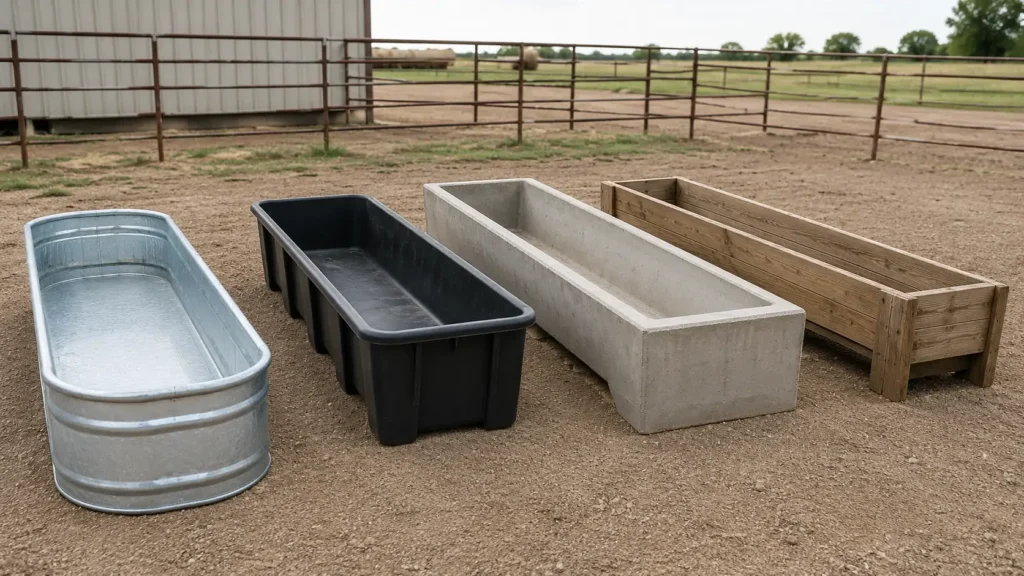
Feed troughs come in several materials and designs. The most common on working farms include:
- Galvanized steel troughs: Durable, rust-resistant, and popular for cattle and larger livestock. Often used in permanent or semi-permanent feeding areas.
- Heavy-duty plastic troughs: Lightweight, easy to move and clean, but may crack or be chewed by larger animals. Suitable for sheep, goats, calves, and small groups.
- Concrete troughs: Permanent fixtures, extremely strong, and long-lasting. Ideal for large herds and high-traffic areas, but difficult to reposition.
- Wooden troughs: Traditional and often handmade. They can work well for hay or dry feeds but require more maintenance and are harder to sanitize.
Each type has trade-offs in cost, weight, longevity, and feed safety. The next section breaks down those differences in detail to help you compare.
Feed Trough Comparison: Task, Animal Fit, Labor, Safety, Capacity, Cleaning, and Long-Term Management
Choosing a feeding trough goes beyond price. The table below compares four common trough types across the factors that matter most on a working farm.
| Feature | Galvanized Steel | Heavy-Duty Plastic | Concrete | Wood |
|---|---|---|---|---|
| Best for Task | Daily grain or concentrate feeding for medium to large herds | Portable feeding, small groups, or mixed livestock | Permanent bunk feeding for high-use areas | Hay or dry roughage in low-moisture environments |
| Animal Fit | Cattle, horses, and large ruminants | Sheep, goats, calves, and small groups of cattle | All large livestock; especially suited for cattle in feedlots | Suitable for cattle and horses if properly maintained |
| Labor Requirement | Moderate – occasional rust treatment and bolt checks | Low – light and easy to move, but may tip or shift | High upfront – heavy installation, very low after placement | Moderate to high – requires regular cleaning and repair |
| Safety | Smooth surfaces if manufactured correctly; check for sharp edges | Generally safe, but cracking can create sharp points; large animals may chew and swallow fragments | Very safe if edges are rounded; fixed position reduces tipping risk | Risk of splinters and rot; hardware may protrude over time |
| Capacity | Medium to high – can be built to custom lengths | Low to medium – limited by plastic strength and size | High – can be cast to any length and depth | Medium – depends on construction quality |
| Cleaning | Easy to scrub and disinfect, but rust can create rough spots | Very easy – smooth, non-stick surfaces; dishwasher-style cleaning possible for small units | Difficult if not sealed; porous surface can harbor bacteria without proper treatment | Difficult – moisture and grain residue soak into wood; odor control is challenging |
| Long-Term Management | May need repainting or galvanizing touch-ups; stands up well with care | Can crack in extreme cold or sunlight; lifespan shorter than steel or concrete | Extremely durable; cracks can be repaired, but full replacement is major work | Requires regular sealing and periodic replacement of damaged boards |
Use this table as a starting point. Real-world performance also depends on feed type, climate, and how well the trough is maintained.
Matching Feed Trough to Animal Type
Different species feed differently, and that affects trough selection.
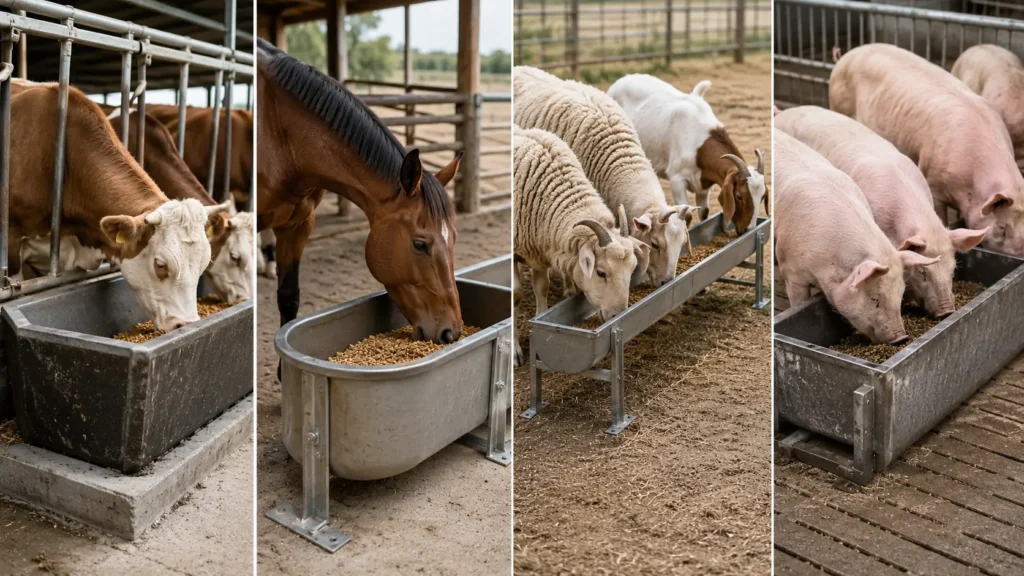
- Cattle: Need a deep, sturdy trough that won’t tip. Bunk height should match shoulder level to reduce feed tossing. Galvanized steel or concrete are common for mature cattle; plastic may work for calves.
- Horses: Can be aggressive feeders. Rounded edges are essential to prevent injury. Avoid materials that splinter. Horses may paw at the trough, so weight and stability matter.
- Sheep and goats: Small mouths and nimble feet. Goats especially may climb into troughs. A shallow, elongated plastic or lightweight metal trough that can be mounted at shoulder height helps keep feed clean and waste low.
- Swine: Strong and curious. Troughs must be robust and secured to the ground or pen wall to prevent rooting and overturning. Stainless steel or thick plastic works well.
A one-size-fits-all feeding trough rarely works for mixed-species operations. When in doubt, observe animals during feeding and adjust height, depth, or material until competition and waste are under control.
Feed Trough Placement and Farm Layout
Where you place a feeding trough affects feed quality, animal behavior, and farm labor.
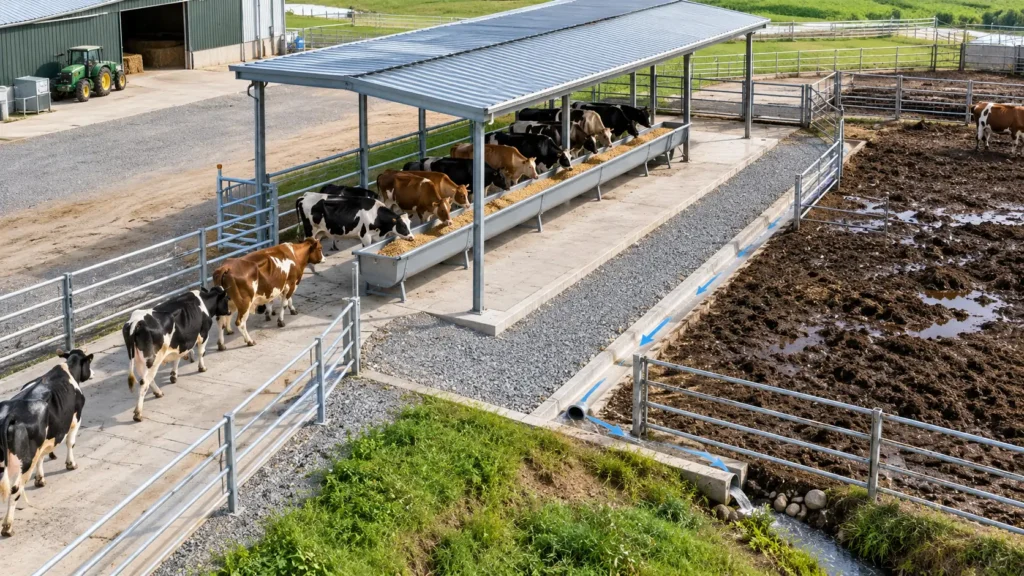
- Drainage: Position troughs on high ground or under a roof to prevent water pooling. Wet feed spoils quickly and can cause illness.
- Accessibility: Ensure a clear path for animals and equipment. A trough placed in a muddy corner will be avoided, leading to underfeeding or waste buildup.
- Contamination control: Keep troughs away from manure-heavy areas and runoff. Regular cleaning is easier if the trough isn’t in the direct path of rain or snow accumulation.
- Seasonal adjustments: In cold climates, consider freeze-resistant materials or heated troughs for liquid supplements. In hot weather, shade over the trough prevents feed spoilage and discomfort for animals standing in the sun.
A poorly placed feeding trough can cancel out the advantages of a good design. Take the time to think through daily traffic patterns before setting it in place.
Common Mistakes When Selecting or Using Feed Troughs
Many trough problems are preventable with a little planning. Avoid these frequent missteps:
- Choosing the wrong height: Too high and small animals stretch or cannot reach; too low and feed gets tossed out or trampled.
- Ignoring capacity: A trough that’s too short forces timid animals to wait or go hungry, increasing competition and stress.
- Not securing the trough: Lightweight plastic or metal troughs can tip when animals push on them. Secure them with stakes, brackets, or bolts.
- Poor drainage: Even a covered trough can collect condensation or rain. Ensure drain holes or a sloped floor if feeding wet feeds.
- Using materials that retain moisture: Untreated wood or cracked concrete absorbs moisture, leading to mold, bacteria, and odors that taint feed.
- Neglecting regular cleaning: Leftover grain attracts pests and ferments. A weekly scrub with a mild disinfectant keeps feed fresh and animals healthy.
- Forgetting about animal behavior: Goats jump, horses paw, and pigs root. Choose a design that can handle those instincts, or the trough will soon need replacement.
These points may seem obvious, but they’re often overlooked in the rush of daily farm work. A quick inspection every few weeks can catch early signs of wear or unsafe conditions.
When a Simple Feed Trough Is Not Enough
A basic feeding trough works well for many situations, but some farm tasks require more specialized equipment.
- Creep feeding calves: Young animals need a protected feeding area that adults cannot access. A simple trough won’t achieve that alone; a creep feeder with adjustable gate openings is needed.
- High-untake operations: Large dairies or feedlots often use feed bunks with automated delivery systems. A manual trough cannot keep up with the volume and consistency required.
- Mineral or supplement feeding: Free-choice minerals need weatherproof, separate compartments. Combined mineral-feeder designs protect supplements better than an open trough.
- Extreme weather: In regions with heavy snow or dust storms, enclosed or covered feeders maintain feed quality much better than open-top troughs.
There’s no rule that a feeding trough must be the only feeding solution. On many farms, a mix of troughs, racks, and self-feeders handles different feeding tasks without overcomplicating the system.
Final Takeaway
A feeding trough is a practical tool that belongs on almost every livestock farm. The right choice depends on the animals you feed, the type of feed, and how much time you have for cleaning and maintenance. Galvanized steel and concrete offer durability for large herds; plastic and wood provide flexibility and lower upfront cost for smaller operations or portable setups.
Always evaluate height, capacity, durability, and ease of cleaning before you buy or build. Observe how your animals eat and adjust placement or design to minimize waste and keep them calm. When a simple trough can’t do the job, consider specialized feeders as add-ons, not replacements. A well-chosen feeding trough makes daily chores easier, feed bills more predictable, and livestock healthier.
Frequently Asked Questions
A feeding trough holds dry feed, grain, or supplements for livestock off the ground, reducing waste and contamination while making feeding more efficient.
Allow about 18-24 inches per adult cow and 12-16 inches per sheep or goat when all animals eat at once. For free-choice feeding, you can size slightly smaller, but always avoid overcrowding.
It’s possible, but horses tend to paw and may injure themselves on sharp edges. Use a trough with rounded edges and ensure it’s heavy enough not to tip. Separate troughs for each species often reduce conflict.
Wipe out remaining feed daily. Scrub with water and a mild disinfectant weekly or whenever residues build up. In hot weather, clean more often to prevent mold and bacterial growth.
Heavy-duty plastic can work for calves or small groups, but mature cattle may chew, crack, or push it around. For full-sized cattle, galvanized steel or concrete is generally more reliable.
Concrete is the longest-lasting and most resistant to weather and animal impact, but it’s not portable. Galvanized steel is a strong, somewhat mobile alternative that still offers excellent durability with regular care.
Elevate the trough so the lip is at shoulder height for the smallest animal. Add a raised rail or edge above the trough, or use a design with slanted openings that discourage standing inside.
The most common errors are buying a trough that’s too short for the herd, placing it in a wet or muddy spot, and not securing it properly. Regular observation and a few simple adjustments usually fix these issues.
References
- University of Minnesota Extension guide to Stocking Density Outdoor Cow Areas
- University of Minnesota Extension guide to Efficiently Feeding Hay Cattle
- Penn State Extension guide to Feed Bunk Space in Automated Milking Systems
- Penn State Extension guide to Feeding Beef Cattle
Related Guides in This Category
- Sheep Feeder: What Changes by Animal Type and Farm Routine?
- Goat Feeder Hay: What Changes by Animal Type and Farm Routine?
- Hay Feeder vs Feed Trough: Which One Reduces Waste on Your Farm?
- Cow Feeding Trough: What Changes by Animal Type and Farm Routine?
- Types of Hay Feeder for Goats: Practical Options for Livestock Farms
- Types of Cow Hay Feeder: Practical Options for Livestock Farms
- How Round Bale Feeders Help Control Hay Waste in Cattle and Sheep Feeding
- Types of Horse Hay Feeders: Practical Options for Livestock Farms
- Cattle Feeders: What Changes by Animal Type and Farm Routine?
- Types of Goat Hay Feeder: Practical Options for Livestock Farms