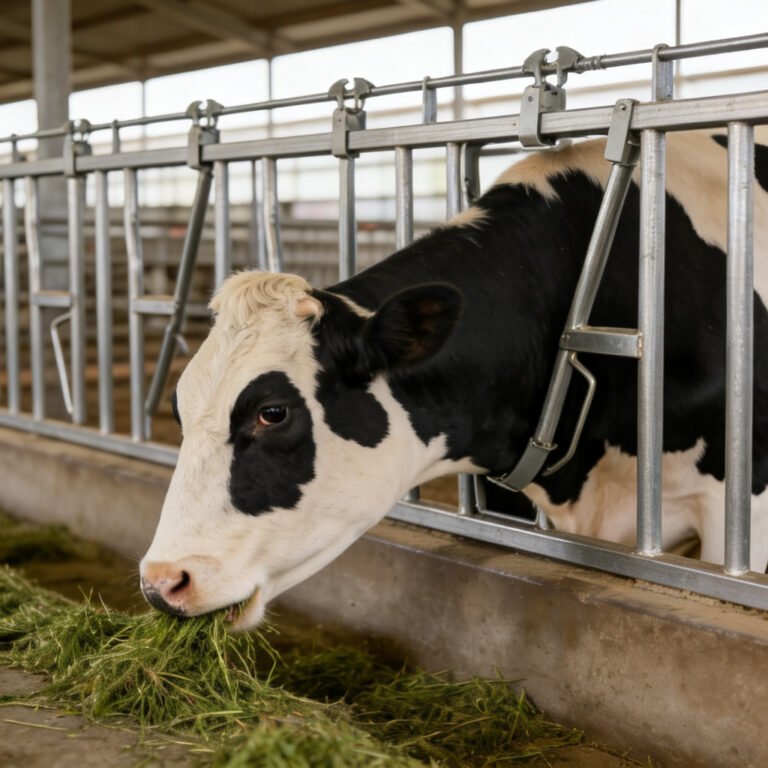
What Is a Cow Headlock and How Does It Work?
A cow headlock is a metal structure mounted along a feed barrier or a handling alley. It has a self-catching or manual mechanism that gently traps the cow’s neck when she lowers her head to eat. Once locked, the animal can be examined, vaccinated, bred, or simply identified without the need for extra restraint.
The basic working principle is simple: as the cow extends her head through the opening, she pushes against a yoke or bar. This triggers the locking mechanism, which closes around the neck. Most designs allow the cow to release herself if she backs up before the lock engages. Some headlocks have a manual release that lets the operator unlock one animal or a group at once.
When Is a Cow Headlock Used on a Farm?
Cow headlocks are used whenever a farmer needs to safely hold a cow in place for a short period. Common on-farm uses include:
- Feeding time restraint, allowing every animal to eat without being pushed away by dominant herd members
- Health checks such as body condition scoring, temperature checking, or examining eyes and feet
- Vaccination and injection routines
- Ear tagging and RFID tag reading
- Pregnancy diagnosis and artificial insemination
- Sorting and grouping animals based on visual or tag-based identification
- Minor veterinary procedures where safe head control is needed
Headlocks are especially valuable during vaccination days or herd health events, where dozens of animals must be handled quickly without high-stress chasing. According to the Beef Cattle Handbook, restraint equipment that allows workers to handle cattle quietly and efficiently reduces injury risk and improves labor productivity.
Types of Cow Headlocks: A Comparison Overview
Headlocks come in different styles, and the best choice depends on farm size, handling frequency, and budget. Below is a comparison of common headlock types.
| Headlock Type | Locking Action | Best For | Typical Use | Main Advantage | Main Limitation |
|---|---|---|---|---|---|
| Self-locking (automatic catch) | Spring-loaded, catches when cow pushes forward | High-traffic feeding barns, large herds | Daily feeding plus restraint | Fast, no operator needed to lock each animal | May not catch very timid or small animals consistently |
| Manual-locking | Operator must lock each cow individually | Small herds, occasional handling | Infrequent vet or sorting tasks | Lower cost, simple mechanism | Slower, requires person to walk along line |
| Single cow headlock | Individual unit, manual or self-locking | Hobby farms, one-animal care, isolation | Separate pen or chute area | Position anywhere, easy to install | Not efficient for group handling |
| Training headlock (adjustable yoke) | Wider opening, adjustable height | Heifers or cows new to headlocks | Acclimation period | Reduces fear, teaches cows to self-lock | Not suitable for heavy restraint work |
Self-locking headlocks are the most common choice on modern dairy and beef feedlot operations. They allow one person to handle a row of 20–30 cows in minutes. Manual headlocks are still found on smaller family farms where the number of animals does not justify the added cost of automatic catches.
Key Dimensions and Design Features to Compare
Not all headlocks fit every herd. Cow size, horn status, and neck width vary, so dimensions matter. Here are the key design features to evaluate:
- Height of the top rail: This determines whether larger cows can comfortably reach through. For Holstein cattle, a top rail height of around 60 inches is common, but it should be checked against actual herd measurements.
- Width of the head opening: Too narrow and cows will struggle; too wide and they may slip out. A typical opening for mature dairy cows is about 8 inches, adjustable for broader beef breeds.
- Neck bar or yoke shape: The bar should contact the neck without choking. Some designs have a U‑shaped yoke that distributes pressure more evenly.
- Mechanism type: Spring-loaded, gravity, or pneumatic. Spring-loaded self-locking mechanisms are the most reliable for daily use.
- Material and coating: Hot-dipped galvanized steel resists rust and manure corrosion better than painted steel. Tube thickness (e.g., 2‑inch square vs. 1.5‑inch) affects durability under cattle pressure.
- Group release feature: Some headlocks allow the operator to unlock an entire row at once, which saves time when releasing cattle after handling.
- Feed barrier integration: Headlocks are often built into a post-and-rail feed barrier. Ensure the overall structure aligns with existing barn posts or feed alley dimensions.
Accurate dimensions are critical. The Dairy Cattle Housing and Equipment handbook (Chapter 7, p. 89) notes that a poorly sized headlock can cause shoulder bruising and neck abrasions, leading to feed intake dips and submissive cow behaviors.
How to Select the Right Cow Headlock for Your Herd
Choosing a headlock is not a one-size-fits-all decision. Follow a logical selection path based on your farm priorities:
- Define the primary task: Is it for daily feeding restraint, monthly health work, or occasional sorting? If it is used every day, durability and ease of locking matter most.
- Measure your largest cow: Width at the neck, shoulder height, and horn spread (if horned). Add a small allowance so the animal can enter without forcing.
- Count how many headlock positions you need: Typically one per adult cow in the pen, unless you are using a separate handling facility. Overcrowding at the feed barrier leads to fighting and injuries.
- Match the mechanism to labor availability: Self-locking headlocks reduce labor but cost more. If you always have two or three people available during handling, manual locking might be acceptable.
- Consider future herd changes: If you might switch from Holstein to Jersey or beef crosses, get headlocks with adjustable widths.
- Check the barn structure: Ensure the feed barrier and posts can handle the leverage force when a cow pulls backward. Headlocks that mount on multiple horizontal rails are more stable.
Daily Management and Maintenance Checklist
Even the best headlock needs regular inspection and care. Use this checklist as part of your barn routine:
| Task | Frequency | What to Look For |
|---|---|---|
| Check locking mechanism | Daily before use | Binding, rust, or springs that no longer close fully |
| Inspect welds and joints | Weekly | Cracks, broken bolts, or bent bars |
| Lubricate moving parts | Monthly | Use food-grade lubricant on pins and pivot points |
| Clean manure buildup | As needed | Accumulated manure can prevent proper locking and cause corrosion |
| Test group release function | Weekly | Ensure the release bar moves freely and unlocks all headlocks simultaneously |
| Observe cow behavior | Daily | If cows consistently avoid certain positions, inspect that headlock for pinching or noise |
A quick walk along the headlock line during feeding can catch most problems early. Pay special attention to noisy mechanisms, as startled cows may refuse to enter next time.
Common Mistakes to Avoid When Using Cow Headlocks
Operators often blame the headlock when the real problem is setup or handling. Avoid these common errors:
- Forcing cows too quickly: Cows need time to learn how to self-lock. Let them explore the opening without pressure for a few days before starting a full herd health session.
- Using headlocks for long-term restraint: Headlocks are not designed to hold a cow for hours. Prolonged restraint can cause stress, dehydration, and neck rubs.
- Ignoring size mismatches: A headlock set for large Holsteins will not hold a Jersey cow securely, and a smaller headlock can injure a beef bull. Adjust or choose the right size.
- Neglecting the group release: In an emergency (fire, storm, aggressive animal), you must be able to free all cows instantly. Train all workers on the release action.
- Mounting on weak posts: A 1500‑pound cow can exert immense force. Headlocks should be mounted on sturdy posts or heavy-duty feed barrier rails set in concrete or properly tamped ground.
- Skipping training for heifers: First-lactation heifers may panic if they suddenly feel trapped. Use wider openings or training headlocks until they become confident.
Well-managed headlocks actually reduce stress because cows learn the routine. A study cited in the Journal of Dairy Science (Vol. 103, 2020, pp. 1234–1242) found that cows trained to self-locking feed barriers experienced lower cortisol levels during handling compared to those caught by surprise.
Cow Headlocks vs. Other Restraint Methods
Headlocks are just one way to hold a cow still. Here is how they compare to common alternatives:
| Restraint Method | Best Use | Advantage | Limitation |
|---|---|---|---|
| Headlock | Row feeding, herd health work | Handles multiple cows at once, hands-free once locked | Requires proper installation and cow training |
| Squeeze chute | Individual procedures, vet work | Full-body restraint, more secure | Time-consuming, cow must be driven in one at a time |
| Halter and tie | Single animal, trained cow | Simple, low cost | Labor intensive, not suited for groups, safety risk if cow rears |
| Stanchion or tie stall | Indoor show cattle, sick cow care | Familiar environment for cow | Permanent installation, limited capacity |
Headlocks strike a balance between speed and control, which is why they are favored in larger dairies and feedlots. For intense procedures like foot trimming or bull ring placement, a squeeze chute is still the safer option.
Safety Considerations for Both Cows and Handlers
Safety is not optional. Follow these guidelines every time you use a headlock line:
- Never stand directly in front of a locked cow. Cows can still thrust their heads upward or sideways and cause facial injuries.
- Approach from a 45‑degree angle behind the shoulder whenever possible.
- Keep bystanders and children away from the headlock line during active handling.
- Check for pinch points before putting your hand near the yoke; wear gloves.
- Watch for horned animals: Horns can get caught in the headlock or between bars, creating a panic situation. If you have mixed herds, use wide‑opening designs or dehorn.
- Ensure the release lever is accessible from both ends of the row, and that all workers know how to use it.
- Inspect the ground surface: Wet, slippery floors increase the chance of a cow slipping and choking in a headlock. Keep floors grooved or apply coarse traction material.
Final Takeaway
A cow headlock is much more than a feed barrier attachment—it is a management tool that helps you handle cattle safely, quickly, and with less stress. The key to success is selecting the right headlock type and size for your herd, installing it on a solid structure, training cows patiently, and following a daily maintenance routine. When used correctly, headlocks improve labor efficiency and animal welfare. When neglected or misused, they can cause injury and anxiety. Match the tool to the task, and your headlock system will pay you back in calmer cows and smoother workdays.
Frequently Asked Questions
Cost varies by type, material, and number of positions. Self-locking headlocks for a 10‑cow line typically cost more than manual ones due to the mechanism, but exact prices depend on gauge steel and brand. Always budget for proper posts and installation.
Yes, many farmers install headlocks themselves if they have welding and construction experience. However, the structure must handle heavy loads. If you are unsure about post integrity or alignment, consider hiring a farm building contractor.
Holsteins usually need an opening width of about 8 inches and a higher top rail, while Jerseys may need a narrower opening (around 7 inches) and lower rail. Measure your cows’ neck widths and consult the headlock manufacturer’s sizing chart.
Horns can get caught, causing panic. Use headlocks with wider yoke openings or train cows to enter slowly. In some cases, it is safer to dehorn or use a separate restraint method for horned animals.
Moving parts should be lubricated monthly with a food-grade product. Visual checks for damage and proper locking should be done daily, especially if the headlocks are used frequently.
The biggest mistake is not giving cows time to learn. Forcing animals into a headlock line without a training period leads to fear, refusals, and potential injuries. Let cows explore the open headlocks for several days before first use.
Not recommended. Bulls are stronger and their neck and head shape differ. A bull may not fit properly into a standard cow headlock, and the mechanism may fail under his force. Use a heavy-duty bull gate or dedicated bull restraint system instead.
A few minutes for health checks or feeding is safe. Do not leave a cow locked for hours. Prolonged restraint causes stress, and the animal may injure itself trying to escape. Always release cows as soon as the task is done.
References
- Penn State Extension guide to Feed Bunk Space in Automated Milking Systems
- University of Minnesota Extension guide to Stocking Density Outdoor Cow Areas
- Oklahoma State Extension guide to Corral and Working Facilities for Beef Cattle
- Oklahoma State Extension guide to Cattle Handling Safety in Working Facilities