
Practical Overview for Livestock Farms
Grooming a horse is more than a cosmetic routine – it supports skin health, circulation, and the bond between horse and handler. For stable owners, choosing the right horse brush is essential, but the variety of brushes can be confusing. This guide breaks down the brush types you actually need, explains what each one does, and helps you avoid buying tools that sit unused in the tack room.
The Real Purpose of Grooming Horses
Equine care handbooks consistently note that daily grooming improves the horse’s overall condition and provides an opportunity to spot skin issues or wounds early. A good grooming session removes dirt, loose hair, and parasites while stimulating natural oil production for a shiny coat. It also relaxes muscles and reinforces trust between handler and horse. For stable owners, grooming is a practical health check, not just show-day preparation.
Horse Brush Types at a Glance
Understanding the main brush categories helps you make informed choices instead of buying a full kit you never use. The table below summarizes the core types every owner should know.
| Brush Type | Bristle Material | Primary Use | Best for Coat Type | Frequency |
|---|---|---|---|---|
| Rubber Curry Comb | Rubber or plastic nubs | Loosening dirt and shedding hair; massage | All horses; start of grooming | Daily, gentle pressure |
| Hard Brush (Dandy Brush) | Stiff natural or synthetic bristles | Removing dried mud and caked dirt from the body | Coarse coats, muddy horses | As needed |
| Soft Brush (Body Brush) | Soft natural or synthetic bristles | Removing fine dust, smoothing coat, adding shine | Sensitive skin, clipped horses, final finish | Daily or after rinse |
| Mane & Tail Brush | Wide-spaced teeth or soft bristles | Detangling mane and tail without breaking hair | All horses | As needed |
| Face Brush | Very soft bristles, small size | Gently cleaning face, ears, and sensitive areas | All; careful around eyes | As needed |
Must-Have Brushes for Every Stable Owner
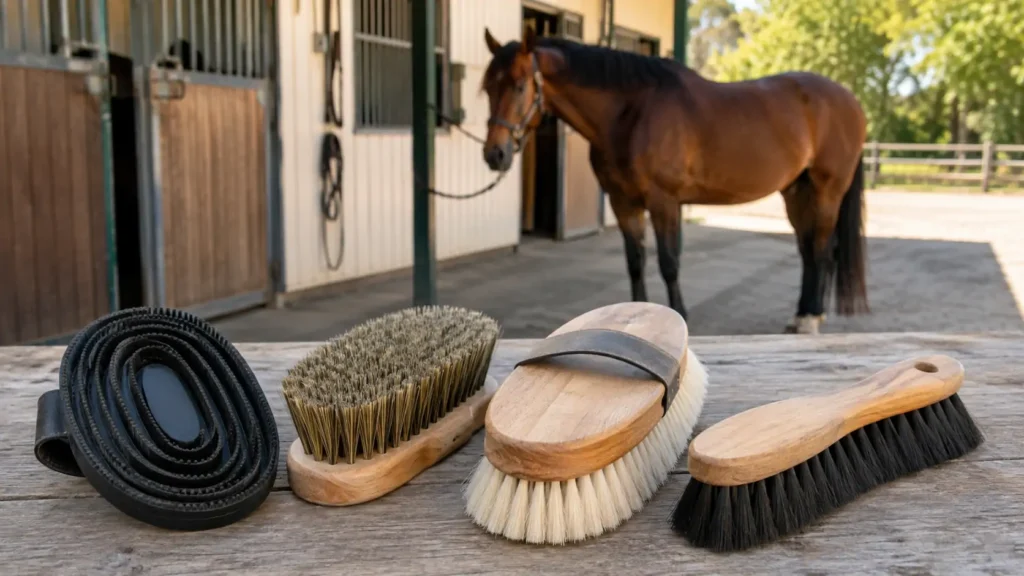
A working stable does not need a large collection; these four brushes cover 90% of grooming tasks:
- Rubber curry comb – loosens dirt and hair, stimulates skin.
- Hard brush (dandy brush) – removes mud and dried sweat from the body.
- Soft brush (body brush) – smooths the coat and adds shine.
- Mane and tail brush – detangles without pulling or breaking hair.
A face brush is optional but useful for sensitive horses that flinch during head grooming. Starting with this minimal kit keeps your tack room organized and your grooming efficient.
Matching Horse Brushes to Coat Type and Season
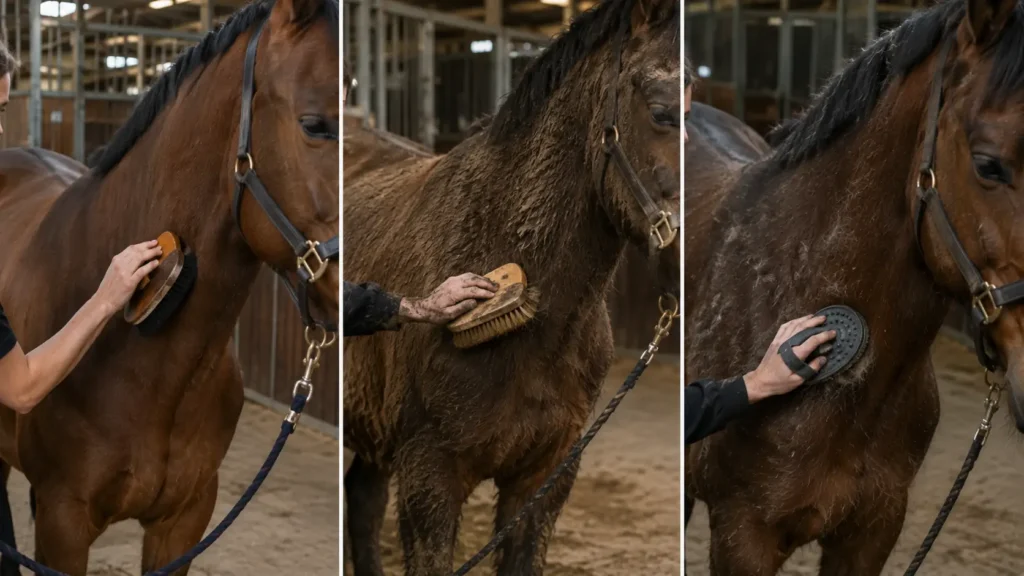
A horse’s coat changes with the seasons and care level, and brush choice should adapt. Short summer coats and clipped horses usually need softer bristles to avoid skin irritation. In winter, thick coats and muddy conditions call for stiffer brushes like the dandy brush to break up caked dirt. During shedding season, a rubber curry comb used in circular motions lifts loose hair faster than a body brush alone. Thoroughbreds and other thin-skinned breeds require extra care, favoring medium or soft bristles even for general use.
Grooming Brushes vs. Shedding Tools: What’s the Difference?
Shedding blades, grooming blocks, and loop shedding tools are not brushes – they are heavy-duty seasonal helpers designed to remove large volumes of loose hair quickly. A horse brush, on the other hand, is meant for regular dirt removal and coat finishing. Use shedding tools during peak shedding periods and then follow with a brush routine to smooth the remaining hair. Both have their place, but no single brush replaces a good shedding blade when a winter coat is letting go.
Why Horse Brushes Are Different from Goat, Sheep, or Camel Brushes
Not all livestock brushes are interchangeable. Horses have relatively thick skin but react poorly to stiff bristles on bony areas like hips and shoulders. Their grooming tools strike a balance between scrubbing power and comfort. Goats have thin, sensitive skin and require very soft brushes; a horse dandy brush can easily cause irritation or panic. Sheep rely on lanolin in their wool – minimal brushing is needed so natural fleece qualities aren’t damaged. Camels and other camelids have dense coats with long hair, often requiring specialized grooming tools distinct from horse brushes. Using the same brush across species can spread skin issues and cause discomfort, so separate, species‑appropriate tools are the best practice.
Common Grooming Mistakes to Avoid
Even experienced owners can fall into habits that reduce grooming effectiveness or cause harm:
- Brushing too aggressively over bony areas – use softer tools on legs, hips, and spine.
- Using the same brush on multiple horses without cleaning – this can spread fungal infections like ringworm.
- Applying a hard brush to the face – always use a face brush or soft cloth.
- Neglecting brush hygiene – caked‑on dirt and hair harbors bacteria; clean brushes weekly.
- Over‑brushing a wet, muddy coat – this can push grit into the skin and cause scurf. Let mud dry and brush gently.
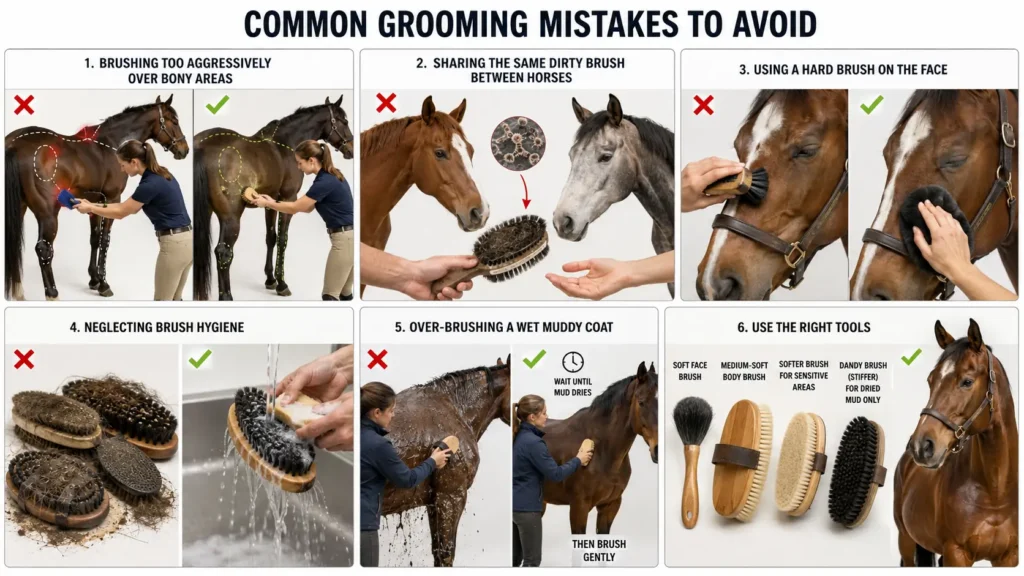
Veterinary dermatology resources remind owners that a simple brush swap between horses is a known risk factor for skin disease outbreaks in barns.
How to Build a Practical Grooming Kit Without Overbuying
Focus on function, not fashion. A basic, quality kit includes:
- Rubber curry comb
- Hard brush (dandy)
- Soft body brush
- Mane and tail comb/brush
- Hoof pick (not a brush, but essential)
Add a sweat scraper after winter riding, and a shedding blade seasonally. Extra‑fine finishing brushes, cactus cloths, or polishing mitts are nice but rarely needed in a working stable. Invest in brushes with durable handles and firmly set bristles – they save money and reduce plastic waste over time.
Frequently Asked Questions
A minimal set includes a rubber curry comb, a hard brush (dandy), a soft body brush, and a mane and tail brush. These cover daily dirt, mud, shedding, and detangling.
It is not recommended. Sharing brushes can spread skin infections like ringworm. Ideally, each horse should have its own set, or brushes should be disinfected between uses.
Bristle quality and handle durability matter. Cheap brushes may shed bristles or break quickly. A well‑made brush with secure bristles and a comfortable grip can save money over time.
Remove hair and dirt after each use. A deep clean with mild soap and water every two weeks helps prevent bacterial buildup. Ensure brushes are completely dry before the next use to avoid musty bristles.
Horse brushes are often stiffer and larger to handle bigger bodies and thicker coats. Goat skin is thinner and more sensitive, so goat brushes are typically softer, smaller, and designed for a lighter touch.
Yes, especially a rubber curry comb. But if your horse sheds heavily, adding a dedicated shedding blade or grooming loop can reduce time and stress on the brush.
A body brush alone may not remove caked mud or lift dried sweat. Most horses benefit from a curry comb first to loosen dirt, then a body brush for finishing.
References
- Penn State Extension guide to Building from the Ground Up Safe Ground Handling of Horses
- University of Minnesota Extension guide to Caring Horses Budget
- University of Minnesota Extension guide to Preparing Barn Disaster
- Penn State Extension guide to Tick Safer Horses How to Do a Tick Check on Your Horse
Related Guides in This Category
- Types of Horse Brushes: Practical Options for Livestock Farms
- What Is a Cow Brush and Why Do Cattle Use It?
- Horse Grooming Kit Bag: What Changes by Animal Type and Farm Routine?
- Horse Grooming Kit: What Changes by Animal Type and Farm Routine?
- Horse Grooming Items: What Changes by Animal Type and Farm Routine?
- Cow Scratcher: Practical Farm Use, Selection and Daily Management Basics
- Brush Horse Grooming: What Changes by Animal Type and Farm Routine?
- Horse Grooming Supplies: What Changes by Animal Type and Farm Routine?
- Cattle Brush vs Cow Scratcher: Which Grooming Setup Fits Your Barn?
- Horse Grooming Products: What Changes by Animal Type and Farm Routine?