
Milking system basics
Open this practical guide topic for selection, setup, maintenance, and daily-use context.
Your Trusted Source For Livestock Farming Equipment
Complete dairy milking systems for farms of all sizes — parallel parlors, rotary systems, portable milkers, and bulk cooling tanks. Food-grade stainless steel, custom-configured to your herd and barn layout.
Use these guide categories to compare selection, setup, maintenance, and daily use topics related to this equipment category.
Open this practical guide topic for selection, setup, maintenance, and daily-use context.
Open this practical guide topic for selection, setup, maintenance, and daily-use context.
Open this practical guide topic for selection, setup, maintenance, and daily-use context.
Open this practical guide topic for selection, setup, maintenance, and daily-use context.
Open this practical guide topic for selection, setup, maintenance, and daily-use context.
Efficient herringbone (fishbone) milking parlors with excellent udder access. Ideal for medium to large dairy herds.
Custom-configured parallel milking parlors for dairy cattle, sheep, and goats. Stainless steel, high throughput, and custom stall counts to fit your barn.
Portable milking machines for small cow, goat, sheep, camel, yak, and donkey farms. Compare vacuum pump and piston type bucket milkers, single…
High-capacity rotary milking equipment for large-scale commercial dairy farms. Maximize cows milked per hour.
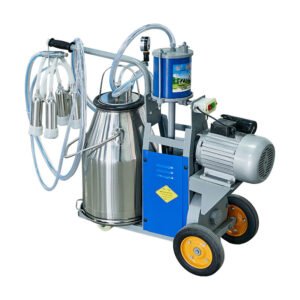
This piston type portable milking machine is designed for small cow, goat, and sheep farms that need a compact, mobile, and easy-to-maintain milking solution. It is available in Type I single bucket and Type II double bucket configurations, with stainless steel milk buckets, piston pump, vacuum gauge, pressure regulator valve, food-grade liners, milk claw, teat […]
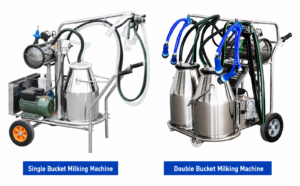
This vacuum pump portable milking machine is designed for small and medium dairy farms that need a flexible, hygienic, and easy-to-move milking solution. It can be configured as a portable cow milking machine, portable goat milking machine, sheep milking machine, or camel milking machine with suitable teat cups, liners, and milking clusters. Single bucket and […]
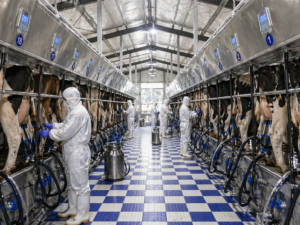
Maximize your dairy throughput with a custom-configured parallel milking parlor designed for medium to large herds. The side-by-side stall layout fits more milking units into a shorter building than any other design, while the central operator pit enables one person to manage an entire milking shift efficiently. Constructed from food-grade 304 stainless steel with silicone milk tubes, this system combines pneumatic […]