Main Types and Practical Farm Uses
Providing unfrozen water to livestock during winter is a basic daily need on most farms. Heated watering troughs are a practical way to keep water available without constant ice-breaking, but there is no single design that fits every animal, climate, or farm layout. This article walks through the most common types of heated watering troughs used on livestock farms, explains when each option makes sense, and outlines what to check before choosing a system.
Why Heated Watering Troughs Matter on Livestock Farms
Water intake drops when animals must wait for ice to melt or when they can only drink a few times a day. In cold weather, that can reduce feed intake, slow growth, and lower milk production. According to the Dairy Cattle Science textbook (4th Edition, Chapter on Water Systems, p. 230), consistent access to clean water is directly tied to animal health and performance. Heated troughs remove one major winter obstacle by keeping water at a drinkable temperature without constant manual labor.
Main Types of Heated Watering Troughs
Most heated watering troughs fall into a few functional categories. The right type depends on power availability, herd size, animal species, and how cold your winters really get.
Electric immersion heater in a standard troughA submersible heating element is placed directly into a conventional watering trough. This is often the lowest-cost way to add heat to an existing setup. The heater must be protected from animal contact, and the trough needs an accessible weather-protected electrical outlet with GFCI protection. Immersion heaters work best when the trough is sheltered and the heater is sized correctly for the water volume.
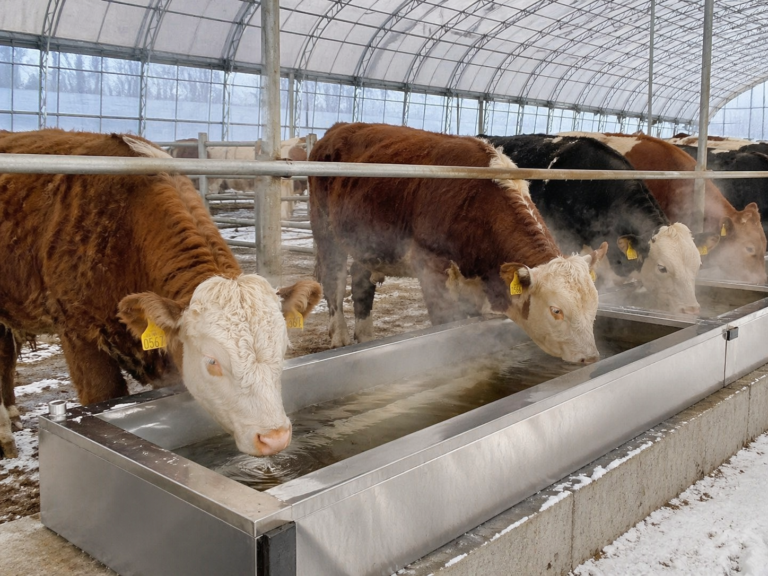
Integrated heated trough (built‑in heating element)These units have the heating element and insulation built into the trough shell from the factory. A thermostat usually controls the element, and the insulation reduces heat loss. Integrated heated troughs are more energy-efficient than an uninsulated tank with a drop-in heater, and they are designed to keep the cord and heating element away from livestock. They are a better long-term choice for permanent winter watering sites, especially for larger cattle herds.
Energy‑free or partially insulated troughs (geothermal/solar)These designs use heavy insulation, a buried water pipe to capture ground heat, or a small solar panel to prevent freezing without a continuous external power source. They can work well in moderate cold climates but may struggle in prolonged sub‑zero temperatures. They are most attractive for remote pastures where running electricity is expensive or impossible. Annual average ground temperatures must stay high enough to keep the water above freezing.
Automatic heated waterers (drinking cups)These deliver water on demand through a small heated basin. Because only a small volume is heated, they are energy efficient and keep the water cleaner. They work best for small herds or individual animals where a large trough is not needed. Some models are designed specifically for sheep, goats, or calves with low drinking level and reduced drowning risk.
| Type | Power Source | Best For | Installation | Maintenance | Key Advantage | Key Limitation |
|---|---|---|---|---|---|---|
| Electric immersion heater | Electric (120V or 240V) | Existing troughs, temporary setups | Plug‑in, requires GFCI | Check element for mineral crust, inspect cord | Low initial cost, flexible | Exposed cord and element, less energy efficient |
| Integrated heated trough | Electric (120V or 240V) | Permanent sites, cattle herds | Poured concrete pad or gravel base | Clean basin, check thermostat | Energy efficient, animal‑safe design | Higher upfront cost, fixed location |
| Energy‑free / geothermal | Ground heat / solar | Remote pastures, moderate cold | Buried water line, heavy insulation | Inspect insulation, clear solar panel | No monthly electricity cost | Limited performance in extreme cold |
| Automatic heated waterer | Electric (120V or 240V) | Small herds, sheep, goats, calves | Mount on wall or stand, plumbed waterline | Clean bowl, check valve | Very energy efficient, clean water | Small capacity, not ideal for large cattle herds |
Matching Trough Type to Your Livestock
Different animals drink differently, and that affects which heated watering troughs work best.
- Cattle: Need large volumes of water quickly. A low‑lip integrated heated trough or a robust immersion‑heated tank with animal protection works well. The trough must withstand pushing and rubbing.
- Sheep and goats: Smaller animals risk drowning in deep troughs. Automatic heated waterers with shallow bowls or integrated troughs with low water level settings are safer. Avoid open immersion heaters where wool or horns can reach the element.
- Horses: Some horses are wary of electric cords or heater hum. Integrated insulated troughs with enclosed heating elements or energy‑free designs are often preferred to reduce risk of shock or injury.
- Calves and youngstock: Need easy access and consistent water temperature. Heated pail‑style waterers or small automatic cups are common.
Key Considerations Before Choosing a Heated Watering Trough
Start with your farm’s real conditions, not just the label on a product.
- Winter severity: How many days per year stay below freezing, and how low does the temperature go? A geothermal trough that works at 20°F may fail at -10°F.
- Number of animals: A small automatic waterer that serves five calves will not keep up with 50 cows.
- Electricity access: If the watering site is far from a power source, an energy‑free option or a solar‑powered system may be the only realistic choice.
- Water source: Some troughs connect to a pressurized water line; others are filled by hand or from a storage tank.
- Energy efficiency: A well‑insulated trough with a thermostat will use less electricity over a winter than an open tank heater.
- Safety certifications: Look for equipment that meets relevant electrical safety standards (e.g., UL listed) and is designed for wet, outdoor farm use.
- Animal behavior: Cattle can damage exposed cords or heaters. Choose a design that keeps electrical parts out of reach.
Installation and Placement Best Practices
Even a good heated trough can fail if it is placed badly or wired incorrectly.
- Place the trough in a sheltered area to reduce wind chill and freeze risk.
- Always use a GFCI‑protected circuit and enclosed outdoor‑rated outlets.
- Mount troughs on a stable, level base—concrete pad, compacted gravel, or treated timber—to prevent sinking and tipping.
- Provide an insulated water supply line if the line is above frost depth.
- Angle the trough slightly toward a drain or gravel bed so loose water does not pool and freeze around the base.
- Protect power cords with rigid conduit or heavy‑duty covers where they might be stepped on or rubbed.
Common Mistakes to Avoid
- Using a household extension cord instead of a permanent outdoor circuit. This is a fire and shock hazard.
- Under‑sizing the heater for the water volume. A heater rated for 50 gallons will struggle in a 150‑gallon tank in deep cold.
- Ignoring the thermostat. A missing or broken thermostat can waste power or allow freezing.
- Placing the trough in an open windy spot with no shelter. Wind strips away heat much faster.
- Skipping regular cleaning. Mineral buildup and algae growth reduce heating efficiency and water quality.
- Forgetting to check the heating element for damage after cattle or other animals have pushed against the trough.
Maintenance and Safety Checks
A quick walkabout once a week in the coldest months prevents most failures.
- Inspect the heating element and power cord for cracks, bite marks, or exposed wire.
- Test the thermostat by turning the temperature setting down and checking that the element cycles off.
- Check that the ground rod and GFCI outlet are working properly.
- Drain and scrub the trough regularly to remove mineral scale, algae, and debris.
- Verify that insulation panels, covers, or float enclosures are securely in place.
- Watch animal behavior around the trough—hesitation to drink may signal a stray voltage problem.
Final Takeaway
There is no universal heated watering trough. For a remote pasture with no electricity, a well‑insulated geothermal or solar trough may be the only practical choice. For a permanent cattle yard near the barn, an integrated heated trough with a thermostat will likely save time and energy over the years. For small groups of sheep or calves, an automatic heated waterer keeps the water clean and the energy bill low. Match the trough type to the animals, the climate, and the real farm infrastructure you have in place.
Frequently Asked Questions
Electric immersion heaters, integrated heated troughs with built‑in insulation, energy‑free geothermal/solar troughs, and automatic heated waterers are the most practical types used on livestock farms.
Yes, but the trough must be sturdy, the heater must be protected from animals, and you need a GFCI‑protected outdoor circuit. Uninsulated tanks lose heat quickly, so a thermostat and a shelter or cover are recommended.
Integrated heated troughs with a low lip and sturdy construction work well for cattle because they handle the high water demand and physical contact. An immersion heater in a large sturdy tank can also work if electrical safety is managed.
They can work in moderate cold if the ground temperature stays above freezing. In areas with long stretches below 0°F, they often need a supplemental heat source or careful attention to insulation and water flow.
Operating cost depends on electricity rates, water volume, insulation, and thermostat setting. A well‑insulated 100‑gallon integrated trough often costs less to run than an uninsulated tank with a drop‑in heater. Energy‑free troughs eliminate the electric bill but have a higher purchase cost.
Yes, but choose a model with a shallow bowl and an enclosed heating element to prevent wool or horns from contacting hot surfaces. Automatic heated cups designed for small livestock reduce drowning risk and keep water cleaner.
A UL‑listed heater, a built‑in thermostat, a GFCI‑protected circuit, a sealed power cord that animals cannot reach, and a sturdy base that prevents tipping. Regularly checking these features is just as important as the design itself.
References
- University of Minnesota Extension guide to Managing Dairy Cattle Cold Weather
- University of Minnesota Extension guide to Heat Stress Dairy Cattle
- University of Minnesota Extension guide to Farmbytes Watering System Design Rotational Grazing
- Penn State Extension guide to Harmful Algal Blooms Safety Testing and Management Options
Related Guides in This Category
- Horse Trough Heater: What Changes by Animal Type and Farm Routine?
- Common Automatic Horse Waterer No Freeze Problems and What Farmers Should Check First
- Types of Heated Stainless Steel Water Bowl: Practical Options for Livestock Farms
- Common Solar Water Heater for Livestock Problems and What Farmers Should Check First
- Heated Horse Trough: What Changes by Animal Type and Farm Routine?
- Common Frost Free Horse Waterer Problems and What Farmers Should Check First
- Types of Livestock Water Heater: Practical Options for Livestock Farms
- Common Solar Horse Trough Heater Problems and What Farmers Should Check First
- Common Solar Powered Livestock Water Heater Problems and What Farmers Should Check First
- Heated Horse Water Trough: What Changes by Animal Type and Farm Routine?