What Is a Portable Cattle Chute?
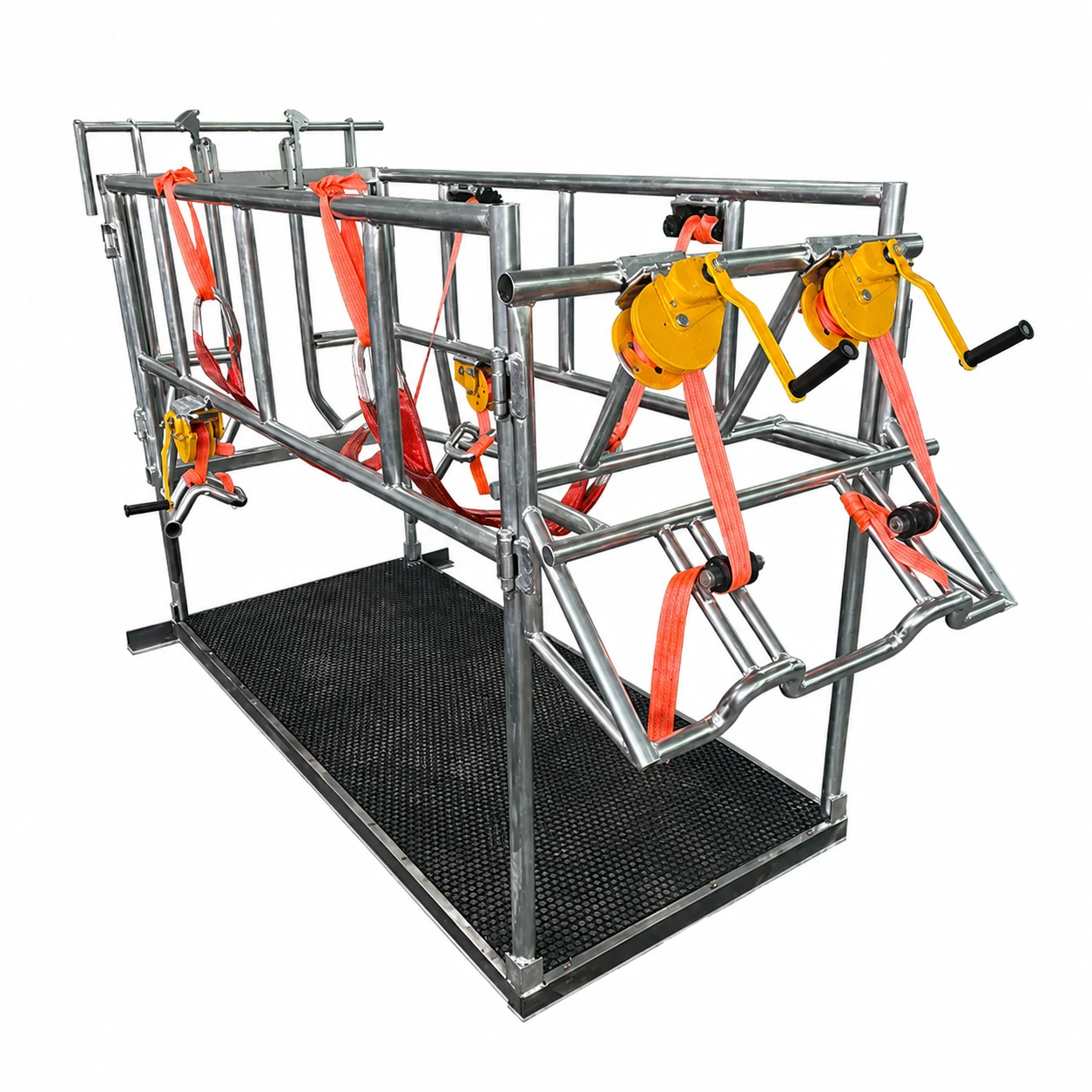
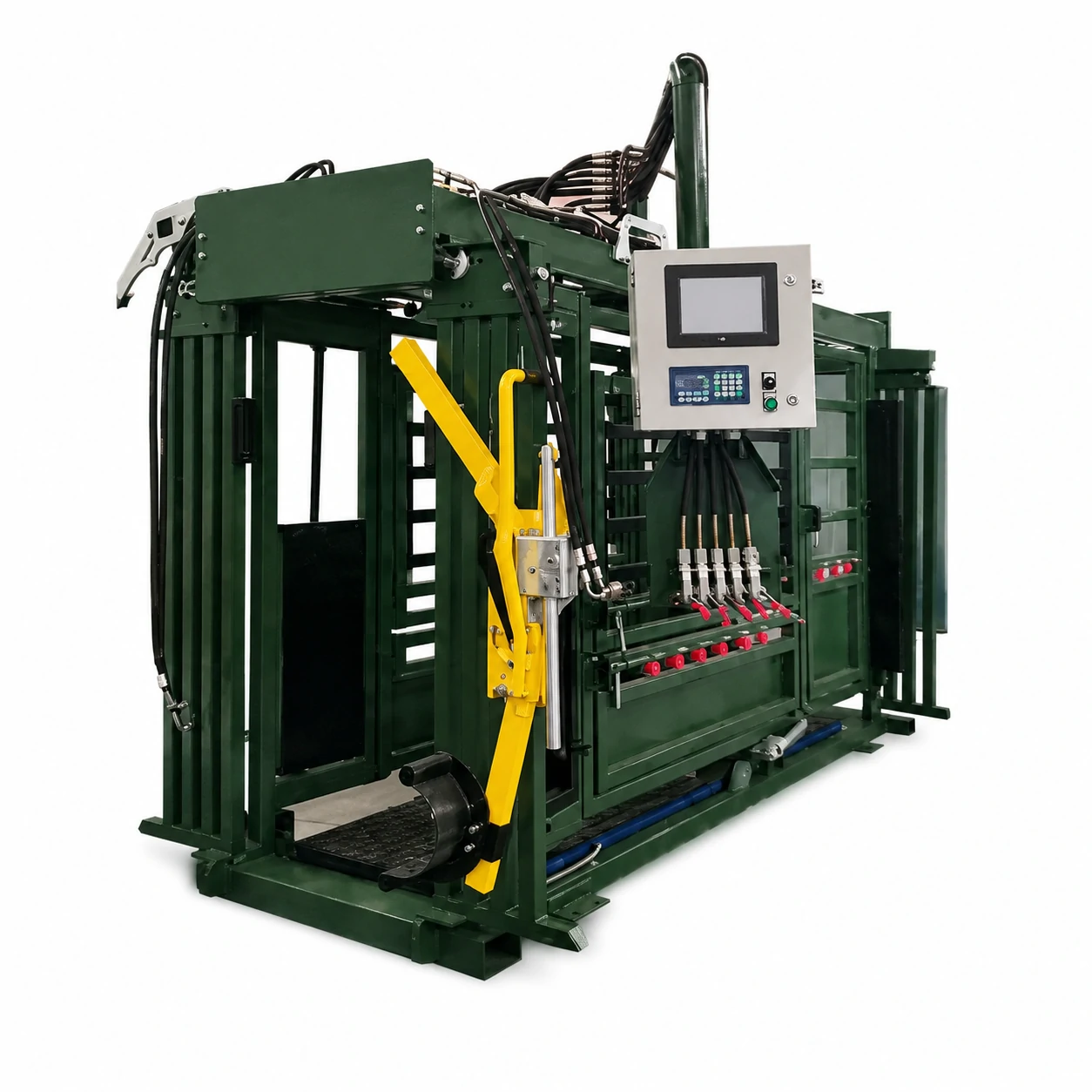
A portable cattle chute is a movable restraint device used for holding cattle securely during management procedures. Unlike a permanent facility, a portable chute can be towed or hauled from pasture to pasture, or even between farms. Most models include a squeeze mechanism, a head gate, and a trailer or skid mount. They come in manual and hydraulic versions, with some offering integrated scales or palpation cages. According to Penn State Extension, mobile handling equipment can be especially useful for operations that use multiple grazing sites or need to process cattle in remote locations without fixed infrastructure.
What Is a Fixed Cattle Handling System?
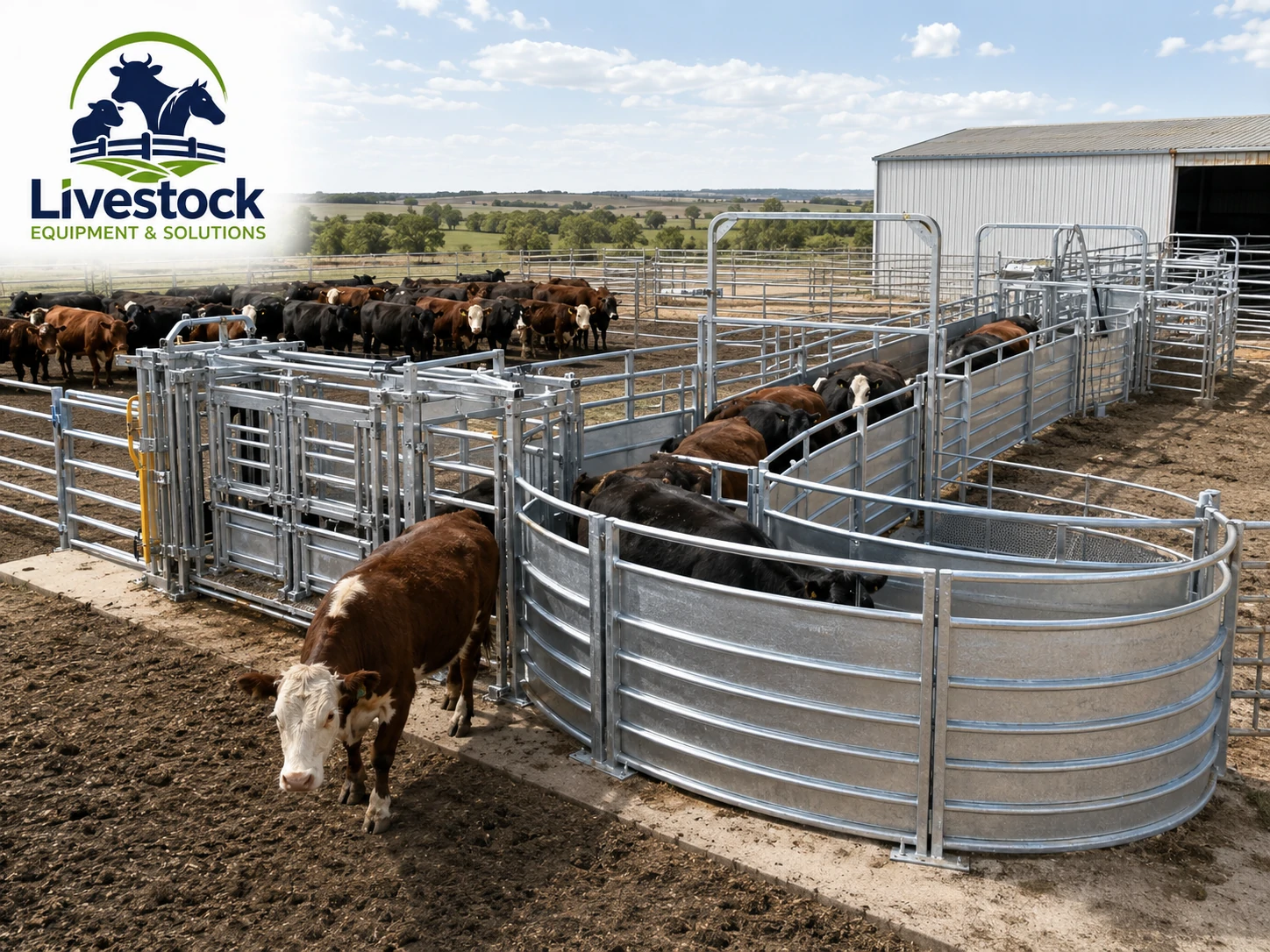
A fixed handling system is a permanent setup, typically built in one central location on the farm. These systems often include a combination of holding pens, crowding tubs, alleyways, squeeze chutes, and loading ramps. They are constructed from heavy steel, concrete, or wood, and are designed to handle large volumes of cattle efficiently over many years. The USDA Natural Resources Conservation Service (NRCS) provides design guidance for cattle handling facilities, emphasizing durability and animal flow. Fixed systems are a long-term investment that can improve workflow for operations that process cattle frequently.
Our cattle handling system product page lists the standard dimensions, materials and options.
Key Differences Between Portable and Fixed Systems
Understanding the core differences helps clarify which system aligns with your operational goals. The table below highlights the main points of comparison.
| Feature | Portable Cattle Chute | Fixed Handling System |
|---|---|---|
| Mobility | Easily moved between locations | Permanent, single location |
| Installation | Minimal setup required | Significant site preparation and construction |
| Cost | Lower upfront cost; can be shared | Higher initial investment; long-term value for frequent use |
| Capacity | Suited for smaller herds (under 150 head) | Handles larger herds and continuous processing |
| Flexibility | Adapts to changing pasture needs | Fixed layout, but can be expanded |
| Durability | Sturdy but lighter construction | Heavy-duty, built to last decades |
| Animal Flow | Setup-dependent; may require more labor | Engineered for efficient, low-stress movement |
| Maintenance | Lower overall, but specialized parts | Routine upkeep, but materials are standard |
When a Portable Cattle Chute Makes Sense
- Small to mid-sized herds – If you’re handling fewer than 150 head at a time, a portable chute often provides adequate capacity without the expense of a fixed facility.
- Leased land or multiple grazing sites – A portable unit can be moved to where the cattle are, saving you from trailing animals long distances.
- Limited budget – You can start with a portable chute and upgrade later, or share one among neighbors.
- Seasonal or occasional use – For operations that only process cattle a few times a year, portability avoids tying up capital in an underused fixed system.
- One-person operations – Many portable chutes are designed for single-handler use, reducing the need for extra labor during setup.
When a Fixed Handling System Is the Better Choice
- Large herds (200+) – High-volume operations benefit from the speed and flow of a permanent system. The Oklahoma State University Extension notes that well-designed facilities reduce processing time by up to 50%.
- Frequent, repetitive tasks – Dairy farms, feedlots, and large cow-calf operations that handle cattle weekly or daily need the reliability of a fixed setup.
- Integrated features – Fixed systems can easily incorporate scales, sort gates, and hydraulic chutes that are cumbersome to move.
- Terrain limitations – Steep, muddy, or rough terrain may restrict where a portable chute can be safely placed.
- Long-term stability – If you own your land and plan to be in business for decades, a fixed facility is a one-time investment that pays off over time.
Seasonal Operations and Small Crews
Why mobility matters on seasonal farms
Seasonal operations often move cattle across BLM allotments, distant leased ground, or between high-country summer pastures and lowland winter feed grounds. Building a fixed system at each location isn’t practical. A portable cattle chute allows you to set up a temporary alley and processing pen right where the cattle are. This eliminates the stress and weight loss of a long drive home, and it means you can perform health protocols on schedule, regardless of where the herd is grazing. Many producers also share a portable chute among family members or neighbors, spreading the cost.
Labor and safety with a small crew
Both systems can be safe and labor-efficient, but they excel differently. A portable chute often requires one person to operate the chute while another brings cattle; however, the ability to reposition the chute near the pen can cut walking time. A fixed system, if designed with proper gates and a curved alley, can allow one person to run the squeeze, sort animals, and load out, as the layout does the crowd work for you. The key is facility design, not just the chute type. Regardless of which you choose, cattle handling safety guides from extension services stress the importance of clear escape routes for humans and low-stress animal movement techniques.
Factors to Weigh Before You Decide
- Herd size and growth plans – Will you be expanding? A portable chute may need to be upgraded sooner than a fixed system.
- Handling frequency – Daily vs. seasonal use heavily influences the return on investment.
- Available labor – Can you set up a portable system alone, or do you rely on family or hired help?
- Property layout – Multiple distant pastures favor portability; one central location strongly supports a fixed facility.
- Budget timeline – Portable chutes have lower upfront costs, but fixed systems may be cheaper over 10+ years if used frequently.
- Infrastructure – Do you have a truck to tow the chute? Is there a covered area for storage?
- Animal temperament – Excitable cattle may require the solid, familiar environment of a permanent system to keep stress low.
- Future goals – If you plan to add scales, automatic sorters, or custom alleys, a fixed system is easier to expand incrementally.
Installation cost and ground conditions
A fixed handling system typically demands a level building site, compacted gravel or concrete pad, and sometimes utilities for lights or hydraulic power. If your farm has rocky ground, high water table, or you lease the land, pouring concrete may be cost-prohibitive or even prohibited. A portable cattle chute needs only a reasonably flat area and can often function on gravel, dirt, or grass. This makes it the go-to choice for producers on short-term leases or those who plan to relocate their operation. The initial capital outlay for a portable unit can be lower, though it may not appreciate like a permanent structure.
Can You Combine Both Systems?
Absolutely. Many ranches use a permanent alley and crowding tub at the home corrals but rely on a portable cattle chute for remote pastures or leased land. This hybrid approach keeps the home base efficient for routine work while giving you flexibility for seasonal needs. It can also serve as a backup if the main facility requires repair.
Common Mistakes When Choosing Between Portable and Fixed
- Underestimating the work of moving a portable chute – Towing and setting up each time can become a chore if you process cattle frequently.
- Not factoring in total cost of a fixed system – Beyond the chute, you’ll need concrete, posts, gates, and maybe a heavy equipment rental for installation.
- Ignoring behavioral needs – Even a high-quality portable chute will cause problems if the holding pen and alley layout are poor. Temple Grandin’s principles of curved alleys and solid sides apply regardless of mobility.
- Choosing a portable chute that’s too light – Adult bulls or large cows can damage a lightweight chute. Always match the equipment to the animal’s size and force.
- Failing to plan for herd growth – A portable chute that works for 50 cows may be a bottleneck when the herd reaches 150.
Decision Checklist
- Do you lease or own your primary handling location?
- How many times per year will you run cattle through the chute?
- What is your maximum group size?
- How many people are available to help during processing?
- Do you have the budget for concrete, site prep, and permanent construction?
- Is the ground suitable for an in-ground facility (not too rocky or wet)?
- Do you foresee expanding or relocating the herd in the next 5 years?
Answering these questions honestly will push you toward the right system for your farm.
Final Takeaway
Both portable cattle chutes and fixed handling systems have a solid place on modern cattle operations. The key is matching the equipment to your real-world constraints: herd size, labor, land, and budget. For many small and mid-sized producers, a portable cattle chute offers the right balance of flexibility and cost. For larger, high-throughput operations, a well-designed fixed system is a foundational investment that improves efficiency and safety for decades. Evaluate your current and future needs carefully, and choose the system that will keep your cattle—and your operation—running smoothly.
Frequently Asked Questions
How much does a portable cattle chute cost compared to a fixed system?
Portable chutes generally have a lower upfront cost, often ranging from a few thousand dollars for basic manual models to more for hydraulic versions with scales. A complete fixed handling system can easily surpass $20,000 when you include site preparation, concrete, gates, and the chute itself. However, for a large operation with frequent use, the per-head cost of a fixed system may be lower over time.
Can one person operate a portable cattle chute?
Yes, many portable chutes are designed for one-person operation, with features like self-catching head gates and squeeze mechanisms that can be controlled from the rear. However, the overall handling process may still require an extra person to move cattle through the alley and into the chute, especially if a crowding tub or bud box is not integrated.
Do portable cattle chutes require special maintenance?
Maintenance is similar to fixed chutes: regular greasing of all pivot points, checking welds and bolts, and cleaning manure and dirt from the squeeze mechanism. Portable units with wheels and tires need periodic bearing and tire pressure checks, and hydraulic models require fluid level and hose inspections as recommended by the manufacturer.
Can a portable chute handle large bulls or aggressive cattle?
Most heavy-duty portable chutes are built to handle mature bulls and cows, but you must verify the manufacturer's specifications. Look for models with reinforced frames and sturdy head gates. For extremely aggressive animals, a permanent facility with solid sides and a heavy crowding tub may provide an extra margin of safety.
Is a fixed handling system safer than a portable one?
Safety depends on design and maintenance, not just whether it's portable or fixed. A well-designed portable chute with proper animal flow is very safe. Conversely, a poorly maintained fixed system with rusted gates or broken latches can be dangerous. Both types require regular inspection and adherence to low-stress handling principles.
How long does it take to set up a portable cattle chute on site?
A trailer-mounted hydraulic portable chute can be ready in less than 15 minutes: unhitch, lower the jacks, and possibly unfold panels. Manual or panel-based portables may need 30–60 minutes to connect alleys and adjust gates. Always plan setup time into your handling day, especially if you're moving between remote pastures.
Can I use a portable chute as a permanent handling system?
Yes, some farmers position a portable chute and leave it stationary as their primary handling facility. This can work well for small operations, but you should anchor the chute securely and consider building a roof or shelter to protect it from weather. Over many years, a dedicated fixed system may hold up better under constant use.
What should be checked before moving a portable chute?
Check tires or skids, pins, gates, latches, hydraulic or manual parts, floor condition, and connection points. A small transport issue can become a safety problem during handling.
References
- Oklahoma State Extension guide to Corral and Working Facilities for Beef Cattle
- Oklahoma State Extension guide to Cattle Handling Safety in Working Facilities
- Oklahoma State Extension PDF on Corral and Working Facilities for Beef Cattle Bae 1219
- Penn State Extension guide to Beef Cattle Facilities Handling Systems
- University of Minnesota Extension stockmanship principles
- Penn State Extension animal handling tips