Practical Overview for Livestock Farms
Grooming a horse is more than a cosmetic routine – it supports skin health, circulation, and the bond between horse and handler. For stable owners, choosing the right horse brush is essential, but the variety of brushes can be confusing. This guide breaks down the brush types you actually need, explains what each one does, and helps you avoid buying tools that sit unused in the tack room.
The Real Purpose of Grooming Horses
Equine care handbooks consistently note that daily grooming improves the horse’s overall condition and provides an opportunity to spot skin issues or wounds early. A good grooming session removes dirt, loose hair, and parasites while stimulating natural oil production for a shiny coat. It also relaxes muscles and reinforces trust between handler and horse. For stable owners, grooming is a practical health check, not just show-day preparation.
Horse Brush Types at a Glance
Understanding the main brush categories helps you make informed choices instead of buying a full kit you never use. The table below summarizes the core types every owner should know.
| Brush Type | Bristle Material | Primary Use | Best for Coat Type | Frequency |
|---|---|---|---|---|
| Rubber Curry Comb | Rubber or plastic nubs | Loosening dirt and shedding hair; massage | All horses; start of grooming | Daily, gentle pressure |
| Hard Brush (Dandy Brush) | Stiff natural or synthetic bristles | Removing dried mud and caked dirt from the body | Coarse coats, muddy horses | As needed |
| Soft Brush (Body Brush) | Soft natural or synthetic bristles | Removing fine dust, smoothing coat, adding shine | Sensitive skin, clipped horses, final finish | Daily or after rinse |
| Mane & Tail Brush | Wide-spaced teeth or soft bristles | Detangling mane and tail without breaking hair | All horses | As needed |
| Face Brush | Very soft bristles, small size | Gently cleaning face, ears, and sensitive areas | All; careful around eyes | As needed |
Matching the brush to the task
Matching the brush to the task keeps the animal comfortable and gets the job done faster. The table below shows common grooming tasks and the best brush for each.
| Task | Recommended Brush | Notes |
|---|---|---|
| Removing caked mud | Rubber curry comb | Use gentle circular motion; avoid bony areas. |
| Flicking off surface dirt | Dandy brush | Short, quick flicks; not on face or tender skin. |
| Deep cleaning and polishing | Body brush | Long, sweeping strokes; follow hair direction. |
| Final coat shine | Finishing brush or soft cloth | Light pressure, all-over polish. |
| Detangling mane/tail | Mane & tail brush or wide-tooth comb | Start at ends and work upward to avoid breakage. |
| Removing excess water/sweat | Sweat scraper | Pull in the direction of hair; wipe blade often. |
| Seasonal coat shedding | Shedding blade | Use light pressure; stop if skin becomes sensitive. |
If you need a version sized for your animals or building, see the full specifications of our cow scratch brush and send us your requirements.
Must-Have Brushes for Every Stable Owner
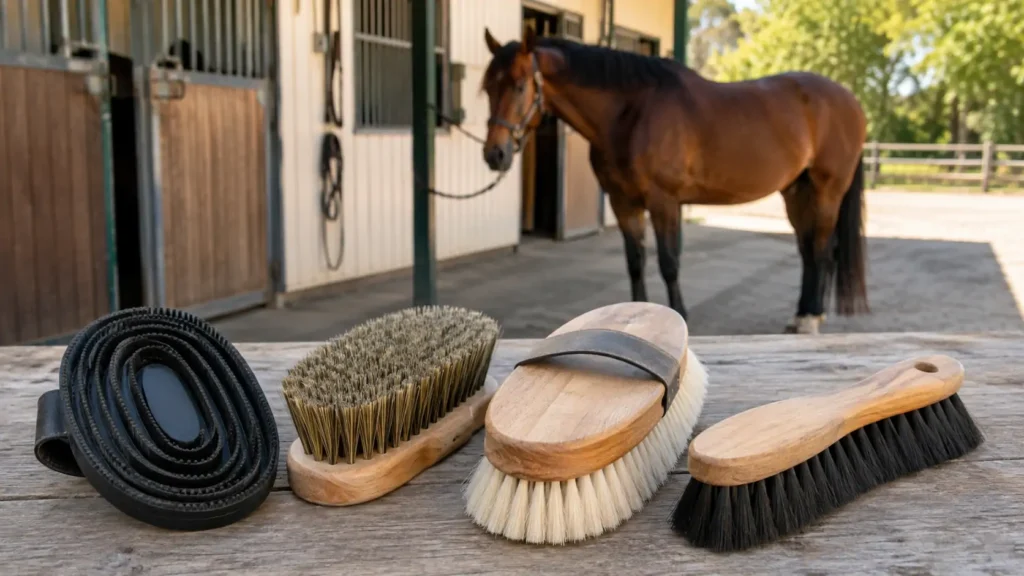
A working stable does not need a large collection; these four brushes cover 90% of grooming tasks:
- Rubber curry comb – loosens dirt and hair, stimulates skin.
- Hard brush (dandy brush) – removes mud and dried sweat from the body.
- Soft brush (body brush) – smooths the coat and adds shine.
- Mane and tail brush – detangles without pulling or breaking hair.
A face brush is optional but useful for sensitive horses that flinch during head grooming. Starting with this minimal kit keeps your tack room organized and your grooming efficient.
Matching Horse Brushes to Coat Type and Season
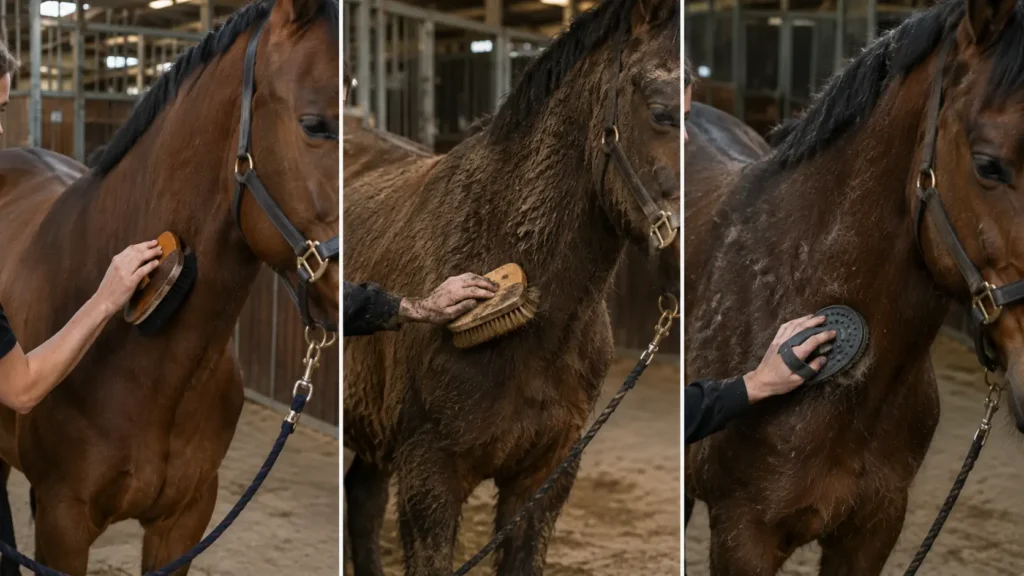
A horse’s coat changes with the seasons and care level, and brush choice should adapt. Short summer coats and clipped horses usually need softer bristles to avoid skin irritation. In winter, thick coats and muddy conditions call for stiffer brushes like the dandy brush to break up caked dirt. During shedding season, a rubber curry comb used in circular motions lifts loose hair faster than a body brush alone. Thoroughbreds and other thin-skinned breeds require extra care, favoring medium or soft bristles even for general use.
Grooming Brushes vs. Shedding Tools: What’s the Difference?
Shedding blades, grooming blocks, and loop shedding tools are not brushes – they are heavy-duty seasonal helpers designed to remove large volumes of loose hair quickly. A horse brush, on the other hand, is meant for regular dirt removal and coat finishing. Use shedding tools during peak shedding periods and then follow with a brush routine to smooth the remaining hair. Both have their place, but no single brush replaces a good shedding blade when a winter coat is letting go.
Why Horse Brushes Are Different from Goat, Sheep, or Camel Brushes
Not all livestock brushes are interchangeable. Horses have relatively thick skin but react poorly to stiff bristles on bony areas like hips and shoulders. Their grooming tools strike a balance between scrubbing power and comfort. Goats have thin, sensitive skin and require very soft brushes; a horse dandy brush can easily cause irritation or panic. Sheep rely on lanolin in their wool – minimal brushing is needed so natural fleece qualities aren’t damaged. Camels and other camelids have dense coats with long hair, often requiring specialized grooming tools distinct from horse brushes. Using the same brush across species can spread skin issues and cause discomfort, so separate, species‑appropriate tools are the best practice.
Brush considerations by animal
| Animal | Body Size / Reach | Coat Type | Typical Brush Types | Key Grooming Focus | Behavior Notes | Routine Integration |
|---|---|---|---|---|---|---|
| Horse | Large; need long handle or strap | Short to medium, dense; seasonal shedding | Body brush, curry comb, mane & tail brush | Dirt removal, coat shine, skin check | Generally cooperative; sensitive flanks | Often before or after exercise/feeding |
| Goat (dairy) | Small; compact brush or mitt | Short hair, thin skin (except cashmere) | Soft body brush, grooming glove | Udder hygiene, hair removal before milking | Skittish; train gradually | Pre-milking on stanchion |
| Sheep (dairy) | Small to medium; reach under belly | Wool, with natural grease; may need clipping | Soft brush, sheep-specific comb | Udder area cleanliness, wool management | Calm once caught; avoid wool pulling | Before milking in parlor |
| Sheep (wool) | Small to medium | Wool, not brushed typically | Generally not brushed; use dagging tools | Fleece quality, not daily grooming | Handle minimally to preserve wool | Shearing time, not daily |
| Camel | Large; tall hump, long neck | Coarse guard hairs, dense undercoat | Long-toothed comb, curry comb | Shedding management, skin health | Unpredictable; require calm handling | After watering, tied or kneeling |
Grooming Routine and Timing
How behavior affects grooming
Each species has a different flight zone and tolerance for handling. Horses are generally accustomed to being touched if handled regularly, but they can be sensitive around the flanks and legs. A sudden movement or a stiff brush can make a horse flinch or kick. Goats are curious but skittish; they may accept brushing on the neck and shoulders but resist the belly or udder if not trained gradually. Sheep, especially wool breeds, often stand still once caught, but they may panic if the brush pulls on tangles. Camels are large and can be unpredictable; they require a handler who understands camel body language and uses slow, deliberate strokes.
For all animals, the grooming routine should start in a low-stress environment. The time of day matters too—many handlers find that brushing after feeding, when the animal is calm and standing contentedly, is more effective than trying to groom a restless, hungry animal.
Timing grooming around feeding
Animals are generally more cooperative when they are comfortable and not hungry or thirsty. Most livestock follow a feeding routine, and that routine often creates a natural window for grooming. For example, many horse owners groom before or after feeding. Dairy goats and sheep are often groomed immediately before milking, when they are brought in from the pasture or pen. According to the Dairy Goat Production Handbook (University of Wisconsin Extension, Chapter on Milking Hygiene), pre-milking grooming reduces the amount of dirt and loose hair that could fall into the milk.
Camels, especially working camels, are often fed and watered after a day’s work. Grooming while the camel is eating can be risky because the camel may be protective of its food. Instead, a separate grooming session after watering, when the animal is relaxed, is safer. Water troughs and feeding areas should be placed away from the grooming spot to avoid dust and competition from other animals.
Seasonal changes
Season changes affect the need for brushing. In spring, horses and camels shed their thick winter coats; a curry comb or shedding blade can help remove loose hair faster. In hot, dry months, dust accumulates quickly on all livestock, so daily brushing may be necessary to keep skin pores clear. In cold, wet conditions, grooming helps dry the coat and prevent fungal infections. However, wool sheep should not be brushed often—over-grooming can damage the fleece structure and reduce its value.
Humidity and dust also determine how often brushes need to be cleaned. In arid regions, a brush can fill with fine dust quickly and become abrasive. In humid areas, brushes can grow mold if stored wet.
Common Grooming Mistakes to Avoid
Even experienced owners can fall into habits that reduce grooming effectiveness or cause harm:
- Brushing too aggressively over bony areas – use softer tools on legs, hips, and spine.
- Using the same brush on multiple horses without cleaning – this can spread fungal infections like ringworm.
- Applying a hard brush to the face – always use a face brush or soft cloth.
- Neglecting brush hygiene – caked‑on dirt and hair harbors bacteria; clean brushes weekly.
- Over‑brushing a wet, muddy coat – this can push grit into the skin and cause scurf. Let mud dry and brush gently.
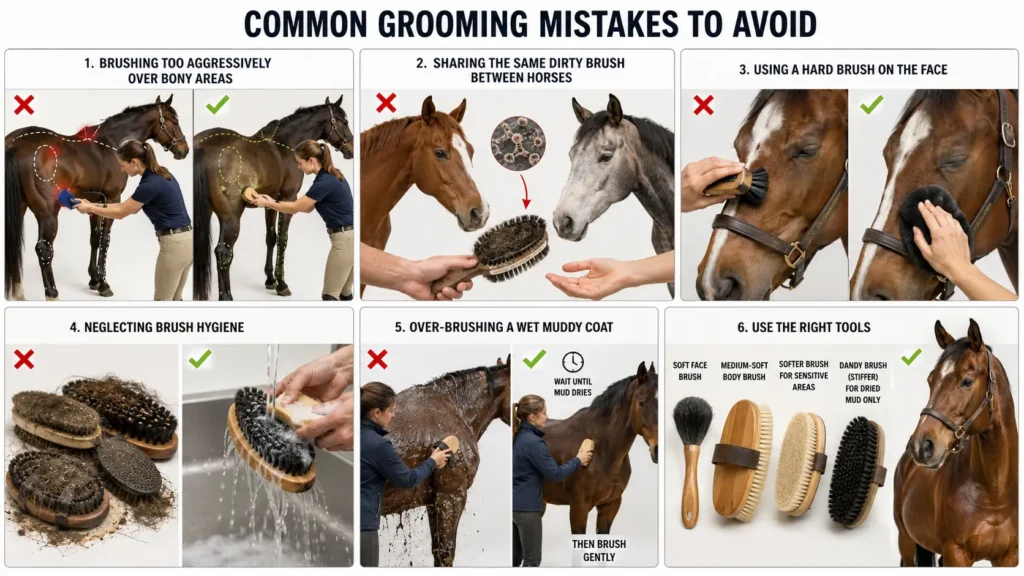
Veterinary dermatology resources remind owners that a simple brush swap between horses is a known risk factor for skin disease outbreaks in barns.
How to Build a Practical Grooming Kit Without Overbuying
Focus on function, not fashion. A basic, quality kit includes:
- Rubber curry comb
- Hard brush (dandy)
- Soft body brush
- Mane and tail comb/brush
- Hoof pick (not a brush, but essential)
Add a sweat scraper after winter riding, and a shedding blade seasonally. Extra‑fine finishing brushes, cactus cloths, or polishing mitts are nice but rarely needed in a working stable. Invest in brushes with durable handles and firmly set bristles – they save money and reduce plastic waste over time.
Frequently Asked Questions
What are the essential horse brushes a stable owner needs?
A minimal set includes a rubber curry comb, a hard brush (dandy), a soft body brush, and a mane and tail brush. These cover daily dirt, mud, shedding, and detangling.
Can I use the same horse brush on multiple horses?
It is not recommended. Sharing brushes can spread skin infections like ringworm. Ideally, each horse should have its own set, or brushes should be disinfected between uses.
Are more expensive horse brushes worth it?
Bristle quality and handle durability matter. Cheap brushes may shed bristles or break quickly. A well‑made brush with secure bristles and a comfortable grip can save money over time.
How often should I clean my horse brushes?
Remove hair and dirt after each use. A deep clean with mild soap and water every two weeks helps prevent bacterial buildup. Ensure brushes are completely dry before the next use to avoid musty bristles.
What’s the difference between a horse brush and a goat brush?
Horse brushes are often stiffer and larger to handle bigger bodies and thicker coats. Goat skin is thinner and more sensitive, so goat brushes are typically softer, smaller, and designed for a lighter touch.
Can I use a horse brush for shedding in spring?
Yes, especially a rubber curry comb. But if your horse sheds heavily, adding a dedicated shedding blade or grooming loop can reduce time and stress on the brush.
Is a body brush enough for daily grooming?
A body brush alone may not remove caked mud or lift dried sweat. Most horses benefit from a curry comb first to loosen dirt, then a body brush for finishing.
What is the difference between a dandy brush and a body brush?
A dandy brush has stiff bristles meant to flick away loosened dirt and mud. A body brush has soft, dense bristles to remove fine dust and distribute natural oils for a shiny coat. Use dandy first, then body.
What brush should I use on a muddy horse?
Start with a rubber curry comb to break up dried mud, then use a dandy brush to flick it off. Avoid rubbing mud into the coat with a soft brush. If the mud is wet, a sweat scraper can help remove it first.
What is a curry comb used for in horse grooming?
A curry comb is a rubber or plastic tool with teeth or nubs. It is used as the first step to loosen caked mud, sweat, and shedding hair by moving in circular motions. It should be gentle and never used on bony areas.
References
- Penn State Extension guide to Building from the Ground Up Safe Ground Handling of Horses
- University of Minnesota Extension guide to Caring Horses Budget
- University of Minnesota Extension guide to Preparing Barn Disaster
- Penn State Extension guide to Tick Safer Horses How to Do a Tick Check on Your Horse