Headgate for Cattle: A Practical Guide to Use, Safety, and Selection
A headgate is a key component in cattle handling facilities, designed to safely hold an animal’s head and neck for routine care. Whether for vaccination, dehorning, or health checks, the right headgate improves handler safety and animal control. This guide walks through what a headgate does, how it works, types, and what to look for before choosing one for your operation.
What Is a Headgate for Cattle?
A headgate is a mechanical gate at the front of a cattle chute or squeeze chute that catches and holds the animal’s head and neck. It restricts forward movement and prevents the animal from pulling its head back, allowing handlers to perform procedures safely. Unlike a simple swing gate, a headgate is designed with locking bars, neck controls, and sometimes self-catching mechanisms.
According to the Beef Cattle Science handbook (Chapter 8, p. 260), a well-designed headgate reduces stress on both cattle and handlers by providing secure restraint.
How Does a Headgate Work?
Most headgates use parallel vertical bars that close around the animal’s neck when it enters the chute. The handler can manually or automatically trigger the closure. Self-catching headgates latch when the animal pushes forward, while manual headgates require a rope, lever, or handle. Some headgates allow width adjustment for different cattle sizes.
Why Use a Headgate Rather Than Just a Gate?
A regular gate controls animal flow, but it doesn’t provide the secure head restraint needed for veterinary work. A headgate locks the animal in place, reducing the risk of injury from sudden movements. When combined with a squeeze chute, it forms a complete restraint system.
Head Gate, Head Chute and Squeeze Chute
Head gate vs squeeze chute
Farmers sometimes mix up head gates and squeeze chutes because they are part of the same working area. A squeeze chute is a full-body restraint that holds the animal from the sides, top, and front. A head gate is only the neck‑catching part at the front of a squeeze chute or simple head chute.
The table below highlights practical differences.
| Factor | Cattle Head Gate | Squeeze Chute |
|---|---|---|
| What it restrains | Head only (neck catch) | Full body (sides, head, sometimes rear) |
| Main purpose | Safe head access for health work, AI, tagging | Complete immobilization for veterinary work, weighing, surgery |
| Common use | Routine head‑area procedures | Chute‑side pregnancy checks, dehorning large cattle, loading out |
| Animal control level | Limited to neck and head | High – body squeeze, head gate, sometimes rear gate |
| Typical placement | Attached to the front of a chute or squeeze | Entire working unit often including alley and head gate |
A simple head chute (sometimes called a head stanchion) may have a head gate but no squeeze mechanism. These are used for low‑pressure procedures where full‑body restraint is unnecessary. The head gate is the working point; the rest is just a standing space.
Clearing up the terms
Many producers use these terms loosely, but they describe different pieces of equipment:
- Head gate – the neck‑catching mechanism only.
- Head chute – a simple narrow chute that includes a head gate but no squeeze. It holds the animal in a standing position with minimal body restraint. Sometimes called a “cattle stanchion” or “AI chute.”
- Squeeze chute – a full‑restraint unit that includes side squeeze, a head gate, and often a rear gate. Designed for procedures requiring complete immobilization.
When someone says “cattle head chute,” they usually mean the whole head‑catch station, not just the gate. And “cattle crush head gate” is a term used in some regions (like the UK or Australia) where “crush” means squeeze chute. So a “crush head gate” is simply the head gate on a squeeze chute. Understanding these nuances helps when reading plans or talking to equipment suppliers.
Types of Headgates for Cattle
There are several types, each suited to different operations.
| Type | How It Works | Best For |
|---|---|---|
| Manual Headgate | Lever or rope operated, handler controls closure | Small operations, low frequency |
| Self-Catching Headgate | Animal pushes through, gate locks automatically | One-person operations, frequent use |
| Scissor-Type Headgate | V-shaped bars rotate inward at top and bottom | Heavy cattle, strong restraint |
| Swinging or Sliding Gate | Simple gate that pivots or slides | Low-pressure sorting, not for restraint |
To see how these points translate into an actual build, view the full specifications of our self-locking headlocks.
Key Features to Compare When Selecting a Headgate
- Neck bar adjustment range: must accommodate calves to bulls.
- Locking mechanism: manual, self-catch, or spring-loaded.
- Material and build: heavy-duty steel for durability, galvanized for corrosion resistance.
- Ease of operation: one-person or two-person use.
- Compatibility with existing chutes: check mounting width and bolt pattern.
- Safety features: emergency release, smooth edges.
Installation and Setup
A headgate that is not mounted properly can injure cattle or break under force. Follow these steps for a solid setup:
- Mount on a sturdy base. The headgate must be bolted or welded to a heavy chute frame or a concrete pad. Lag bolts into wood posts are not enough for large animals.
- Align with the alley. The headgate opening should sit exactly at the end of the crowd alley so cattle walk straight in. Off-center alignment encourages balking.
- Set the right height. The bottom of the neck opening should be about 150–200 mm above the animal’s shoulder level. Too high and the animal may choke; too low and it may slip under.
- Test gate swing. The doors must open freely without scraping the floor or framework. Grease all pivot points.
- Check the catch angle. For self-catch headgates, the spring tension and door angle determine how quickly the gate locks. Adjust per the manufacturer’s guide for your average animal size.
Installation is often a one-time job, but getting it wrong leads to years of frustration. Take the time to measure twice and mock up the position before final bolting.
Headgate Safety Tips
- Always have a release mechanism accessible.
- Inspect pivots, latches, and welds regularly.
- Train animals to enter calmly; never force a panicked animal.
- Keep hands and tools clear of the locking area.
- Use a squeeze chute for added body control when needed.
- Follow APHIS handling guidelines for low-stress cattle handling.
Safe operating practices
A headgate is only as safe as the person using it. Even the best design cannot prevent accidents caused by rushed work or lack of training.
- Keep your body to the side. Never stand directly in front of a headgate when an animal is being caught. A sudden lunge forward can pin you between the animal and the gate.
- Let the animal move forward willingly. Use a calm, quiet approach. For self-catch headgates, allow the animal to step through at its own pace.
- Check the lock before starting work. Tug on the headgate handles to confirm the mechanism is fully engaged. A partially closed gate can pop open under pressure.
- Have an emergency release plan. Know how to free a downed animal quickly. Some headgates include a quick-release pin or side-swing feature.
- Inspect moving parts monthly. Look for worn pins, bent rods or cracked welds. Grease hinges and locks. Replace parts before they fail.
- Train everyone who will use it. Family members, hired hands and visiting vets should all know the correct way to operate and release the headgate for your specific cattle.
When a Headgate Alone Is Not Enough
A headgate works best as part of a larger handling system: holding pens, alley, squeeze chute. For tasks like pregnancy checking or AI, a full squeeze chute with a headgate is recommended. For loading/unloading, a headgate may not be needed. Understanding the limits helps avoid injuries.
Common Mistakes When Using a Headgate
- Assuming one size fits all: always adjust for different cattle.
- Neglecting maintenance: rusty pivots can jam during critical moments.
- Relying on a headgate without body squeeze for aggressive cattle.
- Poor alley design leading to animals balking at the headgate entrance.
- Forgetting to train heifers before first use.
Frequently Asked Questions
What is a headgate for cattle?
A headgate is a restraining device at the front of a cattle chute that holds the animal's head and neck to allow safe handling for procedures like vaccination, tagging, or health checks.
How does a self-catching headgate work?
When the animal walks forward and pushes against the bars, a latching mechanism closes and locks automatically. The handler does not need to manually close the gate, which helps in one-person operations.
Can a headgate be used without a squeeze chute?
Yes, a headgate can be mounted independently, but for many tasks a squeeze chute provides better body control and improves safety for both cattle and handler.
What is the difference between a headgate and a cattle chute?
A cattle chute is a narrow alley that guides the animal. A headgate is the locking device at the end of the chute that secures the head. The two are often used together but serve different functions.
How do I choose the right size headgate for my herd?
Measure the largest and smallest animals. Neck bar adjustment should fit both calves and mature bulls. Look for headgates with easy width adjustment and a range that covers your herd’s variation.
What maintenance does a headgate need?
Regularly lubricate pivot points, check for loose bolts, inspect welds for cracks, and test the release mechanism. Corrosion protection is important if the headgate is outdoors.
Are homemade headgates safe?
Homemade headgates can pose serious safety risks if not properly engineered. Commercial headgates are designed to handle high animal pressure and include tested safety releases.
Can I add a head gate to my existing cattle chute?
Yes, many head gates can be attached to existing chutes if the frame and connection points are compatible. Make sure the installation is sturdy and the release direction fits your animal flow.
What is the difference between a manual and a self-catch headgate?
A manual headgate requires the operator to close and lock the gates by hand. A self-catch headgate uses spring-loaded doors that lock automatically when the animal pushes through. Self-catch models are faster for high-volume work, while manual models are simpler and often less expensive.
Is a headgate safe to use when I’m working alone?
Yes, but only if the headgate is properly adjusted and you follow safe positioning. Stay to the side, never directly in front, and ensure you can reach the release handle without crossing the animal’s line of movement. A self-catch headgate reduces the need for a second person.
Do I need a head gate for AI breeding?
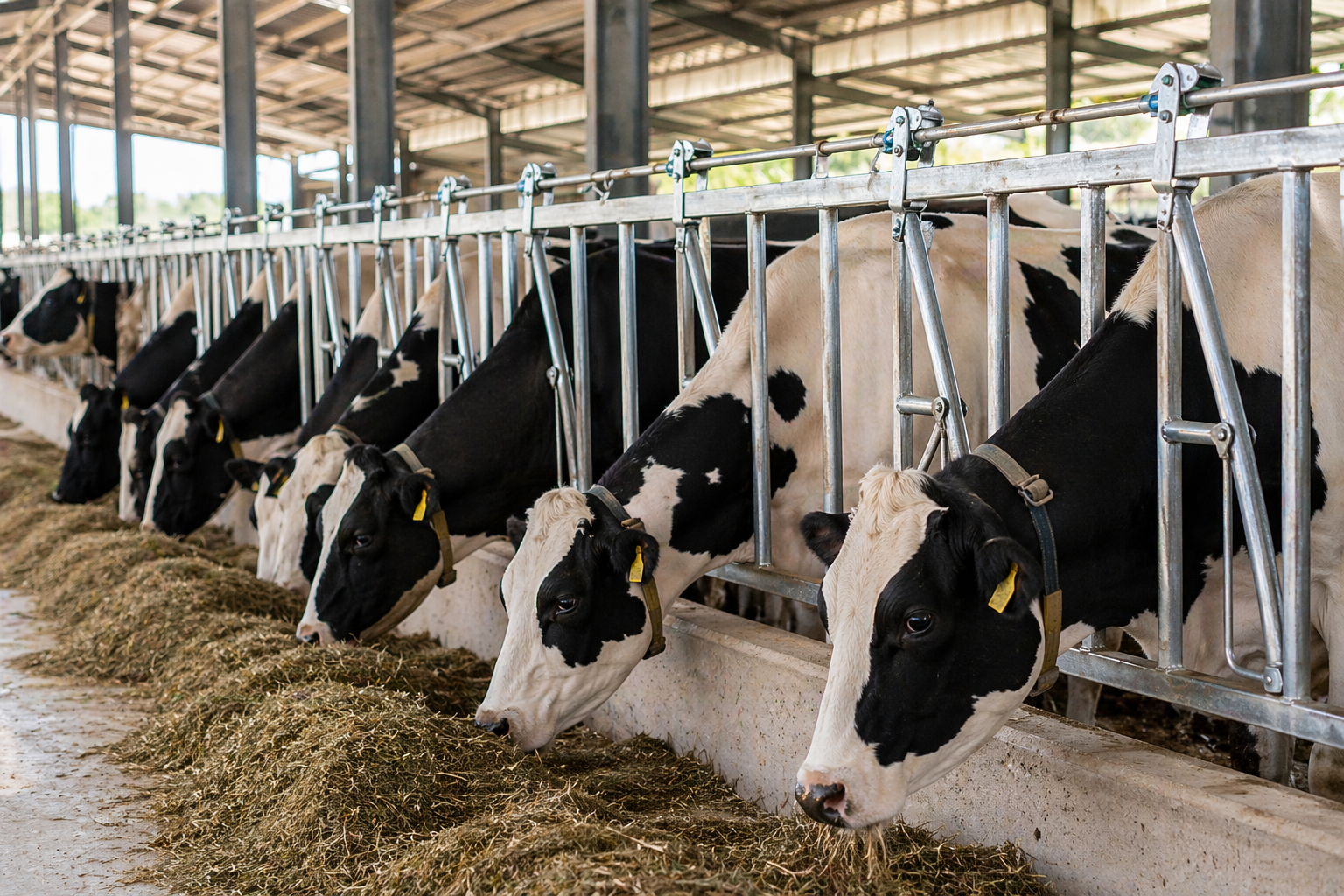
While not mandatory, a head gate can help. It keeps the cow’s head still without squeezing the body, which can reduce stress during AI. Many dairy farms mount a simple head gate at the front of a breeding rail or alley for this purpose.
References
- Oklahoma State Extension guide to Corral and Working Facilities for Beef Cattle
- Oklahoma State Extension guide to Cattle Handling Safety in Working Facilities
- Oklahoma State Extension PDF on Corral and Working Facilities for Beef Cattle Bae 1219
- Penn State Extension guide to Beef Cattle Facilities Handling Systems