Key Concept and Practical Farm Use
A cattle squeeze chute is a specialized piece of livestock handling equipment designed to safely restrain an individual animal. It does more than just hold the animal in place – it gently applies pressure along the body, which helps keep the animal calm and still. This makes routine procedures like vaccinations, health checks, and ear tagging both safer and more efficient.
This article explains exactly what a cattle squeeze chute is, how it works, and when a farm really needs one. It is written for cattle producers and farm managers who want to understand the equipment, not just buy it. By the end, you will know whether a squeeze chute fits your operation and what to look for.
What Is a Cattle Squeeze Chute?
A cattle squeeze chute is a restraint device that catches and holds a single bovine. The animal enters through a rear gate or sliding door, moves forward until its head is secured in a head gate, and then the side panels close gently against its body. This “squeeze” action provides firm, even pressure, which taps into the animal’s natural calming response and reduces struggling.
Unlike a simple head gate or alleyway panel, a cattle squeeze chute fully restricts side‑to‑side movement. This is crucial when a vet or handler needs steady access to the animal’s neck, hip, or legs. Most designs also allow the sides to be adjusted for different sized animals, from calves to full‑grown bulls.
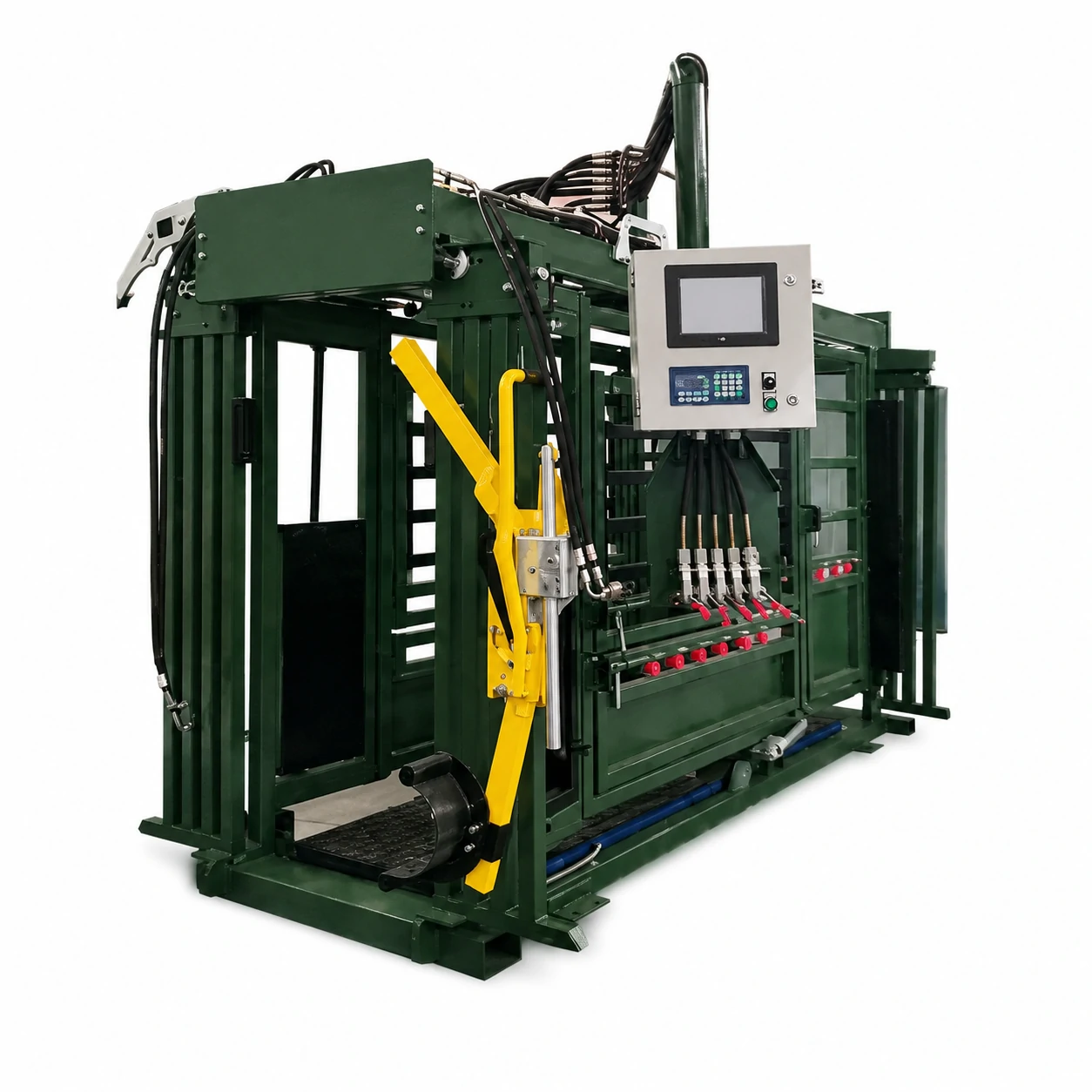
If you need a version sized for your animals or building, see the full specifications of our squeeze chute with weighing system and send us your requirements.
When Do Farms Need a Squeeze Chute?
A squeeze chute becomes a necessity, not a luxury, when handling tasks involve close human‑animal contact. If your farm routinely performs any of the following, a cattle squeeze chute should be seriously considered:
- Vaccinations and injections
- Pregnancy checks (palpation or ultrasound)
- Ear tagging, tattooing, or electronic ID placement
- Horn tipping or dehorning
- Hoof trimming
- Castration
- Blood or tissue sampling
- Treating injuries or administering medication
- Artificial insemination
- Weight recording with built‑in or add‑on scales
Even operations with only a few dozen head can benefit. The squeeze chute reduces the risk of injury to both the animal and the handler, and it makes many jobs faster and less stressful.
Squeeze Chute vs. Head Gate Alone: What’s the Difference?
Many cattle handling setups use a head gate at the end of an alley. A head gate catches and holds the animal by the neck, but the rest of the body remains free. A squeeze chute goes further: it restrains the entire body. The table below highlights the key differences.
| Feature | Head Gate Alone | Cattle Squeeze Chute |
|---|---|---|
| Body restraint | Neck only; body can swing or kick | Full‑body squeeze panels; minimal movement |
| Handler safety | Lower; animal can still move unexpectedly | Higher; handler can work closely with less risk |
| Procedure range | Suitable only for quick neck‑area tasks | Enables hip, leg, udder, and rear‑end work |
| Animal stress | May struggle more without body support | Often calmer due to steady pressure |
| Cost | Lower upfront investment | Higher, but justified by safety and efficiency |
For basic sorting and loading, a head gate may suffice. But for veterinary‑grade handling, a squeeze chute is the superior choice.
How a Squeeze Chute Improves Safety and Efficiency
Safety is the number‑one reason farms invest in a cattle squeeze chute. According to industry reference books like Beef Cattle Science (7th Edition), well‑designed restraint equipment dramatically reduces handler injuries. The squeeze action also lowers animal stress, which can improve immune response and reduce the risk of injury to the animal itself.
Efficiency gains are equally significant. When an animal is held still, tasks that might otherwise require multiple helpers can often be done by one person. The chute’s design also encourages a steady workflow: one animal leaves while the next enters, keeping the herd moving without chaos.
Key Parts of a Typical Squeeze Chute
Understanding the main components helps you evaluate different designs. A standard cattle squeeze chute includes:
- Head gate: Catches the animal’s neck; may be manual, self‑catching, or powered.
- Squeeze mechanism: Moves the side panels inward; can be lever‑operated, cable‑driven, or hydraulic.
- Side panels: Provide the actual body squeeze; often hinged at the bottom for vertical calf‑release doors.
- Rear gate or door: Controls entry and prevents the animal from backing out once caught.
- Floor or platform: Could be solid rubber matting, wooden planks, or an open‑bar grid; good footing is critical.
- Access doors or panels: Some chutes have side‑opening panels for easy access to the flank, leg, or udder.
- Scale integration: Many modern chutes can accommodate load bars for weighing the animal during restraint.
Types of Squeeze Chutes: Manual, Hydraulic, Portable
Not all squeeze chutes are built the same way. The three most common categories are manual, hydraulic, and portable. Each has a place on the farm, depending on herd size, handling frequency, and budget.
Manual Squeeze Chute
Operated by levers and mechanical advantage, a manual squeeze chute requires the handler to close the sides and operate the head gate by hand. It is the most common choice for moderate‑sized operations. With proper maintenance, a quality manual chute can last decades. It involves no hydraulic components, so it tends to be lower‑maintenance and less expensive.
Hydraulic Squeeze Chute
A hydraulic squeeze chute uses oil‑powered cylinders to move the sides, head gate, and sometimes the rear gate. The operator can control everything from a safe distance via a remote or console. This type is especially valuable when processing large numbers of cattle or when the handler works alone. The trade‑off is higher cost and the need for a hydraulic power source, such as a tractor remote or an electric pump.
Portable Squeeze Chute
A portable squeeze chute is built onto a trailer or skid frame so it can be moved between pastures, leased lots, or remote handling sites. Many portable models are manual, but some are equipped with hydraulics. The key advantage is mobility; the trade‑off is often a slightly lighter build to keep the unit towable. Portable chutes are popular with custom operators and ranches that move cattle frequently.
Checklist: What to Look for Before Choosing a Squeeze Chute
Use this checklist when comparing different cattle squeeze chute models. It focuses on practical, safety‑critical features rather than price alone.
- Head gate style: self‑catching, scissor‑style, or fully adjustable? Does it fit your breed and horn status?
- Squeeze mechanism: manual lever or hydraulic? Can you operate it smoothly from a safe position?
- Side panel adjustability: can it accommodate a 300‑lb calf and a 2,000‑lb bull without pinching?
- Access doors: do you need side‑opening panels for flank, leg, or udder work?
- Floor surface: non‑slip and easy to clean; rubber matting or textured steel are common.
- Escape protection: do the bottom sides block kicks and prevent leg entanglement?
- Construction quality: check weld integrity, steel gauge, and corrosion resistance (painted or galvanized).
- Scale compatibility: can you install load bars for weighing?
- Mobility: does the chute need to be moved between locations?
- Noise and handling: well‑designed chutes are quiet; loud clanging increases animal stress.
Daily Safety and Maintenance Checks
Even a solid squeeze chute fails if the setup or technique is wrong. Avoid these common pitfalls:
- Over‑squeezing. The squeeze panels should steady the animal, not constrict it. Over‑tightening causes panic and possible injury.
- Head gate too low or too high. This can choke or allow the animal to flip its head out. Adjust the neck bar height for each group of cattle.
- Running cattle too fast into the chute. A calm entry produces a calmer catch. Use a blocking gate to pace the alley flow.
- Standing in the exit path when releasing. Always stand to the side, not behind the chute, when the head gate opens.
- Ignoring horned cattle needs. Use a full-opening head gate and avoid trapping horns against the bars.
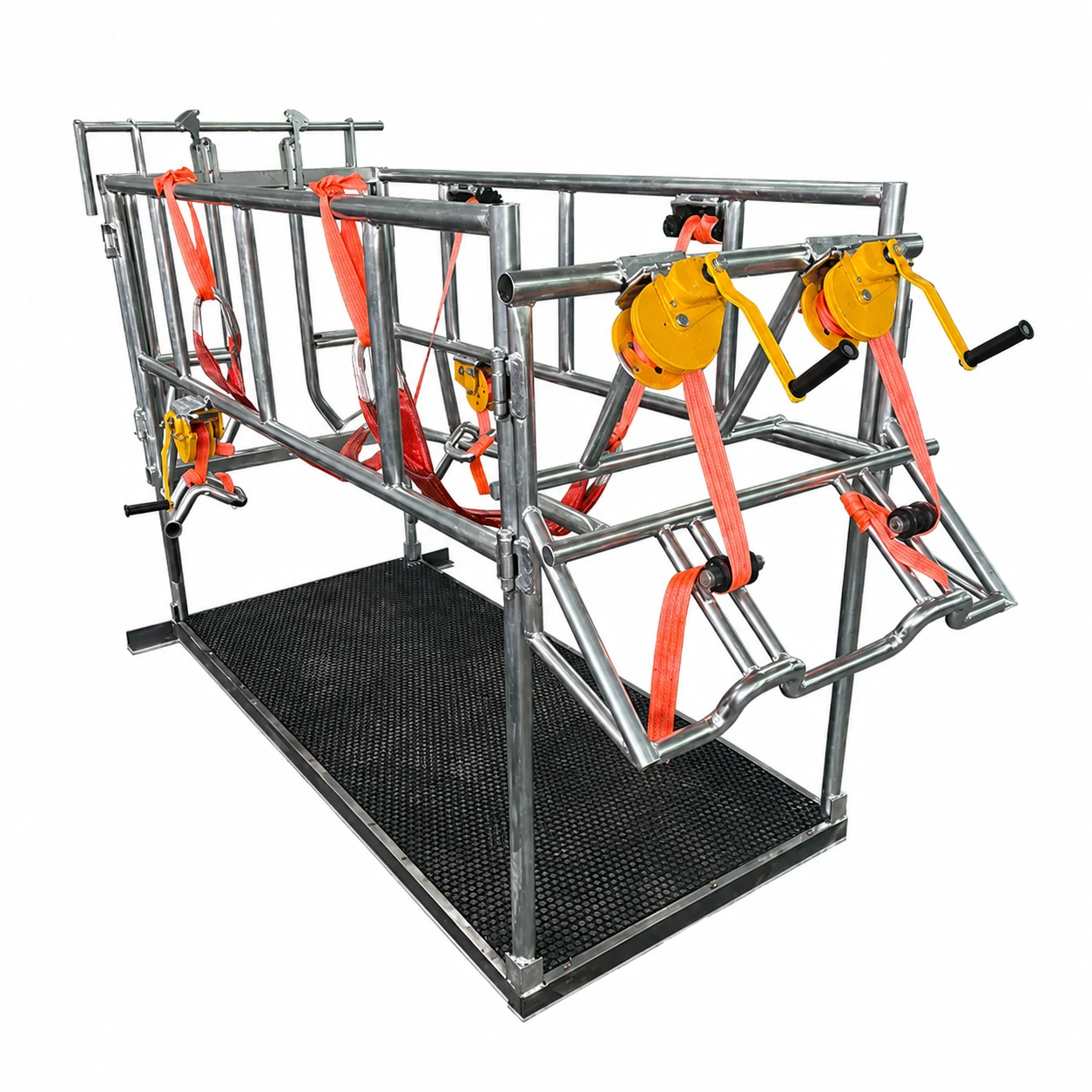
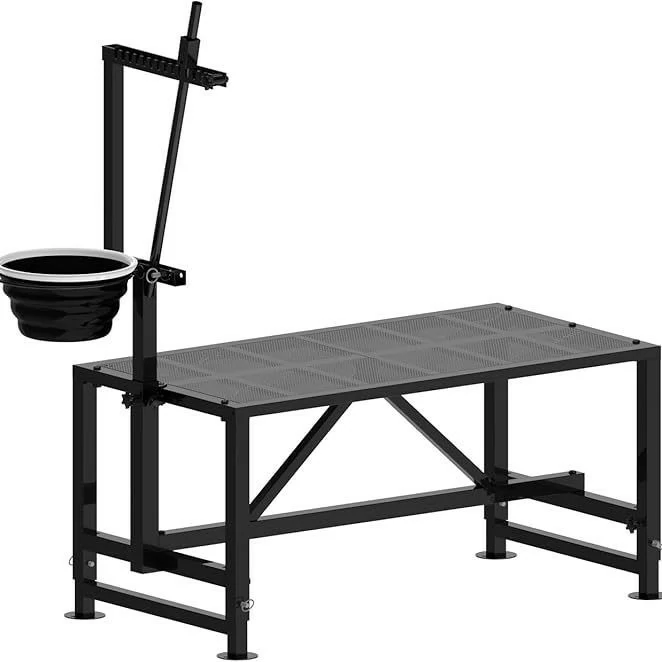
- Using a squeeze chute for tasks better suited to a dipping vat or calf cradle. Know the limit of your equipment. Young calves often need a calf table or tipping cradle for safe dehorning or castration.
- Skipping daily maintenance. A sticking head gate is often the first sign of missed lubrication or dirt buildup.
- Improper ground anchoring. A portable chute that slides or tilts during use becomes a hazard.
Common Mistakes When Using a Squeeze Chute
Even the best cattle squeeze chute will underperform if used incorrectly. Avoid these frequent missteps:
- Over‑squeezing: Applying too much pressure defeats the calming effect and can injure the animal. The sides should barely touch the body, then stop.
- Rushing animals through: A calm, steady flow reduces balking. Use curved alleys and solid sides to encourage forward movement.
- Failing to adjust for size: Not resetting the squeeze opening between calves and mature cows leads to escapes or excessive pressure.
- Poor lighting or shadows: Cattle resist moving into dark, shadowy chutes. Ensure the work area is evenly lit.
- Neglecting maintenance: A sticky head gate or squeaky squeeze mechanism can panic the animal. Lubricate moving parts regularly.
- Using as a holding pen: A squeeze chute is not for long‑term confinement. Move animals through quickly and release them to a recovery area.
Where a Squeeze Chute Fits in a Cattle Handling System
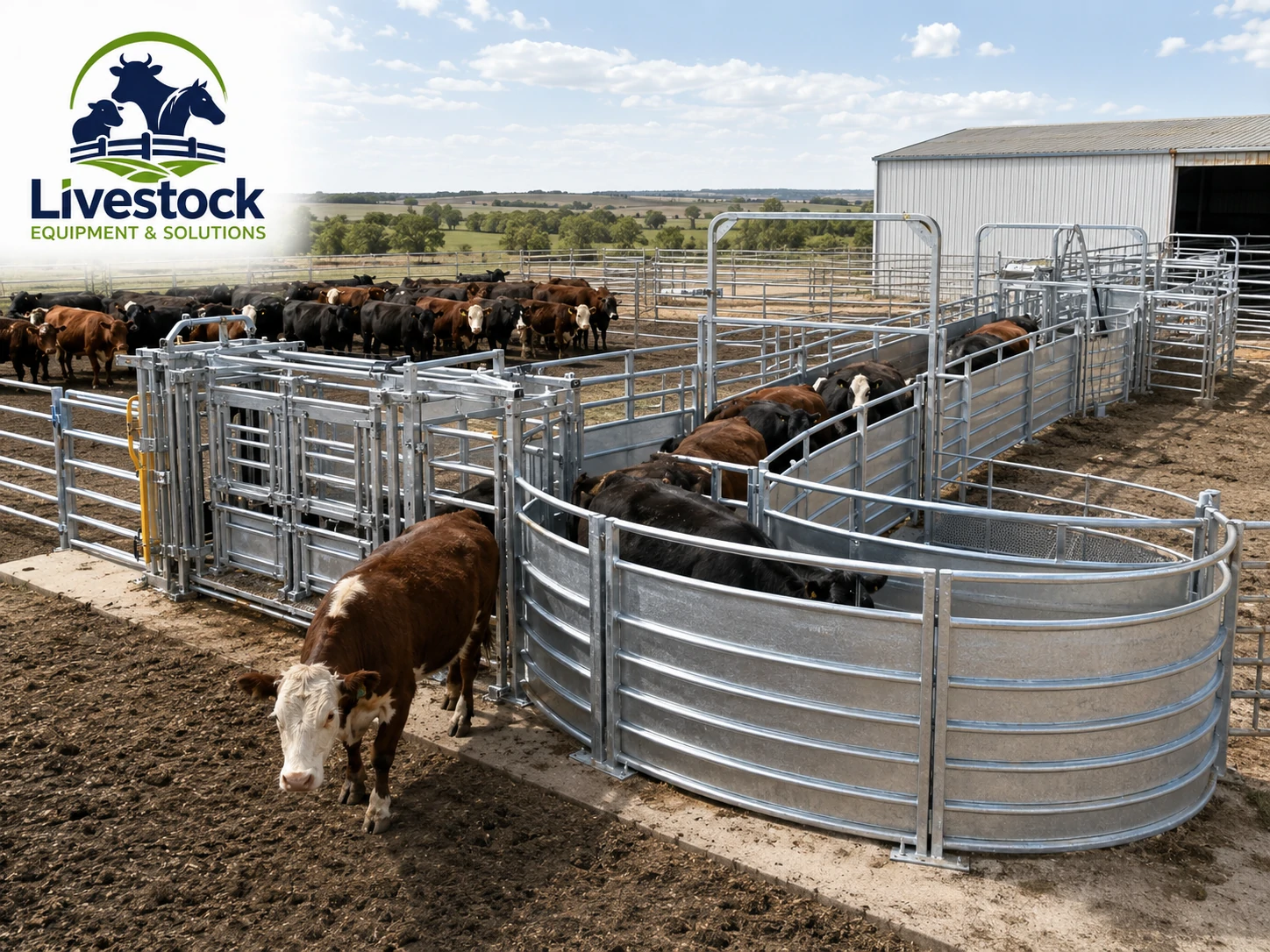
A squeeze chute does not work in isolation. It is part of a larger handling layout that typically includes holding pens, a crowding area, a curved or straight alley, and the chute itself. USDA NRCS guidance on livestock handling facilities emphasizes that each component should help animals flow smoothly toward the point of restraint.
Ideally, cattle move from a holding pen into a crowding pen, which tapers to a single‑file alley. The alley leads directly into the squeeze chute. After processing, the animal exits into a separate holding or recovery area. This one‑way flow keeps stress low and prevents animals from turning back.
Before buying a squeeze chute, evaluate your current handling setup. If the alley is too narrow or the crowding area too small, even the best chute will cause backups. Often, improving the alley geometry and adding solid visual barriers yields immediate benefits.
Final Takeaway
A cattle squeeze chute is more than a piece of equipment – it is a safety and efficiency investment. For any farm that regularly handles cattle for health checks, breeding, or treatment, a squeeze chute reduces risk, saves time, and improves animal welfare.
The decision comes down to three main factors: the size and behavior of your herd, the types of procedures you perform, and whether you need a stationary or portable setup. Manual, hydraulic, and portable models each have their place, and the checklist above can help you compare features rather than prices.
Remember, a squeeze chute is only as good as the handling system around it. Pairing the right chute with a well‑designed alley and calm stockmanship will give you the safest, most productive results.
Frequently Asked Questions
What is the difference between a squeeze chute and a head gate?
A head gate catches only the neck, while a squeeze chute secures the entire body with side panels. This makes a squeeze chute much safer for procedures involving the rear or sides of the animal.
How much should a farm budget for a cattle squeeze chute?
Cost varies widely by type and features. A manual squeeze chute is typically less expensive than a hydraulic one, and portable models add mobility costs. Consider long‑term durability and safety, not just the upfront price.
Can a squeeze chute handle both calves and full‑grown bulls?
Most well‑designed chutes can adjust to fit a wide range of sizes. Look for adjustable side panels and a head gate that locks securely at different widths. Test the mechanism on your smallest and largest animals before committing.
Is a portable squeeze chute a good investment?
If you move cattle between multiple pastures, lease land, or do custom work, a portable squeeze chute is highly practical. It saves the cost and time of fixed installations at each site. Ensure the trailer and hitch system match your towing vehicle.
How do I maintain a squeeze chute to keep it working safely?
Regularly grease all pivot points, check welds for cracks, and test the head gate and squeeze mechanism for smooth operation. Clean manure and mud from the floor and lower panels to prevent rust and slipping hazards.
What safety features should I look for in a squeeze chute?
Key safety features include a kick‑guard panel at the rear, smooth‑operating controls that keep the handler away from the animal’s legs, quiet latching mechanisms, and non‑slip flooring. Access doors that lock securely are also important.
Can a squeeze chute be used for other livestock like sheep or goats?
A cattle squeeze chute is usually too large and widely spaced for small ruminants like sheep or goats. They could slip through or be injured. Use a smaller, appropriate squeeze designed for those species.
What is a common beginner mistake when buying a squeeze chute?
Choosing based on price alone is a frequent error. A cheap chute with poor welds or a loud, jerky mechanism increases stress and safety risks. Prioritize fit for your herd size, ease of operation, and build quality.
Can a squeeze chute be used for horned cattle?
Yes, but you need a headgate with enough horn clearance. Some models have a wider opening or special design for horned breeds. Always test with your own animals before depending on it for a full work day.
Can I use the same squeeze chute for cows and bulls?
Yes, but ensure the chute is rated for full-grown bulls. Bulls are often heavier and more muscled, requiring a chute with a higher weight capacity and stronger construction. Some operations keep a separate, heavy-duty chute specifically for bulls due to the added stress and power.
References
- Oklahoma State Extension guide to Corral and Working Facilities for Beef Cattle
- Oklahoma State Extension guide to Cattle Handling Safety in Working Facilities
- Oklahoma State Extension PDF on Corral and Working Facilities for Beef Cattle Bae 1219
- Penn State Extension guide to Beef Cattle Facilities Handling Systems