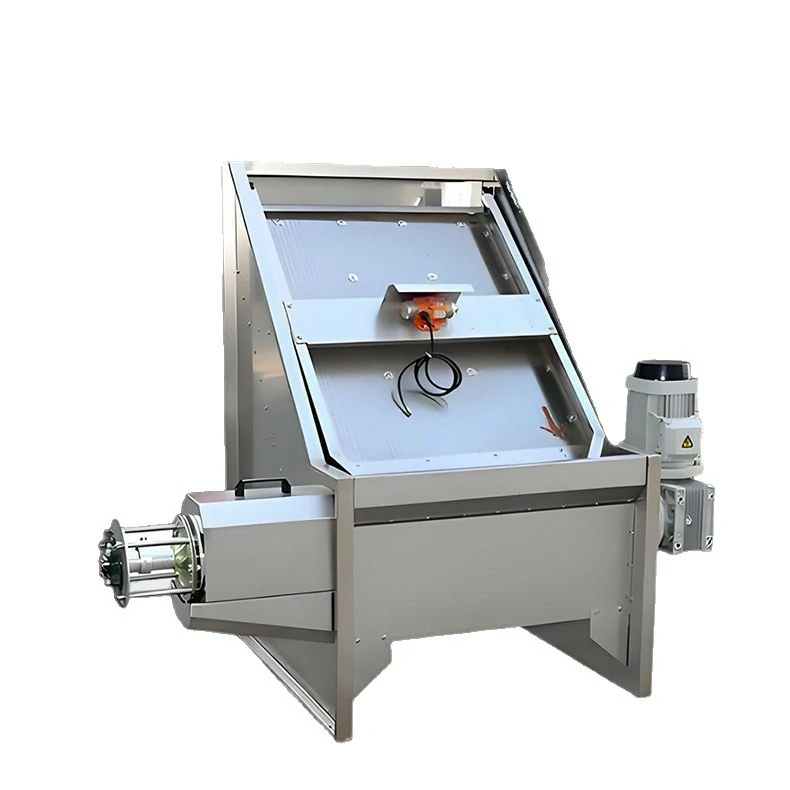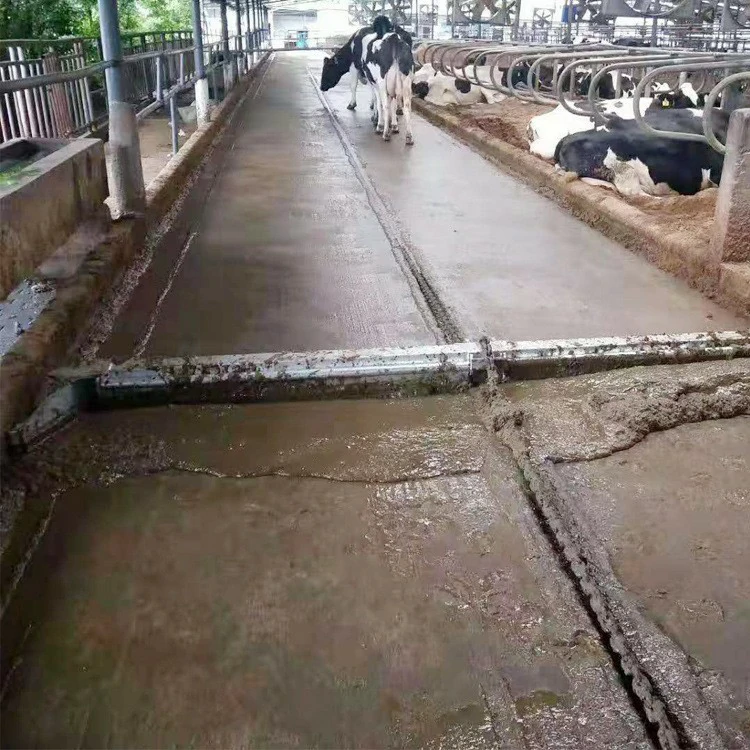
What Is a Manure Separator and Why Is It Used?
A manure separator is any piece of equipment that divides raw slurry or scraped manure into two streams: a solid cake and a liquid filtrate. The goal is not to treat the manure completely but to make it easier to manage later. According to the Dairy Manure Management: Treatment, Handling, and Community Relations textbook (Chapter 9), solid-liquid separation reduces the volume of material to be handled and improves the efficiency of both solids recovery and liquid nutrient application.
Farmers use manure separators when they need to solve specific handling problems: thick manure that clogs pumps, lagoon sludge buildup that reduces storage capacity, bedding material demand, or tight nutrient application windows. Separating early, before storage, gives more options for each fraction.
The Practical Benefits of Separating Manure Solids from Liquids
Solid-liquid separation is not just a textbook idea—it addresses real farm bottlenecks. Here are the main practical benefits:
- Easier pumping and irrigation. Removing coarse solids prevents pipe blockages and reduces wear on pumps. The liquid fraction flows more efficiently through irrigation nozzles.
- Better storage management. Separating solids cuts the volume of material that settles in lagoons. Less sludge means less frequent lagoon cleanout and more usable storage space.
- Bedding recovery. Many farms use recovered solids as freestall bedding or in bedded-pack barns. This can replace purchased bedding materials like sawdust or sand.
- Flexible nutrient management. Solids can be composted or applied to fields at times when soil conditions are right, while nutrient-rich liquid can be injected or spread more precisely.
- Reduced odor and fly breeding. Drier solids that are promptly composted or stored properly create fewer odor and fly problems than a stagnant slurry.
When Solid-Liquid Separation Makes Sense on a Farm
Separation is not a one-size-fits-all decision. It usually makes sense when:
- Manure is collected as slurry or semi-solid scraped material.
- Bedding is needed on farm or can be sold.
- Lagoon or storage capacity is limited.
- Nutrient application windows are narrow and the farm benefits from separating high-phosphorus solids from nitrogen-heavy liquid.
- Irrigation systems are used and plugging is a constant issue.
- Environmental regulations limit winter manure spreading and the farm needs a drier material that can be stored temporarily in stacks.
On the other hand, if a farm already has a well-functioning liquid system with no clogging or bedding need, separation may add cost without enough benefit. USDA NRCS notes that solid-liquid separation is most cost-effective when the separated solids have a clear intended use.
Comparison: Managing Manure With and Without Separation
| Factor | With Manure Separator | Without Separation |
|---|---|---|
| Pumping and hose lines | Liquid fraction pumps easily; fewer clogs | Slurry is thick; higher risk of blockage |
| Storage volume needed | Lower solids settling extends lagoon life | Rapid sludge buildup reduces capacity |
| Bedding source | Recovered solids can replace purchased bedding | No solids recovery; bedding must be bought |
| Nutrient application | Solids and liquids can be applied separately to match crop needs | Single slurry; higher risk of phosphorus buildup |
| Odor and flies | Drier solids reduce odor if managed properly | Wet slurry can increase odor and fly breeding |
| Operational labor | Separator operation and solids handling add daily work | Simpler daily routine but more labor during cleanout |
What Happens to the Recovered Solids?
After separation, the solid fraction typically has a moisture content between 65% and 75%, depending on the separator type. This material can be used for:
- Bedding: Dairy farms often use separated solids in freestalls. Properly drained and aerated, they can provide a comfortable surface. Some farms dry them further before use.
- Composting: Solids can be mixed with other organic material and turned to create stable compost for field application or off-farm sales.
- Soil amendment: Direct field application of separated solids adds organic matter and slow-release nutrients, though careful timing is needed to avoid runoff.
- Energy recovery: In some systems, dried solids are used as fuel for biomass boilers, though this requires additional drying and processing.
What About the Liquid Fraction After Separation?
The liquid fraction still contains dissolved nutrients, especially nitrogen and potassium. It can be:
- Pumped to a lagoon for storage.
- Applied through irrigation systems with less risk of clogging.
- Injected or incorporated into soil to reduce ammonia losses.
- Treated further in constructed wetlands or other natural treatment systems.
The liquid fraction’s nutrient concentration is lower per gallon than raw slurry, so larger volumes may need to be applied, but the nutrient form is more readily available to crops when managed correctly.
How Separation Changes Nutrient Management
Nutrients such as nitrogen (N), phosphorus (P), and potassium (K) partition unevenly between solids and liquids. Generally, the solid fraction retains a larger share of phosphorus and organic nitrogen, while the liquid fraction contains more ammonium nitrogen and potassium. This split gives farmers more flexibility in meeting crop needs without over-applying phosphorus on fields already high in P.
| Nutrient | Typical distribution after separation | Management implication |
|---|---|---|
| Nitrogen (N) | More in liquid as ammonium; organic N in solids | Liquid N is quickly available; solids release N slowly |
| Phosphorus (P) | Concentrated in solids | Solids can be applied to P-deficient fields or exported off-farm |
| Potassium (K) | Slightly more in liquid | Liquid provides readily available K for crops |
| Organic matter | Mostly in solids | Solids improve soil quality when incorporated |
Land application of each fraction
The separated solid fraction handles more like a compost or solid manure. It can be spread with a box spreader, stockpiled, or used for bedding (if pathogen levels allow). The liquid fraction is more dilute, can be pumped through dragline or irrigation, and is suited to low-pressure application. Farms often apply liquids during the growing season when crops can use nitrogen quickly, while solids are spread before planting or after harvest when incorporation is possible.
Common Oversights When Using a Manure Separator
A well-chosen separator can pay off, but mistakes can reduce its effectiveness. Watch out for these common issues:
- Ignoring pump compatibility. The pump feeding the separator must match its flow and pressure needs. An undersized pump starves the unit; an oversized pump may overwhelm screens and cause bypass.
- Neglecting screen cleaning. Screens or rollers can blind over time. Regular flushing prevents capacity loss and poor separation.
- Using the wrong screen size. Too fine a screen may capture more solids but also slow throughput drastically. The right size depends on the manure type and the intended use of solids.
- No plan for solids handling. Separators produce a constant stream of solids. If there is no conveyor, stacking area, or daily spreading routine planned, the solids pile up and create a bottleneck.
- Overlooking winter operation. In cold climates, solids can freeze in discharge chutes. Insulation, housing, or heated areas may be necessary.
- Assuming it solves all nutrient problems. Separation redistributes nutrients—it does not remove them. The farm must still manage soil phosphorus levels, especially if solids are applied to the same fields year after year.
By keeping these points in mind and matching the separator to the farm’s actual daily handling pattern, solid-liquid separation can become a reliable part of the manure system rather than a maintenance headache.
To see how these points translate into an actual build, view the full specifications of our inclined screen manure separator.
Nutrient Plans and Regulations
Manure separation supports environmental goals by making nutrient application more precise. In many regions, comprehensive nutrient management plans (CNMPs) require documenting how manure nutrients are used. Separated solids can be more easily transported to fields where phosphorus is needed, reducing the risk of runoff from over-application. This practice helps farms stay compliant with Clean Water Act requirements and state-level phosphorus indexing.
When separation is not enough
While separation adds flexibility, it is not a replacement for sound nutrient planning. Farms with high animal density or sensitive watersheds may still need additional treatment, such as anaerobic digestion, composting, or advanced nutrient recovery. Manure separation is one tool that fits into a broader system of best management practices.
By understanding how solids and liquids divide nutrients, farmers can make better decisions about land application, storage sizing, and regulatory compliance. Manure separation is not a one-size-fits-all solution, but when matched to farm goals, it sharpens nutrient management and reduces environmental risk.
References
- Penn State Extension manure separation facilities guide
- USDA NRCS solid-liquid manure separation handbook
- USDA NRCS waste separation facility standard
- EPA guide to animal feeding operation manure uses
Frequently Asked Questions
Why do farms separate manure solids from liquids?
Separation can improve pumping, reduce solids in storage, recover bedding fiber, concentrate nutrients in a manageable fraction, and make manure handling more predictable.
What happens to the liquid fraction after separation?
The liquid fraction is usually easier to pump and may be stored or applied through liquid handling systems. It can still contain nutrients and fine solids, so management is still required.
What happens to the solid fraction after separation?
The solid fraction may be stacked, composted, dried, transported, or used in bedding systems depending on moisture, cleanliness, and farm goals.
What affects separator performance the most?
Manure consistency, bedding type, screen size, flow rate, maintenance, and machine adjustment all affect performance. A separator should be evaluated under real farm conditions.
How can farmers tell if manure separation is helping?
Track storage volume, pump clogging, solids dryness, bedding recovery, odor, labor, and nutrient test results. The system should solve a specific manure handling problem.
Does manure separation remove nutrients?
No, it redistributes nutrients. Solids tend to contain more phosphorus and organic nitrogen, while liquids contain more ammonium nitrogen and potassium.
How does manure separation affect land application timing?
Liquids can be applied during the growing season using low-travel irrigation systems, while solids are often spread before planting or after harvest when soil incorporation is feasible.
Is manure separation required by environmental regulations?
It is not universally required, but it can help farms meet nutrient management plan goals and phosphorus-based application limits.