Key Concept and Practical Farm Use
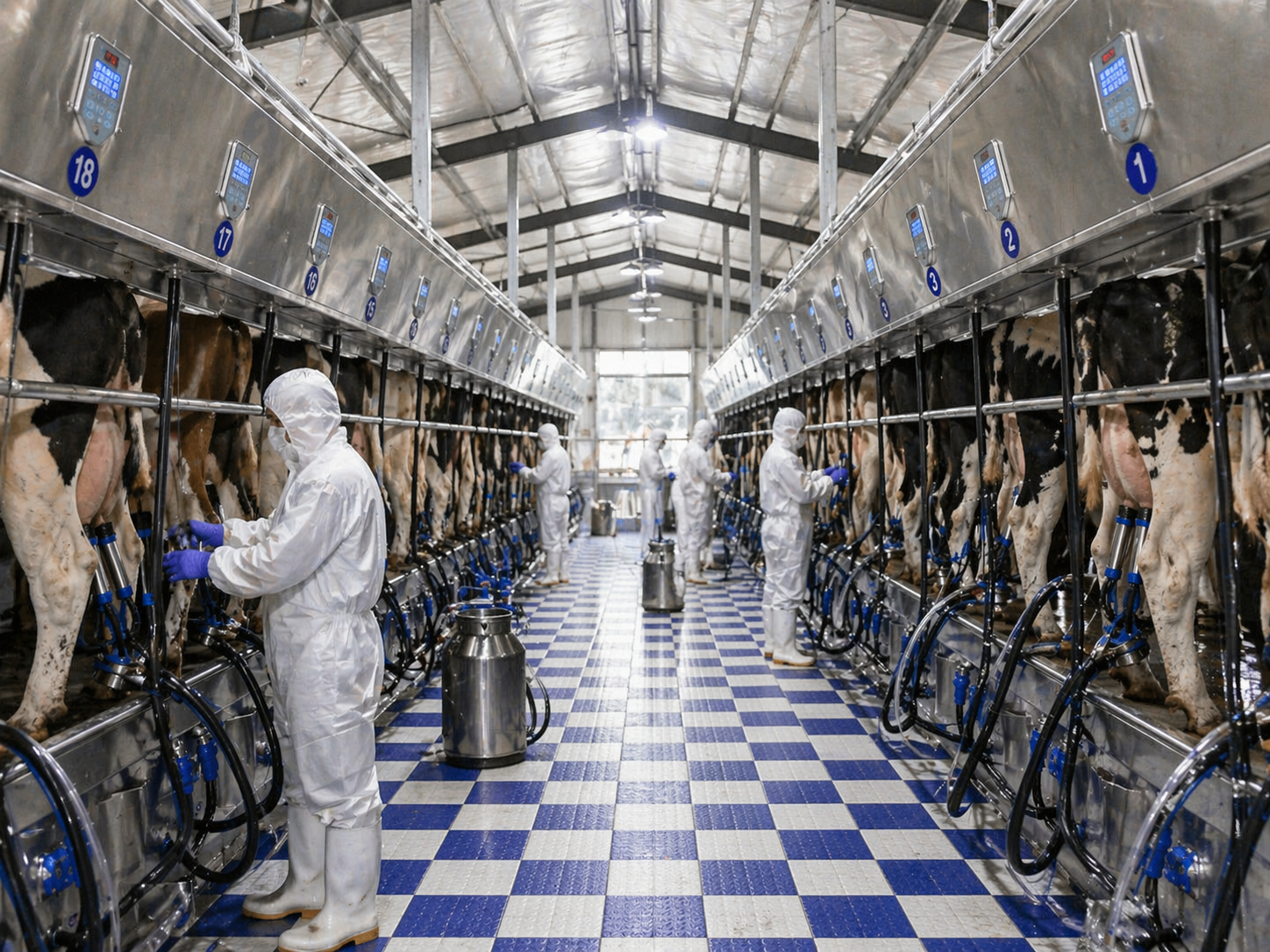
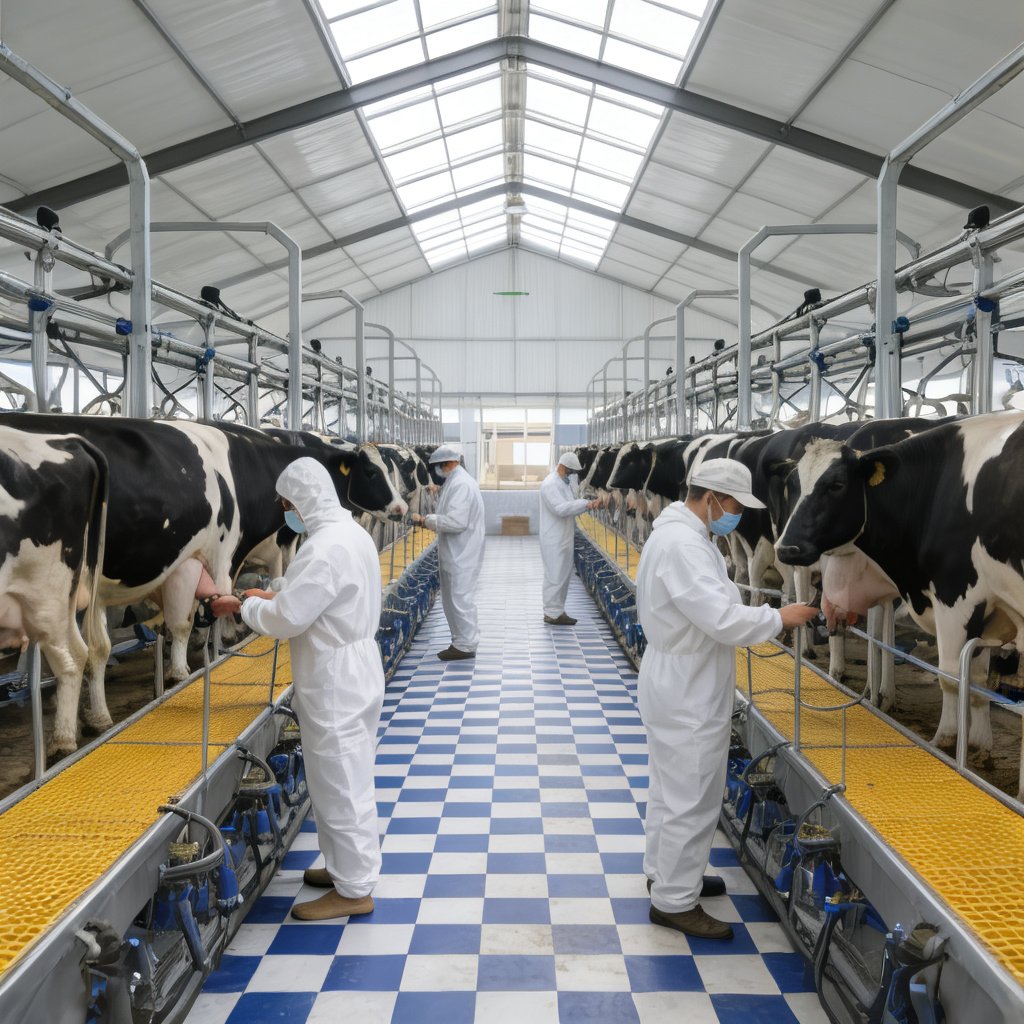
A milking parlour is a dedicated space where dairy animals are brought to be milked, designed to improve milking speed, cow comfort, and labour efficiency compared to milking in a tie‑stall barn or with a bucket system. In plain farm language, it is a room or building where cows enter in groups, stand on a raised platform or in stalls, and are milked from a central pit or side while operators work at udder level without bending down. The milk flows through a pipeline directly to a bulk tank, creating a clean, fast, and repeatable routine.
This article is written for farmers who want to understand the basics: what a parlour really is, how it differs from other setups, when it makes sense, and what key decisions come before investing. It is not a product comparison or a design manual. Deeper guides on specific parlour types, planning, and retrofitting will be covered in separate articles within the Milking Parlour Types category.
What Is a Milking Parlour?
A milking parlour is a facility built around one central idea: bring the cow to the milker, not the milker to the cow. Instead of moving equipment along a row of cows tied in stalls, the parlour allows cows to walk into a designated milking area, get milked in a few minutes, and exit to make room for the next group.
Key features that define a parlour include:
- A raised cow platform that puts the udder at an ergonomic height for the operator.
- A milking pit (in many designs) where the operator stands, keeping milk equipment and operators clean.
- Side‑opening or rapid‑exit gates that speed up animal flow.
- Centralized milking equipment—claw, milk lines, pulsators, and vacuum lines are part of a fixed installation, not trailed from cow to cow.
- An operator area that keeps people safe, dry, and away from kicking hazards.
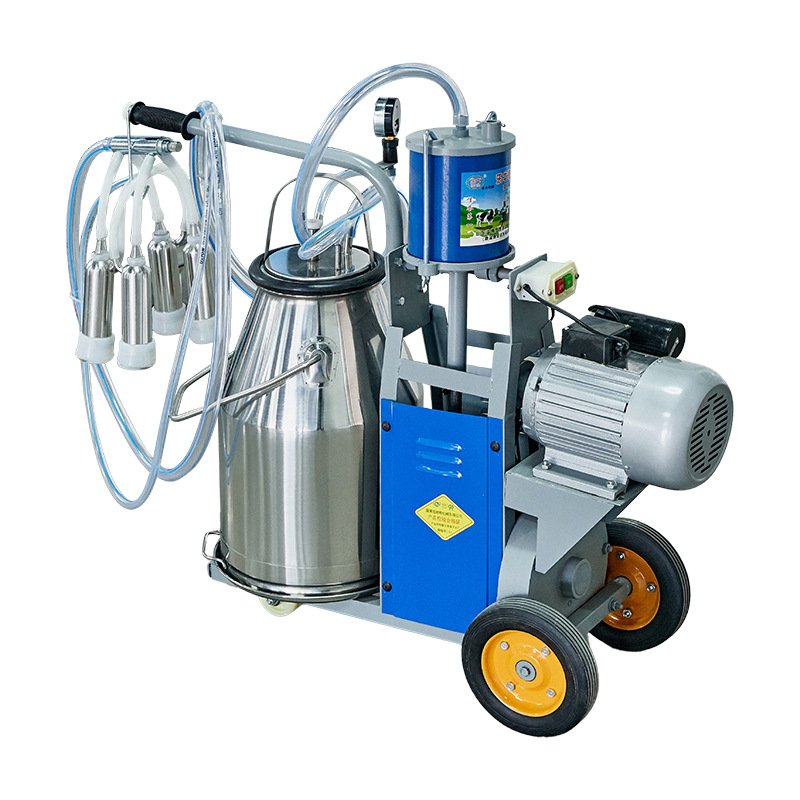
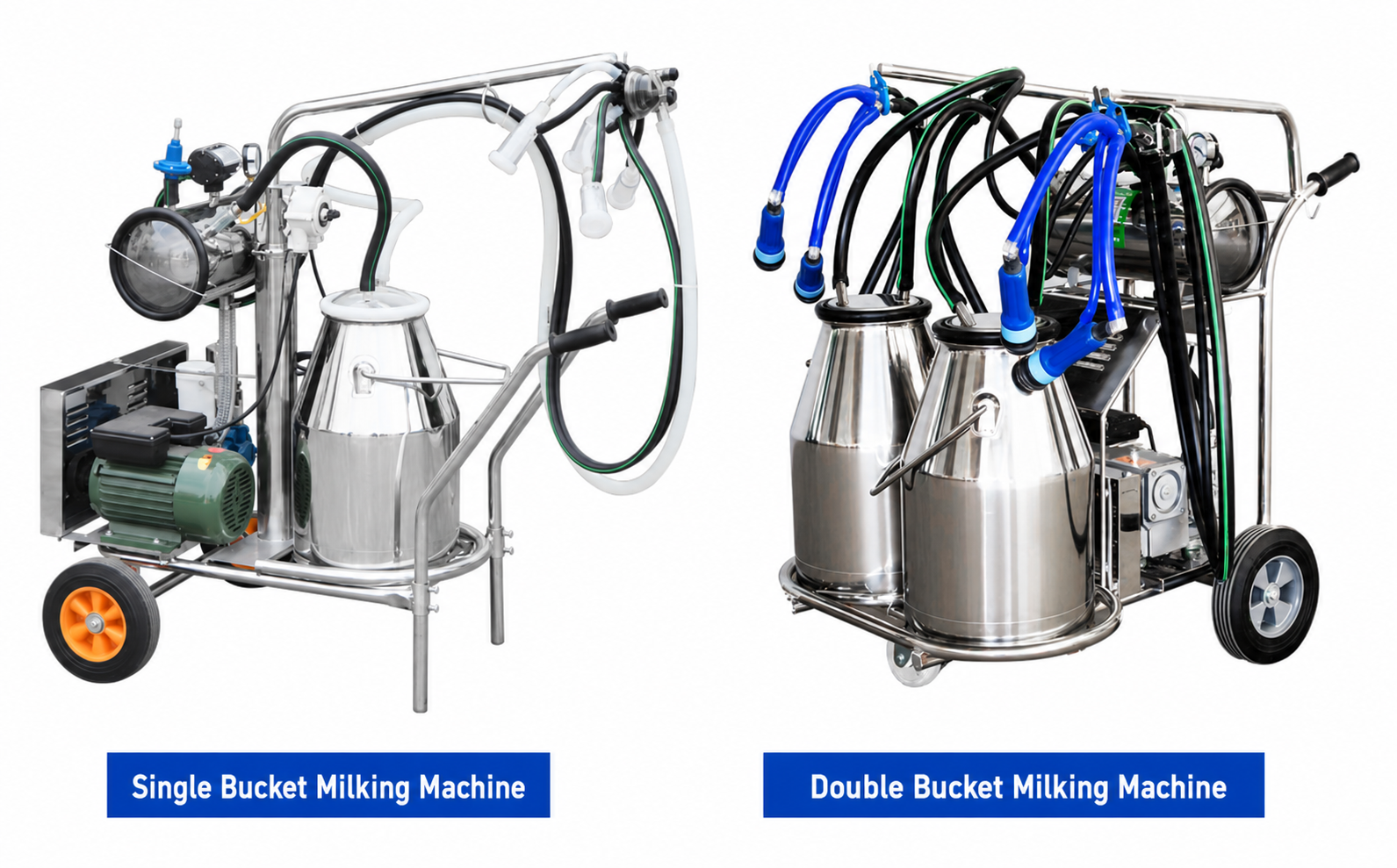
Importantly, a milking parlour is not simply a «milking machine»—that term often refers to the portable bucket or pipeline milker used in a stanchion barn. A parlour is the whole building, layout, and workflow. It is also not the same as an automatic milking system (AMS or robotic milker), where robots attach the teat cups without an operator present.
The basic daily flow
Although parlor types differ, the general sequence is similar across most dairy farms:
- Cow entry: A small group enters the parlor from a holding area, usually through a crowd gate or alley.
- Positioning: Cows move into individual stalls or onto a rotating platform, depending on the parlor type.
- Pre-milking routine: Udder cleaning, fore-stripping, and pre-dipping happen in a consistent order before cluster attachment.
- Milking: Milk is collected by the milking unit and transferred to the bulk tank.
- Post-milking: Teat dip is applied after cluster removal.
- Cow exit: Cows leave through a separate exit, often guided by a front release or side gate.
This controlled movement is a big difference from stanchion barns, where cows are milked in their resting stalls and the milker carries equipment throughout the barn. In a parlor, the animal comes to the milker, and the milker’s steps are dramatically reduced per cow.
We build this equipment to order; see the full specifications of our parallel milking parlor for standard sizes and custom options.
How a Milking Parlour Differs from Other Dairy Setups
Confusion often arises because farms can use many systems to milk cows. The table below highlights the major differences between a milking parlour, a stanchion/tie‑stall barn with a pipeline or bucket milker, and a robotic milking system.
| Feature | Milking Parlour | Stanchion/Tie‑Stall Barn | Automatic Milking System (Robot) |
|---|---|---|---|
| Cow movement | Cows walk to parlour in groups, then return to pen | Cows stay in stalls; milker moves to each cow | Cows visit robot voluntarily throughout the day |
| Operator position | Standing in a pit or at udder height; ergonomic | Bending, stooping between cows | No operator during milking; only monitoring |
| Milking routine | Group milking; clean‑in‑place; fast throughput | Individual cow routine; slower per operator | Fully automated; cow‑driven timing |
| Typical herd size | 50 cows and above; scales with larger groups | Small‑ to medium‑sized herds, often 10–60 cows | Typically 60–120 cows per robot; multiple robots for larger herds |
| Investment feel | Medium to high initial cost; high labour efficiency | Lower equipment cost; higher labour per litre | Very high initial cost; lowest daily labour |
| Flexibility | Operator can adjust routine; multiple parlour types fit different needs | Difficult to expand without building more stalls | Flexible cow schedules; less human control over timing |
According to the Dairy Cattle Science textbook (4th Edition), the shift from stanchion barns to parlour systems represented one of the biggest labour‑saving and cow‑health improvements in modern dairying.
Parlor vs stanchion barn
Many farmers confuse “milking parlor” and “stanchion barn,” but they serve different operational approaches. The comparison below highlights key practical differences:
| Factor | Milking Parlor | Stanchion Barn (Tie-Stall) |
|---|---|---|
| Animal movement | Cows walk to the parlor for milking | Cows are milked in their stalls, little movement |
| Milker position | Fixed work area; cows come to the milker | Milker walks from stall to stall |
| Labor per cow | Lower; more cows milked per hour per worker | Higher; limited by walking distance |
| Typical herd size | Often above 40–60 cows | Often smaller, traditional herds |
| Routine consistency | Very consistent; all cows follow same flow | More variable; milker routines can drift |
| Hygiene management | Easier to keep milking area separate from bedding | Manure and bedding are close to milking area |
| Initial investment | Significant; building, equipment, and layout costs | Often lower if barn already exists |
| Expansion flexibility | Module can often be added later | Hard to expand without major reconstruction |
This table is not a “which is better” verdict. It shows where each system fits. A well-managed tie-stall barn can produce excellent milk quality, but the physical labor demand grows faster as cow numbers increase.
When Does a Milking Parlour Make Sense on a Farm?
Not every dairy needs a parlour. The decision usually depends on a combination of herd size, labour availability, future plans, and facility goals. Run through this checklist to see if a parlour is worth serious investigation:
- Herd size: Generally, farms with 50 or more lactating cows start to see the payback. With smaller herds, the fixed cost may outweigh the labour savings.
- Labour efficiency: A parlour can slash milking time per cow and allow one person to handle many more cows. If labour is scarce or expensive, a parlour becomes attractive.
- Milking frequency: Herds milked three times a day or with high‑yielding cows benefit most from the throughput of a well‑designed parlour.
- Facility age: When an old stanchion barn needs major repairs, the conversation often shifts to building a new parlour instead of patching an outdated system.
- Operator health: Chronic back, knee, or shoulder problems from stooping in a stanchion barn can make a parlour a necessity for farm family members.
- Expansion goals: If you plan to grow the herd beyond what a stanchion barn can handle, designing a parlour from the start avoids costly retrofits later.
- Milk quality objectives: The clean‑in‑place pipeline and closed milk transfer in a parlour help reduce bacterial counts and improve milk premiums.
University Extension resources consistently note that a parlour only makes sense when the increased efficiency and milk quality returns can offset the higher initial investment over a reasonable period. It is not a one‑size‑fits‑all answer.
Common Types of Milking Parlours at a Glance
There is no single «parlour» design. The main parlour types include:
- Herringbone (fishbone) — cows stand at an angle on both sides of the pit.
- Parallel (side‑by‑side) — cows stand perpendicular to the pit, and operators work from behind.
- Rotary (carousel) — cows step onto a slowly rotating platform; ideal for very large herds.
- Swing‑over parlour — a simpler design where the milking unit swings from one row to the other.
- Tandem parlour — individual stalls that open and close independently; good for training heifers or mixed‑sized cattle.
Each type has its own workflow, space needs, and cost profile. Choosing the right one depends on cow traffic, operator preference, batch sizes, and budget. A separate article in this category will compare milking parlour types in detail, so here we only give the overview to help you see the range of possibilities.
What to Consider Before Investing in a Milking Parlour
Even when a parlour makes sense on paper, a poorly planned installation can create years of frustration. Before committing, look closely at these five factors:
- Cow flow and holding area: The best parlour cannot compensate for a badly designed waiting yard or return lanes. Cows should move easily without being forced.
- Operator comfort and safety: Pit depth, lighting, ventilation, and non‑slip flooring all affect milkers’ performance and injury risk.
- Future growth: A parlour built exactly for today’s herd may become a bottleneck in three years. Modular designs or room for additional stalls can save money later.
- Utility connections: Water, electricity, and drainage must meet heavy daily use. Under‑sized plumbing or poor wash‑water disposal will cause problems fast.
- Local climate: In cold regions, parlour insulation, frost‑free watering, and heated holding areas may be necessary; in hot climates, cooling fans and shade become critical.
Dairy Cattle Science emphasizes that «proper parlour planning starts with animal behaviour, not just equipment layout.» Time spent observing how your own herd moves will always pay off.
Common Mistakes and Misunderstandings
Even experienced farmers can trip up when moving to a parlour system. Avoid these typical errors:
- Choosing a parlour type without first studying cow traffic patterns. A rotary may look impressive, but if your barn layout favours batch milking, a herringbone could be far more efficient.
- Under‑investing in the holding area. Crowding, slippery floors, or long waiting times stress cows and slow down milking.
- Ignoring the wash system. A parlour that is hard to clean will lead to higher somatic cell counts and milk quality deductions.
- Not planning for the milker. A deep pit may be ergonomic, but if steps are unsafe or the operator has no quick exit, injuries can happen.
- Assuming a parlour fixes all labour problems. A poorly organised milking routine in a brand‑new parlour can still waste time and burn out employees.
- Confusing a milking parlour with a robotic milker. A parlour still needs people; a robot largely replaces the human milker, which is a different decision entirely.
When a Parlor May Not Be the Best Choice
A parlor is a powerful tool, but it is not the answer for every dairy farm. A parlor may not make sense if:
- Herd size is very small (fewer than 25–30 cows) and labor is not the main constraint.
- The existing stall barn is in excellent condition and upgrading would cost more than the expected return.
- Management is built around individual cow care in tie-stalls and switching to group milking would disrupt that attention.
- Land or capital constraints make building a new parlor plus waste management system unrealistic.
- The farm is planning a phase-out and long-term investment is not justified.
- Robotic milking appeals more for labor reduction, and the farm is willing to shift to a voluntary system without a set parlor schedule.
For many traditional grazing operations, a mobile milking bail or a simple walk-through system may be a better fit than a fixed parlor. The key is to match the system to the farm’s real daily rhythm, not to an ideal blueprint.
Final Takeaway
A milking parlour is a purpose‑built facility that improves milking efficiency, cow comfort, and milk quality by bringing cows to a fixed, ergonomic milking station. It differs from stanchion barns and robotic systems in how cows flow, how labour is used, and how much daily routine changes. The question «when does it make sense?» is best answered by looking hard at your herd size, labour situation, facility age, and expansion goals—not by following a neighbour’s choice.
Before taking any next step, walk your farm with a critical eye: Where do cows walk comfortably? Where do people stand? How will you handle the 20% busier days that always happen? Answer these practical questions first, and the parlour type, size, and layout will become much clearer.
Frequently Asked Questions
What is the difference between a milking parlour and a milking machine?
A milking machine refers to the portable equipment (claw, pulsator, bucket) that attaches to a cow. A milking parlour is the entire building, pit, platforms, pipeline, and work area that houses the milking process. You can use a milking machine in a stanchion barn, but a parlour integrates everything into a fixed, efficient layout.
Can small farms use a milking parlour?
Yes, but the economics must be examined carefully. Herds with fewer than 40–50 cows often find the investment hard to justify unless the parlour solves a severe labour or health problem. Simple swing‑over or small herringbone designs can fit smaller dairies.
How much does a milking parlour cost?
Costs vary dramatically based on size, parlour type, automation level, and local construction prices. A basic swing‑over parlour might be built for a modest sum, while a large rotary or parallel parlour with rapid‑exit gates and advanced controls can run into six figures. Always get multiple quotes and include site preparation, utilities, and holding area in the budget.
Is a milking parlour the same as a robotic milking system?
No. In a milking parlour, people attach the milking units and oversee the process. A robotic milking system (AMS) uses automated arms or trays to attach teat cups without human presence. Robots allow cows to be milked on their own schedule, while a parlour milks groups at set times.
What is the easiest parlour type to start with?
Many farmers start with a simple herringbone or swing‑over parlour because these designs are straightforward to build, operate, and clean. They also make it easier to expand gradually by adding more stalls later, depending on the original footprint.
Does a milking parlour work for goats or sheep?
Yes, but the stall dimensions, platform height, and milking cluster must be adapted. The general principles—bring animals to a central milking point and work at udder height—apply to small ruminants as well, though the equipment and layout often differ from a standard dairy cow parlour.
What safety issues should I watch for in a milking parlour?
Slips and falls on wet concrete, ergonomic injuries from improper pit depth or repetitive motions, and kicks from nervous cows are the main hazards. Good flooring, proper lighting, non‑slip steps, and an exit route from the pit are essential safety features.
How often must a milking parlour be maintained?
Daily clean‑in‑place (CIP) washing is critical for milk quality. Rubber liners, vacuum pumps, pulsators, and gate hinges need regular inspection—often weekly or according to manufacturer schedules. A thorough professional service once or twice a year can catch electrical or vacuum leaks before they cause major problems.
Can a milking parlor be used for goats or other animals?
Yes, parlors are adapted for dairy goats, sheep, and even camels. The same principles of traffic flow and pit work apply, but stall dimensions, platform height, and milking clusters must match the species.
What are common safety issues in a milking parlor?
Slips and falls on wet concrete, kicks from cows, and pinch points during entry and exit are the main risks. Good flooring, non-slip surfaces, clear traffic lanes, and proper training reduce hazards.
How do I maintain a milking parlor?
Daily cleaning of the pit area, pulsators, milk lines, and clusters is essential. Regular checks on vacuum levels, rubberware condition, and automatic take-off function help prevent mastitis outbreaks and equipment downtime.
What size farm needs a milking parlor?
There is no strict cut-off, but many farms consider a parlor when herd size exceeds 40–60 cows, especially if labor is a bottleneck. Smaller herds can still benefit if future growth is planned or if the existing barn is inefficient.
References
- Penn State Extension guide to Standard Operating Procedure for the Milking Facility
- Penn State Extension guide to Safety Risks in the Milking Parlor Non Biological Exposures
- Penn State Extension guide to Seconds Do Matter in Your Milking Routine
- Penn State Extension guide to Transitioning to a New Robotic Milker