Main Types and Practical Farm Uses
On many modern livestock farms, robotic milking systems are replacing traditional milking parlors. These systems automate the entire milking process, allowing cows to be milked voluntarily with minimal human labor. However, not all robotic milking systems work the same way. From single‑box units designed for smaller herds to high‑capacity rotary platforms that milk hundreds of cows per hour, each type is built for a specific farm size, layout, and management style.
This article explains the main types of robotic milking systems used on livestock farms, how they differ, and what to consider when matching a system to your herd and facility. It does not promote any single brand or configuration; instead, it gives practical information so you can decide which approach fits your operation.
Why Robotic Milking System Type Matters
Robotic milking is not a one‑size‑fits‑all solution. The way cows enter, stand, and leave the milking unit affects everything: daily cow traffic, barn design, labor needed, and milk output per box. Choosing the wrong type can lead to bottlenecks, stressed animals, and underused equipment. Dairy equipment handbooks consistently stress that the system’s physical layout must match the herd’s natural movement and the farmer’s daily routine. Therefore, before looking at specific brands, it pays to understand the basic system categories.
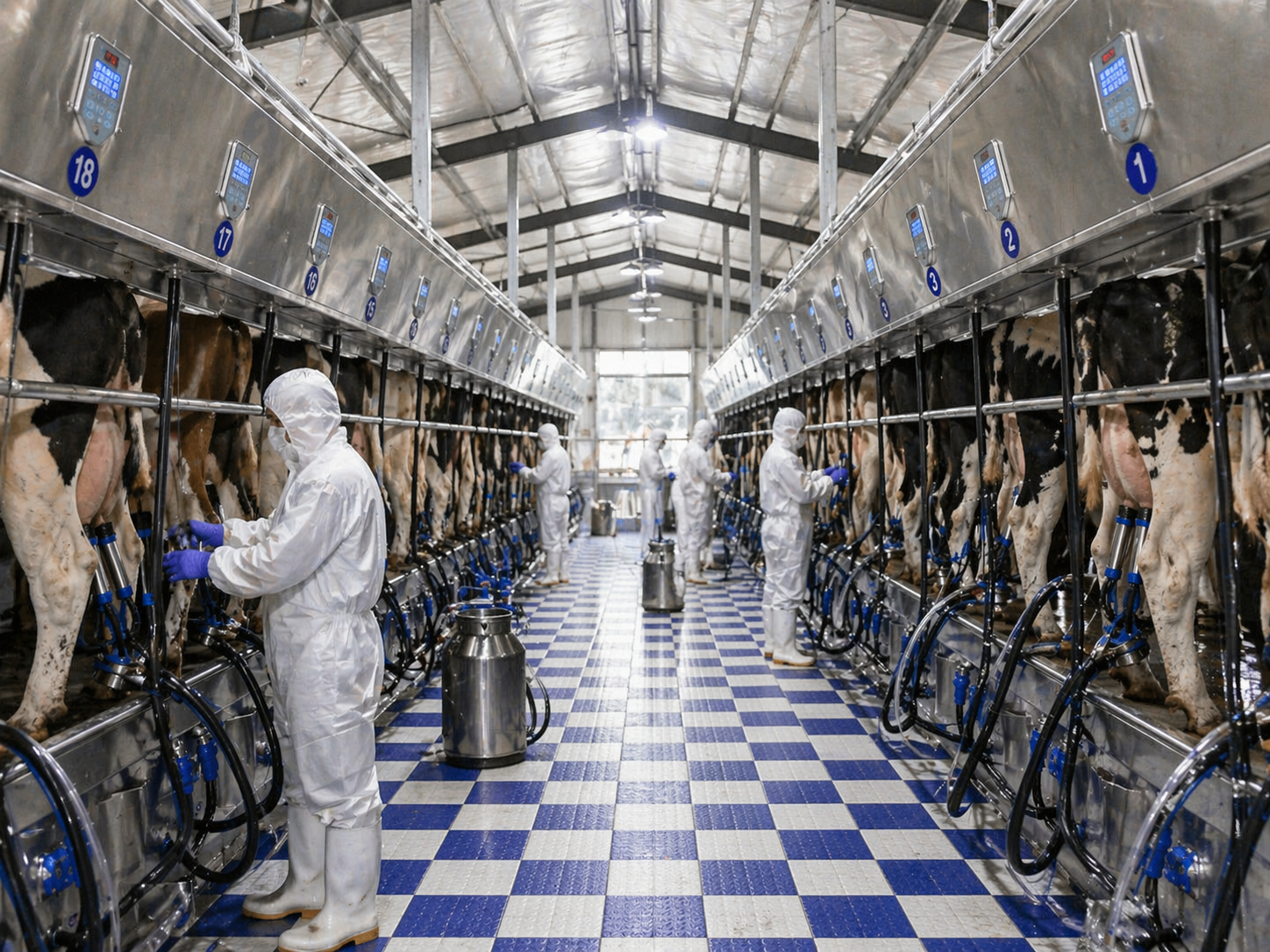
To see how these points translate into an actual build, view the full specifications of our parallel milking parlor.
Common Types of Robotic Milking Systems on Livestock Farms
Single‑Box Robotic Milking System
The single‑box robotic milker is the most common entry‑point system. It consists of one enclosed milking station where a single cow walks in voluntarily, receives feed, and is milked by a robotic arm. Once finished, the cow exits and the next cow can enter. This design fits easily into existing free‑stall barns because it requires little structural change.
Single‑box systems work well for herds of roughly 50 to 120 cows per unit. For larger herds, multiple single‑box units can be placed throughout the barn. According to University of Wisconsin Extension research, single‑box units are often the first step for farms transitioning from a conventional parlor to automated milking. They allow farmers to learn robotic management gradually without a complete barn rebuild.
Multi‑Box (Batch) Robotic Milking System
In a multi‑box configuration, two or more milking boxes share a single robotic arm. Cows are directed into a series of stalls, and the robot moves sequentially from one box to the next. This design increases the utilization rate of the robotic arm because it spends less time idle between cows.
Multi‑box systems can handle larger herds—typically 120 to 300 or more cows—while keeping the cost per cow lower than adding multiple single‑box units. However, cow routing becomes more critical. Dedicated alleyways and sorting gates are often needed to guide cows smoothly to the milking area. Industry guides note that batch systems are best suited for farms that already practice group management and can handle a more structured cow flow.
Rotary Robotic Milking System
A rotary robotic platform takes automation to a different level. Cows step onto a slow‑turning circular platform, robotic arms attach milking units, and the cows ride around until milking is complete, then exit at a dedicated point. This continuous‑flow design allows extremely high throughput—hundreds of cows per hour—making it appropriate for large herds of 300 cows and beyond.
The rotary robotic system requires significant barn modifications and a higher capital investment. It is typically adopted by farms that already milk in a rotary parlor or are building a new facility from scratch. As noted in dairy engineering publications, rotary robots work best when the herd size justifies the equipment cost and when the farm has experienced operators who understand the technology’s maintenance needs.
Hybrid and Other Configurations
Some manufacturers offer systems that blend robotics with partial manual oversight. For example, a “robotic rotary” may automate teat cup attachment but leave teat preparation or post‑dipping to a worker. This hybrid approach can handle very large herds (500+ cows) while keeping labor costs lower than a fully manual parlor. There are also experimental systems that use multiple robots in sequence or mobile robots that move between stalls, but these are less common in commercial practice.
Batch milking robots
Batch milking robots offer a hybrid approach that some farms use when transitioning from a conventional parlor. Instead of allowing cows to visit the robot voluntarily, groups of cows are brought to the robot at scheduled times—similar to traditional milking shifts but with the robot doing the actual milking.
This method can work with single-stall or multi-stall robots placed in a central area. Fetching cows still requires some labor, so it is not an entirely hands-free system. However, it retains the familiar routine of set milking times and can be easier to adopt for farms that want robot precision without totally changing cow management.
Cow Traffic: Free, Guided and Forced
The physical robot is only half the system. How cows move to and from the robot—called cow traffic—has a big impact on milk yield, labor, and animal welfare. Three main traffic types are used:
- Free cow traffic: Cows access the robot, feeding, and resting areas as they choose. This gives the highest freedom but may require fetching cows that do not visit often enough.
- Guided cow traffic: A selection gate directs cows either to the robot or to a lying area based on milking permission. This increases robot visits but can limit feeding access for some cows.
- Forced cow traffic: Cows must pass through the robot to reach feed or resting areas. This guarantees visits but can cause stress and reduce lying time if not managed well.
Each robot milking system type can be paired with different traffic systems, and the choice often depends on barn layout and management style.
Comparison of Robotic Milking System Types
| System Type | Typical Throughput per Unit | Best Suited Herd Size | Main Advantage | Common Limitation |
|---|---|---|---|---|
| Single‑box robotic milker | 2–3 cows per hour, up to 60‑80 cows per day | 50–120 cows per unit | Easy to integrate into existing barns; flexible farm layout | Throughput limited; larger herds need multiple units |
| Multi‑box (batch) system | Higher per‑robot output than single boxes | 120–300+ cows | Better utilization of robotic arm; lower cost per cow | More complex cow routing; harder to manage individual cow attention |
| Rotary robotic platform | Up to 6–10 cows per minute | 300+ cows, up to large scale | Very high throughput; continuous flow | High initial cost; requires major barn modifications; demands skilled management |
| Hybrid robotic/rotary | Comparable to rotary, with some manual tasks | Large herds, 500+ | Balances labor and automation for very large operations | Still needs human oversight; system complexity can increase downtime risks |
These figures are approximate and depend on cow traffic, milking speed, and herd management. The table gives a starting point for comparing the system types, not a substitute for a detailed farm evaluation.
How to Choose the Right Robotic Milking System for Your Farm
Matching a robotic milking system to your operation means looking beyond brochures. Use the following checklist to guide your evaluation:
- Herd size today and expected growth over the next five years.
- Barn layout: free‑stall, tie‑stall, or pasture‑based? Can the building support the chosen robot footprint?
- Cow traffic pattern: voluntary vs. guided access. Will you need selection gates?
- Labor skill: do you or your staff have the time and ability to learn robotic management?
- Milk quality goals: does the system allow for automatic teat cleaning and milk diversion?
- Integration with herd management software and existing equipment.
- Budget: not just the purchase price but also installation, upgrades, maintenance contracts, and potential downtime costs.
According to dairy automation guides, many farms underestimate the importance of cow training and the first months of adjustment. Plan for a transition period where cows learn the new system, and expect some production variability during that time.
Animal Welfare
A well-planned robot milking system can improve cow comfort by giving cows more control over their daily routine. Free traffic systems are often praised for allowing natural behavior, but they require careful monitoring to ensure timid cows get milked regularly. Forced traffic systems may increase stress if cows have to wait in long lines.
No matter the type, good design prevents lameness and udder health issues. The barn layout should include smooth flooring, adequate stall space, and easy access to feed and water. Robot milking is not just about automation—it is about keeping cows healthy and productive.
Common Mistakes When Adopting Robotic Milking
Even the best equipment can underperform if the basics are overlooked. Here are frequent mistakes that farms make when choosing or installing robotic milking systems:
- Selecting a system type without analyzing cow traffic flow first.
- Buying too few milking units for the herd size, leading to long waiting times and reduced visits.
- Ignoring barn ventilation, lighting, or flooring comfort around the robot area – cows will avoid an uncomfortable station.
- Assuming one person can manage multiple robots without extra training.
- Installing a rotary robot in a barn not designed for circular cow movement.
- Underestimating the need for backup milk cooling and electrical supply during system maintenance.
When Robotic Milking Might Not Be the Best Choice
Robotic milking systems, regardless of type, are not ideal for every livestock farm. Consider these situations:
- Very small herds (under 50 cows) where the cost per cow may be too high to recover.
- Farms with an existing, highly efficient parlor and a stable, skilled milking crew – the return on investment may be slim.
- Operations that milk multiple species (e.g., goats, sheep) because not all robots are designed for smaller teats or different udder conformations.
- Farms in remote areas where access to specialized service technicians is unreliable.
- Managers who prefer a hands‑off approach and are unwilling to monitor data daily – robotic systems generate a wealth of information that needs regular attention.
Final Takeaway
Robotic milking systems give livestock farms a powerful tool to reduce labor and improve cow comfort, but the type you choose must fit your herd, your barn, and your management style. Single‑box systems are flexible and low‑risk for smaller herds. Multi‑box setups increase throughput for growing operations. Rotary platforms deliver speed and scale for large dairies. Hybrid configurations offer a middle ground for facilities that still want some human involvement.
Before deciding, walk through your barn as a cow would, study your daily routine, and list the bottlenecks you want to solve. Then match those real‑world needs to the system type, not the other way around.
Frequently Asked Questions
How much does a robotic milking system cost?
Costs vary widely by system type, farm size, and installation requirements. Single‑box units generally have a lower entry price than rotary platforms, but the total investment includes barn modifications, software, and ongoing maintenance. Request detailed quotes based on your specific farm layout.
What size robotic milking system do I need for my herd?
As a rule of thumb, one single‑box robot can serve about 50–60 cows that visit 2.5 times per day. Multiply by that factor for larger herds, but always factor in cow traffic patterns and whether you want room for growth. Overestimating capacity slightly is safer than under‑estimating and causing bottlenecks.
Can robotic milking systems be used for goats or sheep?
Some robotic milking systems are designed for small ruminants, but not all. The teat cup and attachment mechanism must match smaller teat sizes and udder conformation. Always confirm that the equipment is intended for the species you plan to milk.
What are the main installation requirements for a robotic milker?
You need a level, cleanable floor; adequate space for cow entry, exit, and any sorting gates; a reliable power supply with backup; milk cooling and cleaning infrastructure; and proper ventilation and lighting. Rotary systems also require a deep pit or elevated platform, which often means structural construction.
How long does it take cows to adapt to a robotic milking system?
Most cows adapt within a few days to two weeks, but the full transition period can last one to three months. Some cows learn faster than others. Patience, consistent feeding in the robot, and guided visits during the first weeks help speed up training.
What is the biggest mistake first‑time buyers make with robotic milking?
Choosing a system based solely on brand reputation or price without first analyzing their own cow traffic, barn layout, and daily labor routine. The hardware is only one piece; mismatched cow flow or inadequate barn preparation can undermine even the best equipment.
How do I maintain a robotic milking system?
Regular daily tasks include cleaning the milking cluster, checking liners, and monitoring the system’s alerts. Most units have scheduled service intervals for replacement parts. A strong relationship with a local service team and following the manufacturer’s maintenance checklist are essential to prevent unexpected downtime.
Is forced cow traffic better than free traffic?
Not necessarily. Forced traffic ensures cows visit the robot but can cause stress and reduce lying time. Free traffic supports natural behavior but may require fetching lazy cows. The best choice depends on barn layout and management style.
What are the installation requirements for a robot milking system?
You need a barn with solid flooring, adequate electrical supply, water lines, and space for the robot footprint plus cow waiting and exit areas. Retrofit installations may require significant layout changes.
How do robot milking systems handle cows with different milking speeds?
Robot software adjusts milking time per quarter and can release slow-milking cows automatically. However, extremely slow cows may reduce overall throughput, so some farms cull unusually slow milkers.