Animal Type and Farm Routine Considerations
On most cattle farms, water troughs look the same at a glance. But what works for a small group of beef steers on dry pasture often does not fit a high-producing dairy herd near the parlour. Animal body size, drinking speed, social behavior, feeding pattern, and milk production routine all change what a cattle water trough must do. The guide below explains these differences so you can match water access to your animals, not just buy a standard trough.
How Body Size Changes Water Trough Requirements
Larger animals require taller, deeper, and often stronger troughs. A calf can drink easily from a low, shallow pan, but a mature beef cow will quickly empty it or foul it. Body size also affects shoulder width and horn spread, which can influence trough rim access.
| Animal Group | Typical Live Weight | Recommended Trough Rim Height | Suggested Minimum Water Depth |
|---|---|---|---|
| Young calves (2–6 months) | 70–180 kg | 40–50 cm | 15–20 cm |
| Yearling cattle | 250–400 kg | 50–60 cm | 20–25 cm |
| Mature beef cows | 500–700 kg | 60–80 cm | 25–35 cm |
| Mature dairy cows (lactating) | 550–750 kg | 60–80 cm | 30–40 cm |
These are general field guidelines. Trough depth should allow easy drinking without the animal stretching upward excessively, while still holding enough water for the group between refills.
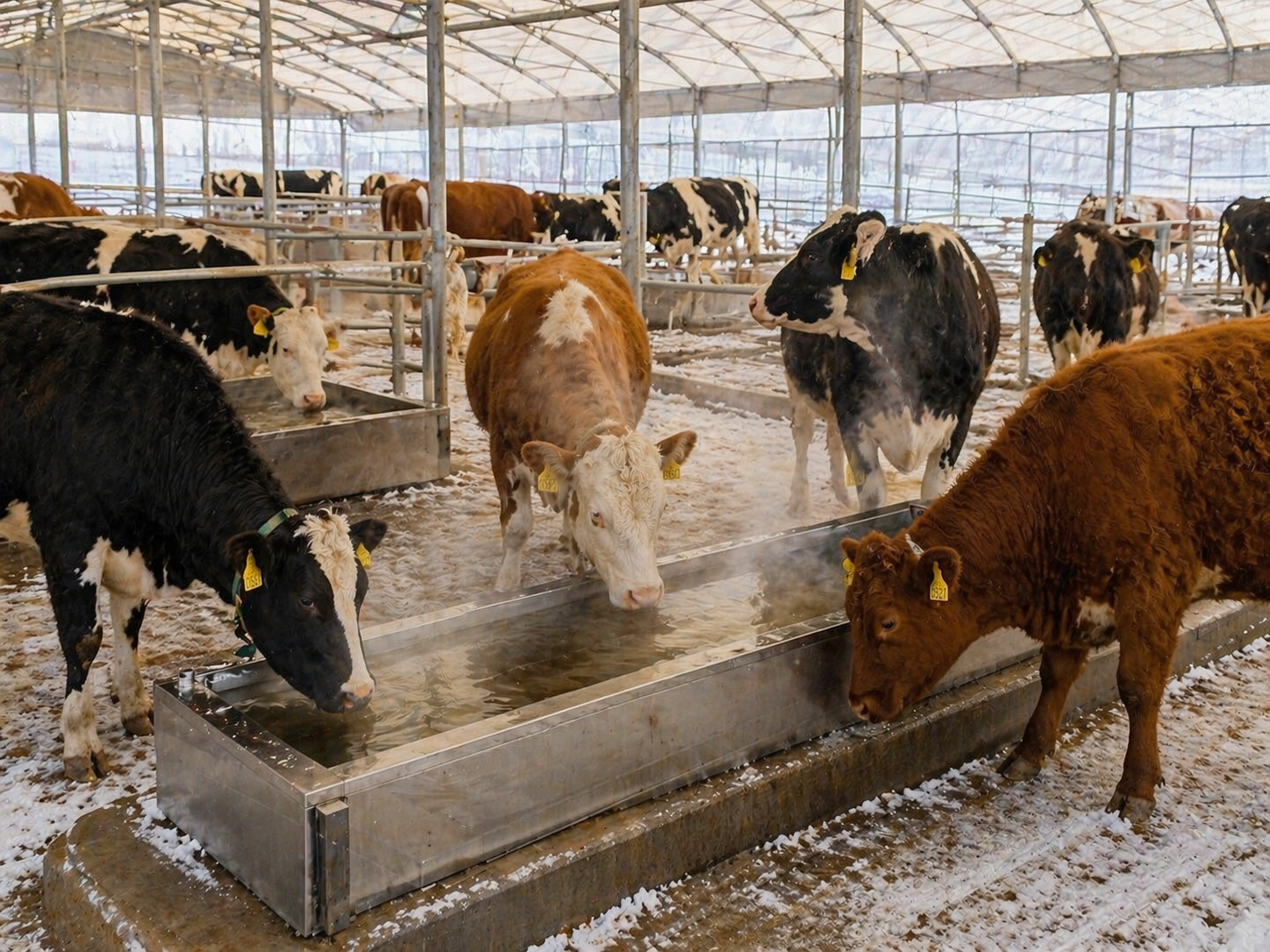
We build this equipment to order; see the full specifications of our heated water trough for standard sizes and custom options.
Drinking Behavior: Why Trough Shape and Access Speed Matter
Not all cattle drink the same way. Beef cattle on extensive pasture may visit water once or twice a day and drink for longer periods. Dairy cows, especially high-yielding cows, tend to drink more frequently and quickly around milking. Social rank also plays a role; dominant animals can block access if trough space is tight.
According to the Dairy Cattle Science textbook (4th Edition), water intake is closely tied to milk yield; a lactating dairy cow may drink 100–130 liters per day, and a 20% restriction in water can reduce milk production noticeably within hours. This means dairy troughs must refill fast and allow multiple cattle to drink at once without competition.
For beef herds, round or long troughs with ample perimeter space reduce crowding. In contrast, dairy operations often benefit from quick-recovery float-valve systems and controlled access near the parlour exit, where cows are most thirsty.
Feed and Milk Production Routines: When Water Demand Spikes
Feeding and milking schedules create distinct peaks in water demand. Dairy cows typically drink the most immediately after milking and after eating. If a trough is too small or slow to refill, dominant cows drink first and lower-ranking cows may wait or reduce intake.
The type of ration also matters. Cattle on dry hay or high-fibre diets need more water than those on lush pasture. During heat stress, water demand can increase by 50–100%. Therefore, a trough serving lactating dairy cows in summer in a dry lot must be much larger and faster-refilling than one for dry beef cows on spring pasture.
Materials Comparison: Metal, Plastic, and Concrete Water Troughs
Material choice interacts with animal type, climate, and routine. Below is a practical comparison.
| Material | Best Fit | Strengths | Weaknesses |
|---|---|---|---|
| Galvanized metal | Large beef herds, permanent sites, high-sun areas | Durable, resists cracking, good for frequent cleaning | Can rust if coating damaged, heavy, conducts heat |
| Plastic (polyethylene) | Dairy moveable troughs, calf groups, cold climates | Lightweight, resists corrosion, easier to move | May crack under heavy impact, can float if not anchored |
| Concrete | Large permanent dairy yards, feedlot pens | Extremely durable, difficult to tip over, stable temperature | Hard to relocate, can crack over time, rougher surface can harbour biofilm |
Plastic troughs are popular for group calf rearing because they are easy to sanitise and reposition. Metal troughs are common in cow-calf operations where fencing and handling facilities are mostly galvanised steel. Concrete troughs are often built in place and designed for high-traffic areas.
Sizing and Capacity: Matching Trough Volume to Herd and Routine
Trough size is not about total daily water need alone; it is about meeting peak demand within the time the water source can refill. A simple rule from the Beef Cattle Science handbook (5th Edition) suggests that trough volume should hold at least 2–3 times the expected hourly peak intake so that animals are never waiting for a slow-refill basin.
To estimate daily water need per head:
- Dry beef cow: 40–60 liters
- Lactating beef cow: 60–80 liters
- Lactating dairy cow (moderate yield): 80–130 liters
- Yearling: 20–30 liters
- Calf: 5–15 liters
Multiply by group size, then size trough volume to cover the biggest drinking surge. For example, a group of 50 lactating dairy cows may need a trough system that can deliver 3,000–4,000 liters per peak hour. Multiple troughs or a high-flow float valve may be required.
How much water livestock need
Before picking a trough, start with daily water intake. If the trough holds less than the herd needs in a day, someone must refill it constantly. That is a common farm frustration.
According to the Beef Cattle Science handbook, mature beef cattle drink 10 to 14 gallons of water per day, but this figure rises quickly in hot weather or when animals eat dry feed.
The table below gives general daily estimates to help you size a trough. Always adjust for local climate, activity level and water content in feed.
| Animal Type | Estimated Daily Water Intake per Head | Notes |
|---|---|---|
| Beef Cattle | 10–14 gallons | Lactating cows need up to 20 gallons |
| Dairy Cattle | 15–25 gallons | High-yield cows drink more |
| Horses | 8–12 gallons | Varies with work and forage type |
| Sheep & Goats | 1–3 gallons | Less in cool weather, more when lactating |
| Poultry (100 birds) | 5–10 gallons total | High temperature raises intake sharply |
Placement and Farm Layout: Integrating Troughs into the Routine
Where a trough sits matters almost as much as its size. Place troughs:
- Away from feeding areas to reduce manure splash, but not so far that cattle avoid drinking.
- On elevated, well-drained ground to avoid mud buildup.
- Near travel lanes or loafing areas, not dead-end corners.
- In sight of the herd but with enough perimeter to avoid bullying.
- In shade during hot weather or with insulation in freezing climates.
For dairy, positioning troughs close to the parlour exit captures the natural thirst peak. For rotational grazing, mobile troughs on skids or wheels let you follow the herd.
Maintenance and Safety Checklist
A well-chosen trough still fails if it is not cleaned and checked. Basic maintenance routine:
- Inspect valve and float assembly weekly; slow refill can limit intake.
- Scrub trough surfaces at least monthly to control biofilm and algae.
- Drain and flush sediment if water source carries sand or debris.
- Check for sharp edges on metal troughs, especially after animal impact.
- Ensure plastic troughs are anchored or heavy enough to prevent tipping.
- Monitor water temperature in extreme cold; frozen surface edges can discourage drinking.
- Watch for bullying at the trough; add more drinking space or secondary trough if needed.
Routine water access problems often show up first as reduced feed intake, milk drop, or cattle hanging near water points without drinking. Do not ignore small changes in herd drinking behaviour.
Keeping troughs clean and algae-free
Clean water is a health requirement, not a preference. Dirty troughs spread bacteria, encourage algae and can turn animals away from drinking. A good routine takes only a few minutes.
Weekly cleaning steps (warm weather, more often if needed):
- Drain the trough completely.
- Scrub interior walls and bottom with a stiff brush. Remove biofilm and debris.
- Rinse thoroughly.
- If needed, disinfect with a mild bleach solution (¼ cup bleach per gallon of water), then rinse again before refilling.
- Refill with fresh water.
Tips for less maintenance:
- Place the trough in partial shade to slow algae.
- Drain plugs or bottom drains make emptying faster.
- A small amount of copper sulfate (used carefully and legally) can control algae in non-organic systems.
- In winter, breaking surface ice daily or using a floating tank de-icer keeps water available.
When a Basic Trough Is Not Enough
A simple open trough works for many farms, but some situations call for a step up:
- Large herds with high water demand: An automatic waterer can keep supply steady without constant refilling.
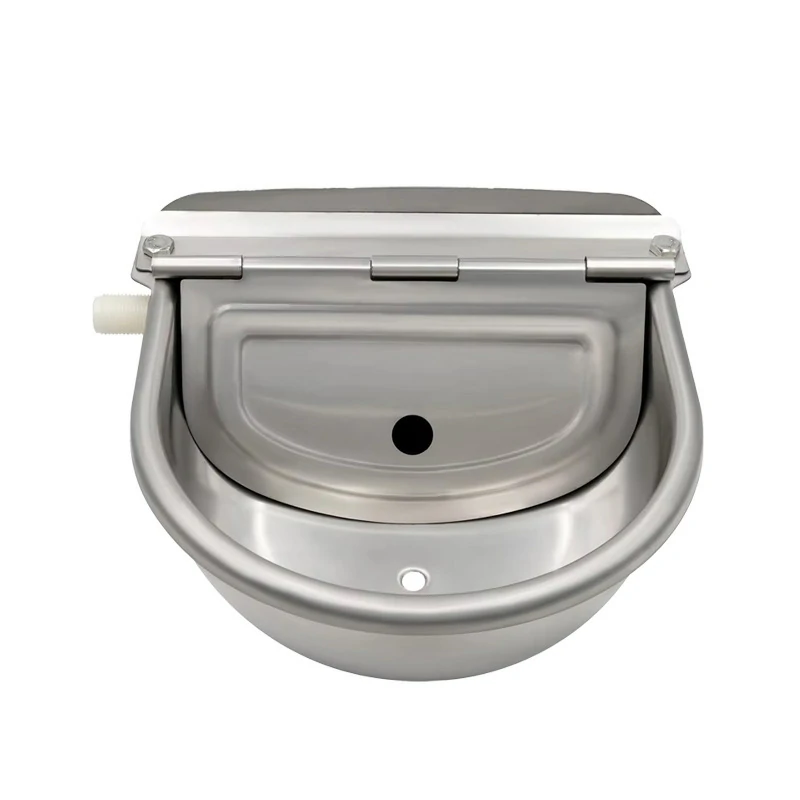
- Extended freezing conditions: An insulated or heated automatic bowl may be safer and more reliable than trying to de-ice an open trough.
- Remote pastures without easy fill access: A float-valve system connected to a storage tank can reduce daily trips.
- Biosecurity or health monitoring: Some operations benefit from water meters or medicated water systems that a simple trough cannot provide.
In these cases, think of the water trough as one piece of the water system, not the whole answer.
Frequently Asked Questions
How much water does a dairy cow need versus a beef cow?
A lactating dairy cow can drink 80–130 liters daily, while a dry beef cow usually drinks 40–60 liters. Lactation, temperature, and feed type push dairy water needs much higher.
Can I use the same water trough for calves and adult cattle?
Calves need lower, shallower access points. Using an adult-height trough without a step or separate calf basin risks dehydration and safety issues.
Do plastic cattle water troughs work in cold climates?
Yes, if the wall thickness is adequate and the trough is anchored. Plastic resists cracking from ice expansion better than thin metal, but it must be freeze-resistant grade.
How many water troughs for a group of 50 beef cows?
At least two separate drinking points spaced far apart reduce bullying. Total trough volume should hold 2–3 times the peak hourly consumption, which may mean 1,500–2,000 liters of accessible capacity.
Does water trough shape affect cattle drinking behaviour?
Yes. Round troughs allow more animals to drink simultaneously without head-to-head conflict. Long linear troughs can work if perimeter space is sufficient; avoid dead-end approaches.
How often should a cattle water trough be cleaned?
At least monthly in moderate conditions. In hot weather or with high-roughage diets, clean every two weeks to control algae and bacteria buildup.
What is the biggest mistake when choosing a cattle water trough?
Underestimating peak demand and refill rate. A trough that holds enough for daily needs but cannot keep up during the post-milking or post-feeding rush will cause intake problems.
How do I keep my water trough from freezing in winter?
Use a floating tank de-icer if electricity is available. In very cold areas, wrap exposed pipes and place the trough where it gets midday sun. Breaking ice by hand twice a day is the minimum backup.
What is the best way to prevent algae in a water trough?
Shade is the simplest prevention. If shade isn’t possible, a weekly scrub and a small, safe dose of copper sulfate (where regulations allow) can keep algae under control. Never use chemicals without checking livestock safety.
How high should a water trough be for goats versus cattle?
Cattle drink comfortably from a trough rim about 24–30 inches high. Goats and sheep prefer a lower rim—around 18–24 inches. If you mix species, provide steps, a ramp, or a lower side so all animals can drink.
References
- University of Minnesota Extension guide to Farmbytes Watering System Design Rotational Grazing
- University of Minnesota Extension guide to Heat Stress Dairy Cattle
- University of Minnesota Extension guide to Stocking Density Outdoor Cow Areas
- Penn State Extension guide to Harmful Algal Blooms Safety Testing and Management Options