Placement and Workflow Considerations
A livestock gate is more than an opening in a fence. Placed correctly, it becomes a tool that directs cattle movement, saves labor, improves barn ventilation, and makes feeding routines safer. This article helps cattle producers and farm managers decide where to set gates for better daily access and workflow.
Why Gate Placement Matters for Livestock Workflow
Gate location directly affects how easily animals move between pastures, pens, and handling areas. A well-placed gate reduces stress on both cattle and handlers by supporting smooth, predictable flow. In contrast, poorly positioned gates can cause bunching, backtracking, and even injuries. According to low-stress cattle handling principles commonly taught by Extension programs, gate placement, handler position, and visual barriers all influence how calmly livestock move through a facility.
From a labor standpoint, strategic gate placement cuts down the time spent chasing animals or opening multiple panels. It also makes daily chores—like feeding, watering, and bedding—faster when gates are aligned with equipment paths and natural animal movement patterns.
Key Areas Where a Livestock Gate Improves Daily Access
Certain farm zones benefit from carefully positioned gates:
- Pasture entry and exit points: Gates should be placed where animals naturally gravitate, such as near water or shade, to encourage voluntary movement.
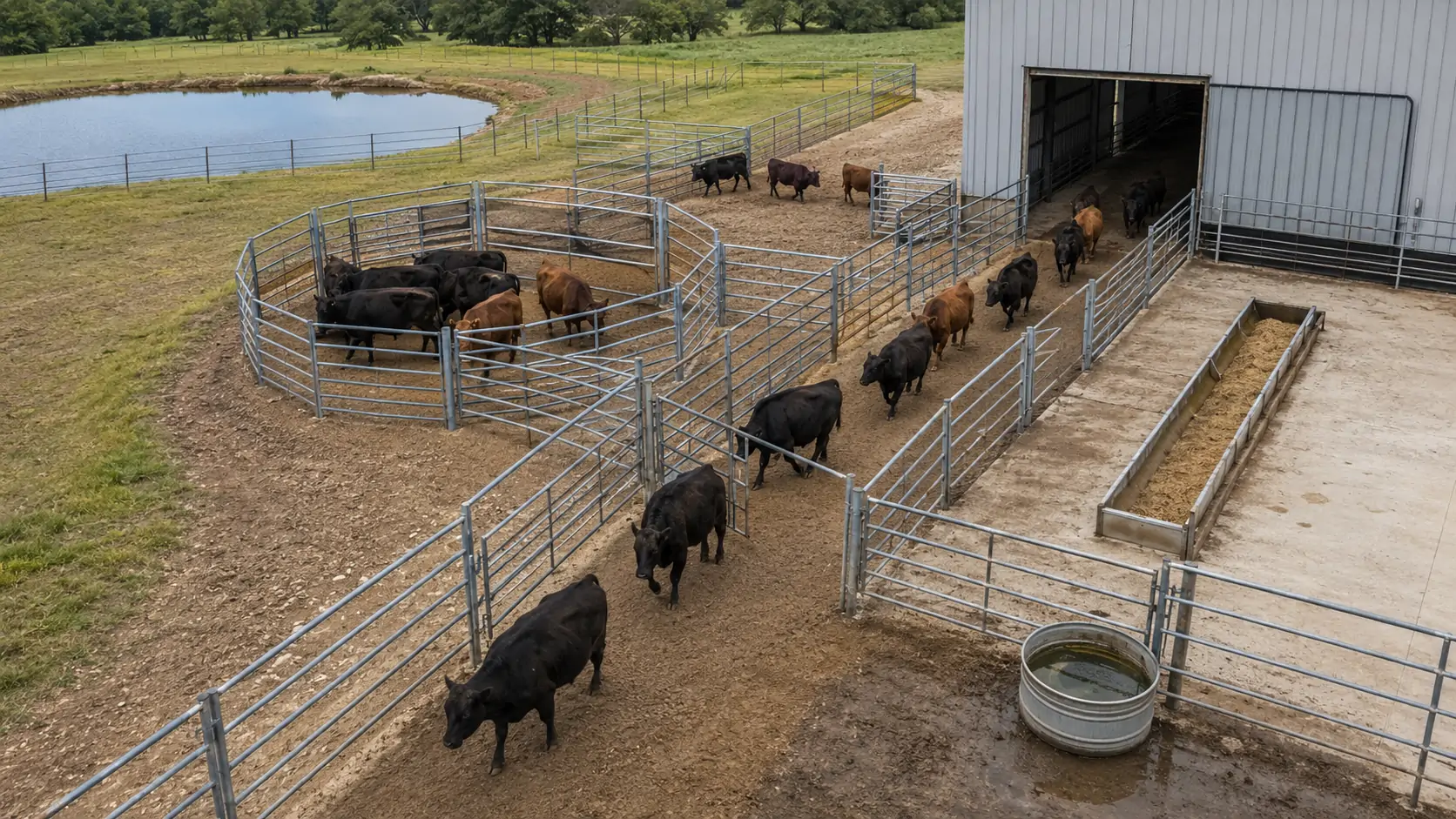
- Alley intersections: Gates that connect lanes let you control which group goes where without extra sorting.
- Between holding pens: Connecting pens with gates allows flexible grouping for weaning, breeding, or health checks.
- Near loading areas: A gate directly aligned with the loading chute or ramp reduces hesitation during truck loading.
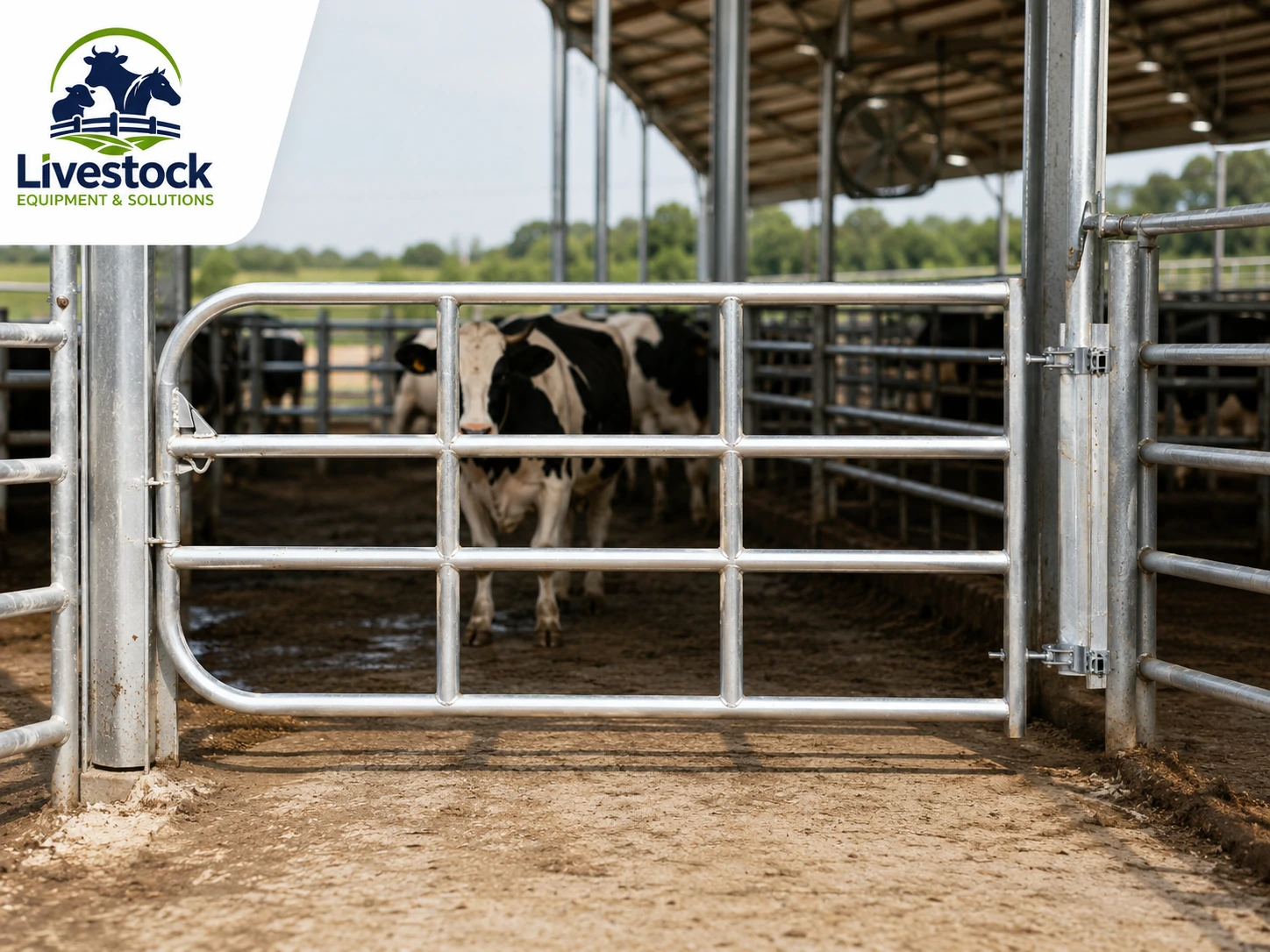
- Barn or shed doorways: A wide gate on the building entrance doubles as a confinement barrier and a passage for equipment.
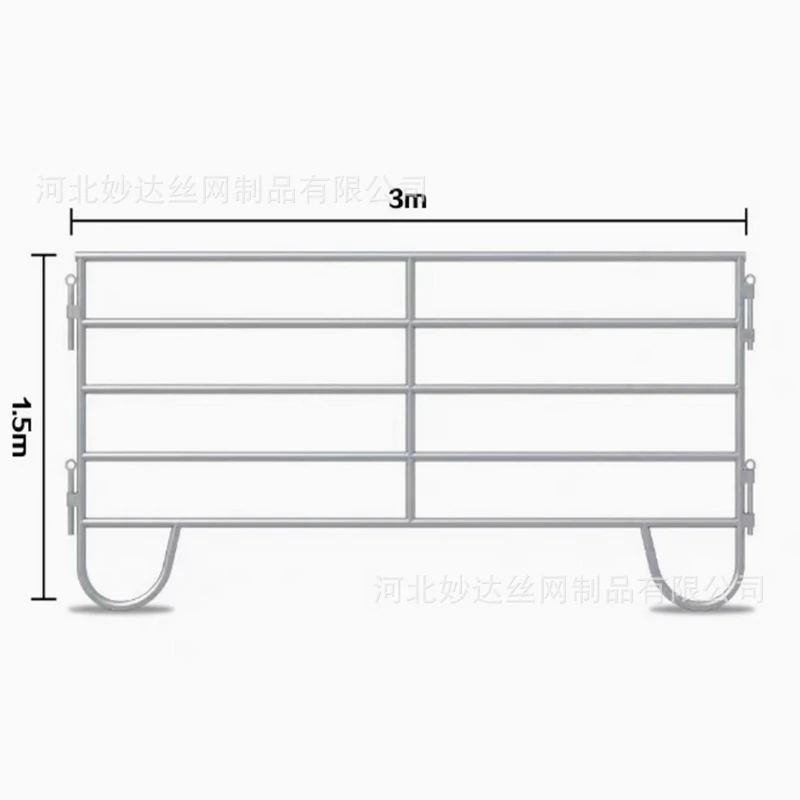
Our heavy-duty cattle gate product page lists the standard dimensions, materials and options.
Barn and Building Gate Placement for Airflow and Movement
In livestock barns, gates do more than contain animals—they influence ventilation. Strategically placed gates can improve cross-ventilation, especially in naturally ventilated barns. For example, installing a livestock gate at both ends of a central alley allows prevailing winds to flow through when gates are open. Likewise, using gates instead of solid walls on interior divisions keeps air moving while still separating groups.
During hot weather, positioning a gate to catch the breeze can make a significant difference in animal comfort. Avoid placing gates in spots where they block airflow dead spots, such as the corners of a barn. If the gate must be in a lower-ventilation area, consider adding mesh or punch-hole panels to the gate itself to maintain some air movement.
Gate Placement for Feeding and Watering Zones
Feeding areas present unique challenges. A livestock gate placed at the end of a feed alley lets a tractor or feed wagon enter without driving through the pen. If cattle are fed in the pen, a gate at the opposite end from the feed bunk allows you to bring in feed while animals are held back, then release them after feeding. For watering points, a gate nearby lets you shut off access when cleaning tanks or when animals need to be kept away temporarily.
When multiple groups share a feed area, consider placing a gate between sections. This way, one group can finish eating while the other is held in an adjacent pen, reducing competition and ensuring all animals get their ration.
Gate Placement in Handling and Working Areas
Handling facilities demand the most thoughtful gate placement. According to Oklahoma State University Extension, working facilities should allow cattle to flow smoothly from the holding area through the crowd pen and into the alley without backtracking. Gates play a key role at every transition point: at the entry to the crowd pen, along the curved alley, and at the chute entrance. Ideally, gates in these areas should open away from the direction of animal flow so they don’t become obstacles.
A common design error is placing a gate that swings into the path of a moving animal. In a crow pen, for instance, a gate hinged on the wrong side can create a dead corner where cattle get stuck. Similarly, a gate at the chute exit should open fully to either side to release an animal immediately after working without interference.
How Gate Width and Swing Direction Affect Placement
Width matters for both animal passage and equipment access. A livestock gate for walk-through use may be 4 ft to 6 ft wide, but a gate used for moving groups of cattle or a feed tractor often needs 12 ft or more. Before setting posts, measure the widest equipment that must pass through, and add at least 2 ft of clearance on either side for safe maneuvering.
Swing direction is equally important. In alleyways, a double-swing gate that opens both ways is convenient for high-traffic routes, though a single-swing gate may be more secure if latching is critical. For pens, gates should generally swing out of the pen to prevent animals from pushing them open. However, in handling systems, gates often need to swing into the animal’s path to act as a crowd panel—this is acceptable if they are operated by a handler and not left free-swinging.
Choosing the Gate Width: 8 ft, 12 ft and 16 ft
Width decides more than which animals fit through. It sets how heavy the gate is, how much swing space it needs and whether machinery can pass. The three widths most farms stock each suit a different job.
8 ft gates for pens, paddocks and small machinery
An 8 foot farm gate fits a wide range of daily livestock tasks without being oversized. It is narrow enough to hang from standard wood or steel posts, yet wide enough to let mature cattle, small tractors, or utility vehicles pass through comfortably. Many farms stock 8 foot gates because they balance strength, cost, and ease of handling. They work well in places where a 10 foot or 12 foot gate would be unnecessary weight and expense, while a narrower 6 foot gate would feel too restrictive. The key is placing the gate where 8 feet of clearance solves the chore, not where it creates a traffic jam.
12 ft gates for group movement and feed alleys
Cattle move more calmly through a wider opening. A 12 foot cattle gate gives animals enough space to walk without crowding or pushing against the frame. This reduces stress and injury during routine movement between pens, pasture and holding areas. According to Beef Cattle Science (7th Edition), wider gateways in working facilities help keep cattle flowing naturally and lower the risk of balking.
A 12-foot gate also allows two groups of cattle to pass each other if needed. This is helpful around feed alleys and central handling points. In contrast, a 10 foot gate can become a bottleneck during group movement, and a 14 foot gate may be too wide for some narrow alleyways. The key is choosing a width that fits the routine animal traffic at that location.
16 ft gates for main traffic points
A gate that is too narrow slows down animal flow and forces cattle to crowd. A gate that is too wide can be heavy, harder to swing, and waste space. The 16 ft width strikes a practical balance for many mid- to large-scale livestock operations. It allows a tractor, skid steer, or small truck to pass comfortably, and it gives enough room for a group of cattle to move through without shoving.
The table below shows how 16 ft compares to other common cattle gate widths in daily farm use.
| Gate Width | Typical Farm Use | Key Limitation |
|---|---|---|
| 10 ft | Calf pens, small alleyways | Too narrow for machinery; may stress larger cattle |
| 12 ft | Pasture entry for smaller herds | Equipment clearance often marginal |
| 14 ft | Working alley entrance, moderate traffic lanes | Acceptable for many tractors, but tight for wide implements |
| 16 ft | Farm entrance, barn openings, feed lanes, main traffic points | Requires sturdy posts and adequate swing space |
| 20 ft | Double-driveway, high-traffic commercial yards | Heavy; may need double gate setup; overkill for most pens |
This is not a recommendation to buy one size over another; it simply shows why 16 ft is often the right choice for primary livestock access points. According to USDA NRCS fence planning guidance, gate placement and width should match the intended livestock and equipment movement patterns.
Common Gate Placement Mistakes to Avoid
- Gate swings into traffic: In alleys or pens, a gate that opens toward oncoming cattle can stop movement or cause pile-ups.
- Narrow gate for wide equipment: A 4 ft gate in a feed alley may block the feed wagon, forcing long detours.
- Dead-end placement: A gate at the end of a blind corner is hard to use smoothly and can trap animals.
- Poor drainage: Mud at the gate base rusts hardware quickly and makes operation difficult.
- Latch out of reach: If you have to step into the pen to open the gate, you compromise handler safety.
- Using a gate as a substitute for a solid panel: In a working chute or squeeze area, animals may see through a gate and balk; solid-sided panels often work better there.
Map Traffic Paths Before Choosing a Spot
Farm maps make gate placement clearer. Pencil in a rough overhead view of pastures, barns, lanes, and handling yards. Mark where cattle walk every day and where vehicles travel. A 16 ft gate usually fits best at the convergence of these traffic paths: where a lane meets the barn, where the pasture opens into the handling facility, or where the property entrance splits into separate working areas.
Think in terms of zones: a high-traffic zone needs a durable, frequently used wide gate; a low-traffic, seasonal paddock may only need a narrower gate. The 16 ft size is most justified in the “A” zone of daily operations. Penn State Extension notes that cattle handling efficiency improves when gates are positioned to reduce turning and backing, which aligns with the idea that traffic flow should dictate gate placement, not arbitrary corner locations.
Checklist: Where to Place Your Next Livestock Gate
| Check Point | What to Evaluate |
|---|---|
| Purpose | Temporary passage, permanent division, working area, or feeding control? |
| Animal flow direction | Will animals move straight through or at an angle? |
| Equipment access | Do feed wagons, tractors, or skid steers need to pass? |
| Swing clearance | Is there room for the gate to open fully without hitting obstacles? |
| Latching position | Can the operator reach the latch without stepping into the animal path? |
| Drainage | Will water pool at the gate base, causing mud and rust? |
| Sight lines | Can animals see through or around the gate to avoid startle responses? |
| Ventilation impact | If in a barn, does the gate block or enhance airflow? |
Final Takeaway
The best livestock gate placement balances animal movement, handler safety, equipment access, and environmental factors like ventilation and drainage. Before setting posts, map out daily routines, observe how cattle naturally move, and plan for future changes. A well-placed gate saves hours of labor and reduces stress on the entire herd.
Frequently Asked Questions
How wide should a livestock gate be for cattle?
For groups of mature cattle, a 12-foot-wide gate is common, especially if tractors or equipment pass through. Walk-through gates for handlers only can be 4 to 6 feet wide, but always check your largest equipment width before settling on a size.
Should a livestock gate swing in or out?
In pens, gates are safer when they swing outward so cattle cannot push them open. In handling alleys, double-swing gates are convenient, but in crow pens, the gate may need to swing inward as a crowd panel—operated only by a handler.
Where should I place gates in a working corral?
Place gates at the entry and exit of the crowd pen, along curved alleys for side exits, and at the chute entrance. Avoid creating sharp 90-degree turns; curved flow reduces balking.
Can gate placement affect barn ventilation?
Yes. Open gates in naturally ventilated barns can channel airflow, while gates instead of solid walls maintain air movement between pens. Avoid placing gates where they block prevailing winds in summer.
What is the biggest mistake when placing a livestock gate?
Not allowing enough room for the gate to open fully, or swinging it directly into the path of moving animals. This creates bottlenecks and can injure both cattle and handlers.
How do I prevent mud at gateways?
Choose a well-drained site, elevate the gate base slightly, and add a gravel or concrete pad. Good drainage prevents rust and makes the gate easier to operate year-round.
When is a single swing gate better than a double swing?
Single-swing gates are simpler and more secure in low‑traffic areas or where you want the gate to stay latched after each use. Double-swing gates save time in high‑traffic alleys but require more hardware and maintenance.
How do I decide between a 12 foot and 14 foot gate?
Measure the widest piece of equipment that will pass through. A 12 foot gate offers enough clearance for most standard tractors and feed wagons; a 14 foot gate gives extra room for large hay equipment or wider vehicles, but it is heavier and needs a stronger structure.
How do I prevent a long gate from sagging?
Use a sturdy end post, proper hinge alignment, and consider a wheel or caster on the latch side to support the weight over time.
Can an 8 foot farm gate be used for sheep or goats?
Yes, an 8 foot farm gate can be used for small ruminants, but you may need to add welded wire or hog panels to the lower half to prevent animals from squeezing through or jumping over. A pure tube gate with wide spacing is not suited for lambs or kids.
References
- Oklahoma State Extension guide to Cattle Handling Safety in Working Facilities
- Oklahoma State Extension guide to Corral and Working Facilities for Beef Cattle
- Oklahoma State Extension guide to Minimizing Impacts to Wildlife from Livestock Infrastructure
- Penn State Extension guide to Horse Stall Design